


Show-class specimens are revered for their beauty, their Japanese name, nishikigoi, means living jewelry and admirers are prepared to pay tens of thousands of dollars for the chance to own one.
Tomorrow and Sunday between 8am to 5pm, members of the public can see what all the fuss is about at the 2005 National Koi Competition (2005
The annual event will feature a giant koi carp competition for fish measuring at least 50cm in length.
A koi of this size takes about three years of care to cultivate in ideal conditions that require the pond's water temperature to stay within a range of 18 degrees Celsius to 23 degrees Celsius.
This year's competition will be divided into 15 categories, starting at 15cm-sized koi and running up to giant specimens that measure around or above 80cm long, said Lien Chun-chieh (
Competition classes are graduated according to the length of the fish. Each 5cm increment marks a new group.
Breeders and collectors have entered around 600 koi for the various competitions.
"A 50cm-long championship winner can be worth as much as NT$150,000 or more. Koi cultivators often use champions as breeding fish. Size, color and marking patterns are the three key criteria used to judge entries to the competitions," Lien said.
Since Japan holds the longest tradition of breeding koi and sets the international standards for koi appraisal, the organizer of the local competition usually invites several officially recognized Japanese experts to Taiwan every year to act as judges for the last round of the championship.
In addition, other international visiting teams this year include koi-breeders from Holland, Germany, England, Belgian, Malaysia, Singapore and Hong Kong.
Koi have been bred and categorized into several groups including the Three Royal Families (
According to Lien, single-colored koi carp tends to grow faster than multi-colored koi. Taiwan's warm climate enables the fish to breed from February to June each year. Each female koi can lay as many as 200,000 eggs, but few survive to become adults.
Disease has become a big worry for breeders and collectors this year. Therefore, Lien and other organizers are taking safety measures to prevent viruses from spreading by ensuring that each koi carp passes a physical check-up the day before the competition begins.
Competition Notes:
What: 2005 National Koi Competition(2005全國錦鯉品評會)
When: Tomorrow and Sunday from 8am to 5pm
Where: Bitan (Green Lake), Sindian, Taipei County (台北縣新店市碧潭吊橋下)
Admission: Free

Last week, Viola Zhou published a marvelous deep dive into the culture clash between Taiwanese boss mentality and American labor practices at the Taiwan Semiconductor (TSMC) plant in Arizona in Rest of World. “The American engineers complained of rigid, counterproductive hierarchies at the company,” while the Taiwanese said American workers aren’t dedicated. The article is a delight, but what it is depicting is the clash between a work culture that offers employee autonomy and at least nods at work-life balance, and one that runs on hierarchical discipline enforced by chickenshit. And it runs on chickenshit because chickenshit is a cultural

My previous column Donovan’s Deep Dives: The powerful political force that vanished from the English press on April 23 began with three paragraphs of what would be to most English-language readers today incomprehensible gibberish, but are very typical descriptions of Democratic Progressive Party (DPP) internal politics in the local Chinese-language press. After a quiet period in the early 2010s, the English press stopped writing about the DPP factions, the factions changed and eventually local English-language journalists could not reintroduce the subject without a long explanation on the context that would not fit easily in a typical news article. That previous
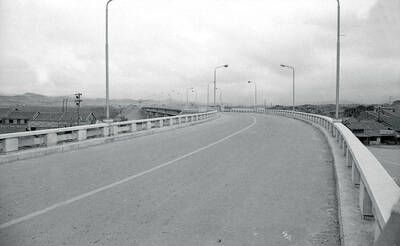
April 29 to May 5 One month before the Taipei-Keelung New Road (北基新路) was set to open, the news that US general Douglas MacArthur had died, reached Taiwan. The military leader saw Taiwan as an “unsinkable aircraft carrier” that was of huge strategic value to the US. He’d been a proponent of keeping it out of Chinese Communist Party (CCP) hands. Coupled with the fact that the US had funded more than 50 percent of the road’s construction costs, the authorities at the last minute renamed it the MacArthur Thruway (麥帥公路) for his “great contributions to the free world and deep
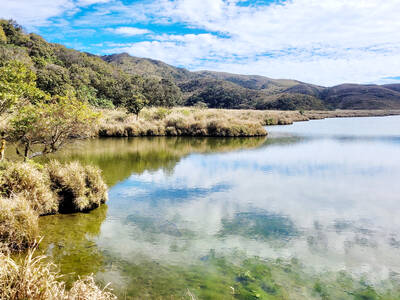
Years ago, I was thrilled when I came across a map online showing a fun weekend excursion: a long motorcycle ride into the mountains of Pingtung County (屏東) going almost up to the border with Taitung County (台東), followed by a short hike up to a mountain lake with the mysterious name of “Small Ghost Lake” (小鬼湖). I shared it with a more experienced hiking friend who then proceeded to laugh. Apparently, this road had been taken out by landslides long before and was never going to be fixed. Reaching the lake this way — or any way that would


 RSS
RSS