


All Star
Various
Rock
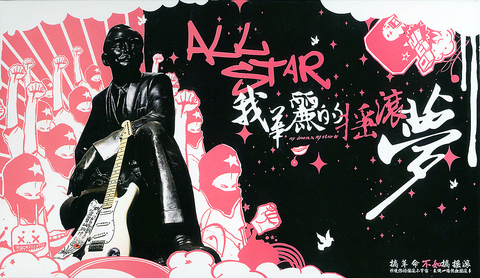
Known for its neatly packaged mainstream Mando-pop artists rather than for promoting self-styled indie/alternative acts, Taiwan's Rock Records recently went against the grain and released an interesting double CD compilation entitled All Star (
Featuring 18 tunes by nine acts of varying styles, influences and musical directions, All Star is an album of contrasts from the get-go. Sure, some of the tunes could do with a bit of ironing out, but for the most part Rock's foray into the alternative scene comes up trumps.
The album takes listeners on a hurdy-gurdy ride of musical genres. From bubble gum-pop to pub rock and from funk to punk, All Star has something to suit everybody's musical tastes.
The album gets off to a corking start with a brilliant piece of work by Neon and a 10,000 Maniacs-like brand of contemporary folk-rock entitled No Regrets (
A couple of other bands and tunes of note include Land of Mess (
Along with the predominantly indie/alternative artists, All Star also features a couple of tunes by popular Mando-pub rock star Bobby Chen (

Final Fantasy
Energy

Universal
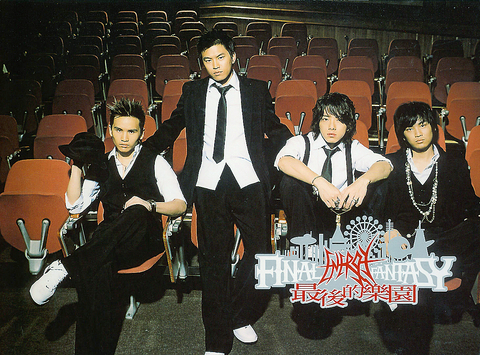
Released two weeks ago, Final Fantasy (
The boys from Energy may be musically versatile, but rumor has it that yet another lineup is on the cards even before the act has had an opportunity to take the current album on the road. Founding member A-Di (
Like the group's previous releases, Final Fantasy is packed with tunes that range in style from hip-hop to the melancholy. There's no real winner as far as picking a best of, but some of the more enjoyable and together tunes include the soul-like Cowboy, the pseudo-nu-metal/hip-hop Heaven and Earth (
Of course, being what it is, the album has moments when you cringe and are forced to wonder just what the hell is going on. Numbers like the truly awful cover version of the Sister Sledge hit We are Family and the easily forgettable pop tune Holiday are two of the worst.
The bottom line with Final Fantasy is, that if you enjoy well produced, inane Mando-pop/hip-hop acts that can sing and dance, then at this juncture in time Energy is the best Taiwan has to offer.
J-Game
Jolin Tsai (
Sony
While it's easy to trash Jolin Tsai (
OK, her performance in front of 30,000 screaming fans in Taipei last year was questionable, as was her relationship with Jay Chou (
She constantly releases more albums per year than all of Taiwan's other leading female artists. Last year Tsai released two albums to A-Mei's (阿妹) one and she outlasted her more mature rivals in all of the nation's top-10 album charts. Her latest release, J-Game (野蠻遊戲) is no exception. The album has already taken the music charts by storm and is sitting at the number one spot.
This time around Tsai has called on the talents of Wang Lee-hom (
reasons.
The material on J-Game is an eclectic mix of hip-hop, disco, or "J-isco" as it's being marketed by her label. There are Mando-pop standards, orchestrated love ballads and some awkward moments when it appears the record producers didn't know what direction to take.
One of the few tunes to really stand out is one of the later. The album's title track is a bouncy affair that sees Tsai using her limited vocal prowess to create a jerky pop/dance number that hums along at a steady rate over computer generated background music. It's not great, but it certainly beats the rocks off many of her other more forgettable tunes.
Exclusive Code
Yida
Sony
When he's not writing his own material, Yida Huang (
Quite how he managed to sell 100,000 copies of his self-titled debut from last year is anyone's guess. But then, hey, when you've allied yourself with such Mando/Canto-pop heavyweights such as Karen Mok (
Yida latest album, Exclusive Code (
This is not to say the actual compositions are bad, as the album is well produced and the numbers are tight and fluid. It's simply that after a very short while they all sound the same. There's little depth and even less in the way of creativity to be found in all bar one of the album's tunes.
The album's sole saving grace is the title track, which is a simplistic piece of pop oriented folk that boasts a pretty catchy chorus. Sadly the tune is the best of a bad bunch and, while we have to wait an entire year before the next Golden Melody Awards come around, this reviewer doesn't expect to see Yida's name anywhere among the
nominations.

After Jurassic Park premiered in 1993, people began to ask if scientists could really bring long-lost species back from extinction, just like in the hit movie. The idea has triggered “de-extinction” debates in several countries, including Taiwan, where the focus has been on the Formosan clouded leopard (designated after 1917 as Neofelis nebulosa brachyura). National Taiwan Museum’s (NTM) Web site describes the Formosan clouded leopard as “a subspecies endemic to Taiwan…it reaches a body length of 0.6m to 1.2m and tail length of 0.7m to 0.9m and weighs between 15kg and 30kg. It is entirely covered with beautiful cloud-like spots

Just after 6am, I walked up to the ticket gate at Taipei Main Station and entered the Taiwan Railway platform without scanning any ticket; instead, I flashed the Sanrio Fun Rail pass on my phone to the gate worker and was admitted. I found my train and prepared to board. My destination? This very same station. I was embarking on a 13-hour journey on one of two round-the-island trains operated by ezTravel. They run each day, one counterclockwise around the island and one clockwise. They differ in a number of ways from an ordinary Taiwan Railway train and can make for
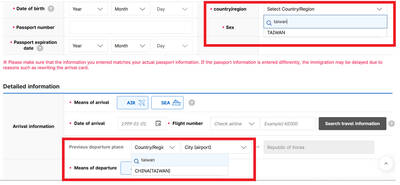
Jason Han says that the e-arrival card spat between South Korea and Taiwan shows that Seoul is signaling adherence to its “one-China” policy, while Taiwan’s response reflects a reciprocal approach. “Attempts to alter the diplomatic status quo often lead to tit-for-tat responses,” the analyst on international affairs tells the Taipei Times, adding that Taiwan may become more cautious in its dealings with South Korea going forward. Taipei has called on Seoul to correct its electronic entry system, which currently lists Taiwan as “China (Taiwan),” warning that reciprocal measures may follow if the wording is not changed before March 31. As of yesterday,
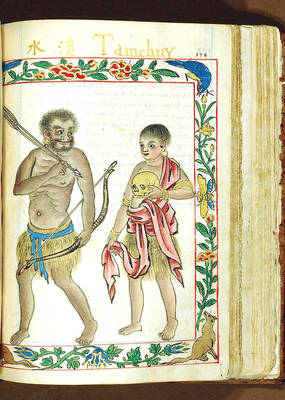
The Portuguese never established a presence on Taiwan, but they must have traded with the indigenous people because later traders reported that the locals referred to parts of deer using Portuguese words. What goods might the Portuguese have offered their indigenous trade partners? Among them must have been slaves, for the Portuguese dealt slaves across Asia. Though we often speak of “Portuguese” ships, imagining them as picturesque vessels manned by pointy-bearded Iberians, in Asia Portuguese shipping between local destinations was crewed by Asian seamen, with a handful of white or Eurasian officers. “Even the great carracks of 1,000-2,000 tons which plied


 RSS
RSS