


Picasso's paintings have captured the imagination of art lovers the world over but they remain a mystery to many in China, as visitors at an exhibition of his lesser-known works here attest.
Beijing has a lively art scene and its residents pride themselves as the most culturally informed in the country.
But visitors said even they were mystified by the Spanish master's lesser-known collection -- mostly etchings and engravings that are illustrations in books of European classics.
"I don't really understand his works, they are relatively abstract. I think this is because I know too little about his culture and background," said 19-year-old Gong Simiao, an engineering student.
The fame of Picasso has attracted some 100,000 visitors to the exhibition in Beijing but many admitted they know little about his artistic background and that has prevented them from understanding his work.
"He lived in a different era and culture and I have no knowledge of these stories so it's difficult to invoke a response in me," said Sun Miao, 23, who works for a logistics company.
Others said their first sighting of the original works of one of the most famous artists in the world was nonetheless an eye-opening experience.
"I've not seen anything quite like this before," said student Niu Liyun, 20, who was admiring the simple lines and curves of Picasso's engravings in Prosper Mirimie's classic, Carmen, published by La Bibliothhque Francaise in 1949.
"They are very vivid and expressive. I especially like the depiction of the facial expressions," she said.
Young people in China, even those who pride themselves as patriots, are curious about and embrace everything Western from Hollywood blockbusters and computer games to art.
"I've always wanted to know more about Western culture, especially in the art field," Gong said.
"I think it's a good thing that these paintings have come to China because young people have so little understanding, and they don't really know what Western culture is really like," she said.
The collection features other works including Le Tricorne (The Three-Cornered Hat) -- Picasso's design of sets and costumes for the 1919 Ballets Russes production of the ballet La Tauromaquia (The Bullfighter) -- and 26 aquatint etchings illustrating the art of bullfighting completed in 1957.
Some visitors expressed disappointment that what was touted as Picasso's largest exhibition in Asia displayed none of his more colorful and famed masterpieces such as Les Demoiselles d'Avignon.
"This is not his main collection, I'm a bit disappointed," said Liu Xiaoxiao, a 33-year-old civil servant.
Curator Zeng Yi, the organizer of the exhibition, said exorbitant insurance and staging costs has snuffed out any idea of bringing Picasso's best known works to China.
The staging of Picasso's 10m by 16m Parade -- his largest canvas work completed in 1917 -- in Hong Kong last year cost over US$1.2 million, excluding insurance fees.
Even so, Zeng said he hoped these lesser-known impressionist works could inspire a spirit of innovation and creativity among Chinese art lovers and professionals.
"Through this exhibition I hope more people will understand more about Picasso's personality and his thinking," he said.
The curator said he hoped Chinese artists would dare to do what Picasso did -- to push beyond traditional artistic limits and to experiment with unusual and avant-garde ideas.
"Most Chinese artists focus too much on traditional Chinese paintings, while this is good ... they never try to go one step beyond. They are always imitating other people's styles but art should be about one's own expression and thinking," said Zeng.
But some visitors found Picasso's erotic depiction of women's bodies in his 1968 illustrations for Fernando de Roja's 1499 novel La Cilestine too radical.
"Chinese people are not so expressive about bodies and desire, they don't really accept this side of modern art," said Liu.
Even so, the master's works seem to have the power to push aside cultural differences to reach the hearts of the less-sophisticated ordinary people.
Ling Chunliao, 74, a retired worker, said he came to spend his day at the art gallery with no specific aim.
"Picasso? I don't know who he is. I don't know where he is from," said the old man, sporting a blue Mao jacket and hat -- an increasingly rare sight in the Chinese capital nowadays.
Asked what he thought of the exhibition, he said: "It's quite nice I suppose. I like the bullfighting pictures, now I know more about bullfighting, my heart is somewhat fulfilled."
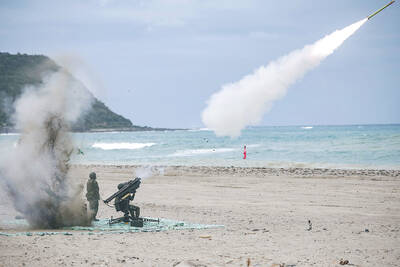
In late October of 1873 the government of Japan decided against sending a military expedition to Korea to force that nation to open trade relations. Across the government supporters of the expedition resigned immediately. The spectacle of revolt by disaffected samurai began to loom over Japanese politics. In January of 1874 disaffected samurai attacked a senior minister in Tokyo. A month later, a group of pro-Korea expedition and anti-foreign elements from Saga prefecture in Kyushu revolted, driven in part by high food prices stemming from poor harvests. Their leader, according to Edward Drea’s classic Japan’s Imperial Army, was a samurai

The following three paragraphs are just some of what the local Chinese-language press is reporting on breathlessly and following every twist and turn with the eagerness of a soap opera fan. For many English-language readers, it probably comes across as incomprehensibly opaque, so bear with me briefly dear reader: To the surprise of many, former pop singer and Democratic Progressive Party (DPP) ex-lawmaker Yu Tien (余天) of the Taiwan Normal Country Promotion Association (TNCPA) at the last minute dropped out of the running for committee chair of the DPP’s New Taipei City chapter, paving the way for DPP legislator Su
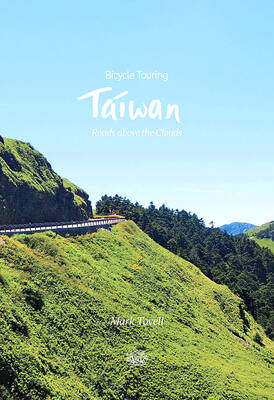
It’s hard to know where to begin with Mark Tovell’s Taiwan: Roads Above the Clouds. Having published a travelogue myself, as well as having contributed to several guidebooks, at first glance Tovell’s book appears to inhabit a middle ground — the kind of hard-to-sell nowheresville publishers detest. Leaf through the pages and you’ll find them suffuse with the purple prose best associated with travel literature: “When the sun is low on a warm, clear morning, and with the heat already rising, we stand at the riverside bike path leading south from Sanxia’s old cobble streets.” Hardly the stuff of your
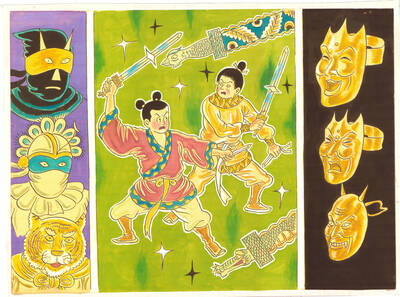
April 22 to April 28 The true identity of the mastermind behind the Demon Gang (魔鬼黨) was undoubtedly on the minds of countless schoolchildren in late 1958. In the days leading up to the big reveal, more than 10,000 guesses were sent to Ta Hwa Publishing Co (大華文化社) for a chance to win prizes. The smash success of the comic series Great Battle Against the Demon Gang (大戰魔鬼黨) came as a surprise to author Yeh Hung-chia (葉宏甲), who had long given up on his dream after being jailed for 10 months in 1947 over political cartoons. Protagonist


 RSS
RSS