


One school night this month I sidled up to Alexander, my 15-year-old son, and stroked his cheek in a manner I hoped would seem casual. Alex knew better, sensing by my touch, which lingered just a moment too long, that I was sneaking a touch of the stubble that had begun to sprout near his ears.
A year ago he would have ignored this intrusion and returned my gesture with a squeeze. But now he recoiled, retreating stormily to his computer screen. That, and a peevish roll of his eyes, told me more forcefully than words, Mom, you are so busted!
I had committed the ultimate folly: invading my teenager's personal space. "The average teenager has pretty strong feelings about his privacy," Lara Fox, a recent young acquaintance, told me with an assurance that brooked no debate. Her friend Hilary Frankel chimed in: "What Alex is saying is: `This is my body changing. It's not yours."' Intruding, however discreetly, risked making him feel babied "at a time when feeling like an adult is very important to him," she added.

PHOTO: NY TIMES
OK, score one for the two of you. These young women, after all, are experts. Frankel and Fox, both 17, are the authors of Breaking the Code (New American Library), a new book that seeks to bridge the generational divide between parents and adolescents. It is being promoted by its publisher as the first self-help guide by teenagers for their parents, a kind of "Kids Are From Mars, Parents Are From Venus" that demystifies the language and actions of teenagers.
Last week, Frankel, who lives with her parents in Dobbs Ferry, New York, sat fielding questions alongside Fox in the Upper East Side apartment Fox shares with her parents. Fox had kicked off her shoes and propped her feet on a sofa. Frankel sat bolt upright, her composure unshaken by periodic intrusions from Fred the spaniel.
Both girls are seniors at Fieldston, the private school in the Bronx. They began writing more than a year ago after hearing a talk at their school by a psychologist who aimed to help parents make better sense of their children. The girls thought they could do even better. Encouraged by a teacher who put them in touch with a literary agent, they offered themselves as scouts showing the way across the forbidding terrain of the adolescent mind.
Their intention, they tell parents in their introduction, is to provide a "guide to what teens really hear when you speak, and how you can make them hear what you are actually trying to say." Their efforts to explain why an apparently innocuous remark so often elicits a tantrum or worse might be meaningful, Fox suggested in the interview, if the result is "one less week of silent treatment from your teenager."
Writing on consecutive Saturdays from November to June between homework assignments and preparation for their SATs, the girls tackled issues including curfews, money, school pressures, smoking and sibling rivalry.
Neal Marshad, a Web and toy designer and television producer in New York, and the father of a 15-year-old boy, said a book like the one the girls wrote might be useful, to a point. "The writers have not yet raised a child," he said. "It's an experience as different as going out for a walk is from scuba diving, and it changes the way you interpret things."
Personally, I welcomed insights into teenagers from any qualified experts, and that included the authors. The most common missteps in interacting with teenagers, they instructed me, stem from the turf war between parents asserting their right to know what goes on under their roof and teenagers zealously guarding their privacy. When a child is younger, they write, every decision revolves around the parents. But now, as Fox told me, "often your teenager is in this bubble that doesn't include you."
The book is laid out as a series of parent-child dialogues, charged with emotion and followed by alternative scenes meant to prevent family battles and resentments. In one conversation, "Jenna" has finished her homework and is glued to her favorite television show. "You have so much free time," her mother tells her. "It's a shame to waste it watching TV." It's a seemingly neutral observation. But what Jenna hears, according to the young authors, is quite different: "You have no direction in life, and everything you do is a waste of time."
Fox and Frankel acknowledge that they and their peers can be quick to interpret their parents' remarks as dismissive or condescending and respond with a hostility that masks their vulnerability. "What we want above all is your approval," they write. "Don't forget, no matter how much we act as if we don't care what you say, we believe the things you say about us."
In the case of Jenna and her mother, Fox and Frankel suggest alternative responses less likely to be misconstrued. The mother might have gotten her point across, they say, if she had coolly said that although it's fine to watch television and "veg out" to take a break from school pressures, Jenna might feel more relaxed and fulfilled if she found another enjoyable after-school activity. The secret, the authors point out, is to emphasize an activity as enjoyable rather than productive.

Last week, Viola Zhou published a marvelous deep dive into the culture clash between Taiwanese boss mentality and American labor practices at the Taiwan Semiconductor (TSMC) plant in Arizona in Rest of World. “The American engineers complained of rigid, counterproductive hierarchies at the company,” while the Taiwanese said American workers aren’t dedicated. The article is a delight, but what it is depicting is the clash between a work culture that offers employee autonomy and at least nods at work-life balance, and one that runs on hierarchical discipline enforced by chickenshit. And it runs on chickenshit because chickenshit is a cultural

My previous column Donovan’s Deep Dives: The powerful political force that vanished from the English press on April 23 began with three paragraphs of what would be to most English-language readers today incomprehensible gibberish, but are very typical descriptions of Democratic Progressive Party (DPP) internal politics in the local Chinese-language press. After a quiet period in the early 2010s, the English press stopped writing about the DPP factions, the factions changed and eventually local English-language journalists could not reintroduce the subject without a long explanation on the context that would not fit easily in a typical news article. That previous
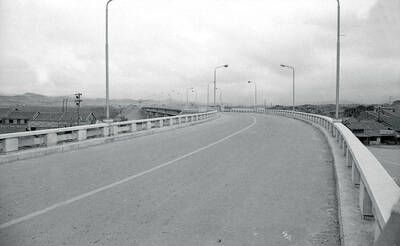
April 29 to May 5 One month before the Taipei-Keelung New Road (北基新路) was set to open, the news that US general Douglas MacArthur had died, reached Taiwan. The military leader saw Taiwan as an “unsinkable aircraft carrier” that was of huge strategic value to the US. He’d been a proponent of keeping it out of Chinese Communist Party (CCP) hands. Coupled with the fact that the US had funded more than 50 percent of the road’s construction costs, the authorities at the last minute renamed it the MacArthur Thruway (麥帥公路) for his “great contributions to the free world and deep

Years ago, I was thrilled when I came across a map online showing a fun weekend excursion: a long motorcycle ride into the mountains of Pingtung County (屏東) going almost up to the border with Taitung County (台東), followed by a short hike up to a mountain lake with the mysterious name of “Small Ghost Lake” (小鬼湖). I shared it with a more experienced hiking friend who then proceeded to laugh. Apparently, this road had been taken out by landslides long before and was never going to be fixed. Reaching the lake this way — or any way that would


 RSS
RSS