


1. BEFORE SUNSET/SIDEWAYS: Superb writing and acting, unobtrusive but expert direction and, above all, unflagging intelligence made these two observant, romantic misadventures the best films of the year. Imagine that working; Hollywood usually doesn't.
2. CONTROL ROOM: In the flood of political documentaries, this was the only one that encouraged us to question messages from all sides, including whichever side we like to believe. ... And, crucially, to suspect parts of "Control Room" itself. Neither Michael Moore nor Bill O'Reilly will ever understand that kind of honesty, the rest of us need to.

PHOTOS COURTESY OF WARNER MOIVES
3. BAD EDUCATION/KINSEY/THE MOTHER: In this red state nightmare trifecta, badly behaving gays, sex researchers with murky motives and a granny who refuses to be a proper bereaved widow powerfully proved that to deny desire is to undervalue one's own, and everybody else's, humanity. And if these ingenious films are any indication, being naughty can also lead to great art.
4. I (HEART) HUCKABEES: The search for spiritual peace in our corrupt modern world is funny, people! Or can be, if it doesn't leave you too traumatized. Just like we all do when we seek to know what it's all about, Davd Russell's one-of-a-kind riff on life's great cosmic joke danced on the edge of profundity and inanity. Only more gracefully.
5. DOGVILLE/THE FIVE OBSTRUCTIONS: Lars von Trier is Europe's most provocative mad movie scientist. These two films -- a three-hour, bare-stage critique of provincialism and power (with Nicole Kidman's best-ever film performance), and a playfully sadistic "making of" documentary like no other -- broke down everything we take for granted at the movies, then built their own unique forms out of the rubble.
6. MILLION DOLLAR BABY: Clint Eastwood delivers another masterpiece. This is not news anymore. Oh, it's a lady boxer movie. Well, that's, uh, unexpected. It also contains Clint's best acting and directing work to date. And it's an unparalleled example of lighting and tonal control. OK, then; media duly alerted.
7. THE BLIND SWORDSMAN (ZATOICHI)/HOUSE OF FLYING DAGGERS/KILL BILL -- VOL. 2: Martial-arts movies got taken in all kinds of imaginative directions this year by Japanese (Takeshi Kitano), Chinese (Zhang Yimou) and American (Quentin Tarantino) directors with limited experience in the genre. It showed, beautifully, in an exhilarating explosion of new ideas and broken tired rules.
8. RAY: Jamie Foxx's channeling of soul legend Charles was nothing short of phenomenal, but the presentation of music, cultural history and the blind genius' understandably darker qualities made for a rocking movie that never missed a high note -- and man, were there plenty of them.
9. GOOD BYE LENIN!/NOTRE MUSIQUE: One thing that we should acknowledge Europeans know: No matter how much the world progresses, man's propensity for self-delusion and violence will always prevent paradise on Earth. Two totally different filmmakers, young German ironist Wolfgang Becker and grizzled French New Waver Jean-Luc Godard, got to the core of this matter with a post-communist family comedy and a hyper-aestheticized philosophical essay. The real connection? Both films still have hope.
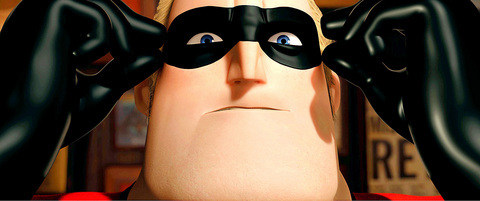
10. THE INCREDIBLES: The first big, computer-animated feature that expressed its director's personal worldview, Brad Bird's superhero satire was also faster, funnier and more visually distinctive than anything the still-young format has seen before. Fight mediocrity, heck yeah!

Taiwan’s English education system is being pulled apart by three opposing forces. Bilingual Nation 2030 pulls students toward English and global communication. Artificial Intelligence (AI) readiness pulls them toward digital judgment, verification and AI-mediated work. But Taiwan’s old exam culture pulls them back toward memorization, grammar drills, timed reading and correct answers. If the education system keeps using old exams to define success, it risks producing graduates who are neither genuinely bilingual nor genuinely AI-ready, but trained for tasks machines can already perform. The first force is Bilingual Nation 2030. Launched in 2018, the policy aimed to “help Taiwan’s workforce connect
It seems every few days one bumps into one of those “real man” comments in which Taiwan is urged to “face reality” or similar, and “make a deal,” with the speaker implying that soon it will be too late. “Deal” advocates always present themselves as having a superior grip on reality, and the manly ability to make the “hard choice.” Their testosterone-laden language often echoes that of Taiwan sellout advocates. Note that such commentary always specifies a process (“make a deal, work with, make progress”), never the end state of what occupation by a violent authoritarian colonialist state will entail. In

There are shadowy cabals plotting to sell out Taiwan to be annexed by China, by invasion if necessary. Fortunately, they are buffoons. In 2019, former Bamboo Union gangster and founder of the China Unification Promotion Party (CUPP), Chang An-le (張安樂, colorfully known as “White Wolf”), led a protest at the Legislative Yuan against comments made by then-premier Su Tseng-chang (蘇貞昌) that in the event of an attack by China, he would never surrender, but would protect the nation by fighting to the end, even if he only had a broom. Chang had party members bring a wooden casket that they

June 1 to June 7 "If all Taiwanese were as afraid of dying as you, then what would happen?” Physician Shih Chiang-nan (施江南) reportedly said this to his wife Chen Chiao-tung (陳焦桐) after she urged him to stop intervening on behalf of Taiwanese soldiers stranded overseas after serving in the Japanese Army during World War II. Shih had clashed with high-ranking officials over the issue, engaged in several heated arguments with Taiwan governor-general Chen Yi (陳儀) and allegedly shouted at general Ko Yuan-fen (柯遠芬), chief of staff of the Taiwan Garrison Command, over


 RSS
RSS