


Opium has always been associated, for better or worse, with China. And almost invariably it's been for the worse. The myth, in both the Christian West and the communist East, has been that this pernicious substance was brought to the Celestial Empire by the perfidious British, forced onto a gullible people, and as a result accelerated the decline of a once-great nation.
This is simply untrue, says Frank Dikotter (supported by his two research assistants) in his controversial new book Narcotic Culture. Opium was consumed at all levels of Chinese society, he argues, both as a highly effective medication and for relaxation and civilized pleasure. The British certainly cornered the trade of importing opium into China in the early 19th century, but they were in no sense imposing a substance they knew to be harmful on a passive market. Not only was opium already well-known and well-loved in China, it was also used throughout Europe in a far stronger form and without any legal controls, as a cure-all and the only reliable pain killer available.
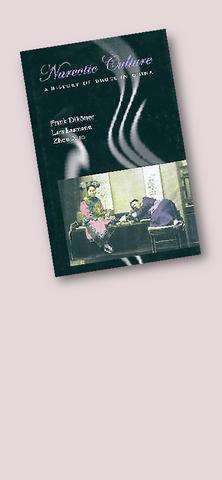
If opium was so harmful to the Chinese, Dikotter asks, why was it so harmless when administered to the English? The reality was, he claims, that towards the end of the Victorian era a movement arose among evangelical Christians in the UK urging the abolition of the opium trade in Asia. The campaign was strongly resisted by the government in London. Eventually,however, its force became overwhelming, so that wherever the Communists extended their control in China they pointed to opium-use and prostitution (another subject for Dikotter, you feel) as the two most evil products of capitalism in its vicious colonial form. A policy of mass executions quickly put a stop to both products. A hostile view of opium had meanwhile come to prevail almost world-wide. (Even so, Hong Kong didn't prohibit its use until 1945, and there were flourishing opium houses in Southeast Asia well into the 1950s.)
This is a brave and powerful book, not least because it questions readings of China's history that up to now have gained almost universal acceptance: The opium trade was a crime as great as slavery, the present trade in cigarettes (typically by American companies operating in Asia) is "a modern opium trade," opium symbolizes every kind of exploitation of poor nations by richer ones. How often have such scenarios been given unquestionable authority?
They're all wrong, says Dikotter. Opium was almost invariably smoked in moderation, and the "opium den" of legend was in reality a neat and well-ordered house offering tea, fine food and a refined and congenial atmosphere. What came in the wake of prohibition when it finally arrived were genuinely harmful intoxicants: heroin, morphine, hard liquor and tobacco.
Defenses of narcotic cultures are not new, but they've typically come from the mouths of enthusiastic users urging their pleasures on the rest of us. Frank Dikotter is not of this company. Instead, he's Professor of the Modern History of China at London University's School of Oriental and African Studies (SOAS) and is a widely admired historian. His special area is China during its Republican era (1911 to 1949), and he's the author of celebrated books on concepts of race, sexual attitudes and the pursuit of eugenics, all in China, plus China's prison system during the Republican period (where he was the first Western researcher to get into selected archives, or indeed to find they were open at all).
In all of these books he has, to some extent or other, upset the apple-cart. The Communists, for instance, have long claimed that Republican China was a mess, and one they subsequently cleaned up. Not so, Dikotter argued. There were many enlightened movements afoot, many attempts to modernize and rationalize, in China in the 1920s and 1930s. It was generally a civilized and enlightened time, and what came after was in almost every way a great deal worse.
Dikotter's analysis will be challenged, nonetheless. It wasn't, for instance, only evangelical Christians in the UK who thought opium was harmful to the Chinese. The government in Beijing thought so too, and from an earlier date, though they were always careful to make a distinction, as Dikotter tells us, between its use for medical purposes and its use -- characteristically when mixed with tobacco -- for pleasure. He also makes much of a distinction between drinking and smoking cultures (in other words West and East) that sounds rather generalized for a scholar who habitually rejects over-arching theories. The text is also quite short for its large subject matter (though there are 100 pages of notes and bibliography). But concision is appropriate to its nature: that of a clarion-call challenging scholars to a debate in an area where, up to now, there has effectively been none.
The wider implications of Dikotter's perspective are immense. The current "war on drugs," for example, attains an entirely new look. It's nothing more than the modern continuation, he argues, of a wrong-headed 19th century assault on the traditional and, in the main, harmless Asian use of narcotics (backed even then by evangelical Christians in the US with astute business motives behind their rhetoric).
Narcotic Culture, then, is a ground-breaking, and indeed astonishing, book. It may not represent a final analysis, but there is more than enough within its pages to support the author's belief, expressed elsewhere, that the best way to win the modern "war on drugs" may well be to stop fighting it forthwith.
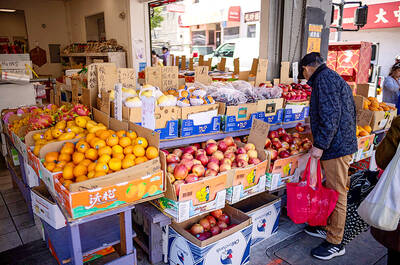
Ajay Verma, a consultant gastroenterologist at Kettering general hospital in Northamptonshire, says our gut is a “complex machine.” “It is constantly providing us with the nutrition we need, initially to grow and develop, and then for us to survive, thrive and repair from injury and illness.” How can we keep it functioning well? Put simply: “Make sure what you put into it is balanced, and that you clear out its waste products adequately,” Verma says. “In a general gastroenterology clinic, the most common conditions we see are irritable bowel syndrome (IBS), gastroesophageal reflux disease, inflammatory bowel disease and constipation,” says Nisha
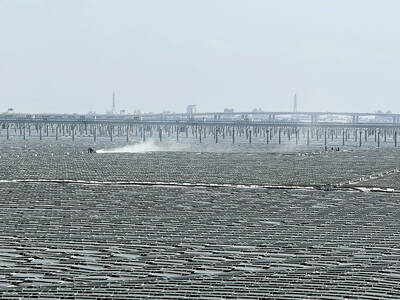
The arithmetic is straightforward and uncomfortable. By the end of 2025, Taiwan had committed itself to a 50-30-20 electricity mix — half natural gas, 30 per cent coal, 20 per cent renewables. The Ministry of Economic Affairs’s (MOEA) own monthly energy reports tell a different story. Natural gas reached 47.8 per cent of generation last year. Coal stood at 35.4 per cent, comfortably above its target ceiling. Renewables came in at 13.1 per cent, well short of the 20 per cent Taipei had pledged a decade earlier. Installed renewable capacity reached roughly half of the 12 gigawatts (GW) the government
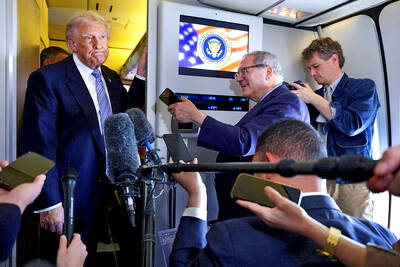
Last week US President Donald Trump was asked by a reporter whether he would speak on the phone to the President of Taiwan. “l’ll speak to him. I speak to everybody. We have that situation very well in hand,” Trump said. This marked the second time in a couple of weeks he had said he would talk to the President of Taiwan. In 2016 he famously took a call from then-president Tsai Ing-wen (蔡英文), when he was president-elect. Despite warnings that the apocalypse was nigh because of a phone call, the world quickly forgot about the conversation between two democratically-elected presidents.
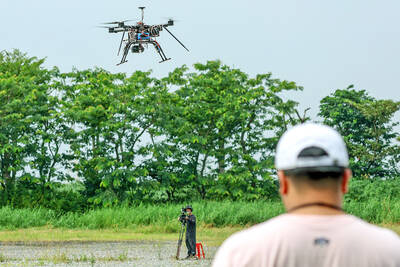
Taiwan’s drone exports are taking off, fuelled by the war in Ukraine, as Taiwanese companies seek a stake in the fast-growing global market for unmanned aerial vehicles (UAV). Low-cost drones used for reconnaissance and strikes are in high demand as governments around the world boost defense spending in the face of intensifying conflicts. A relative new player in the increasingly competitive industry, Taiwan’s pitch is to be an “Asian hub” for the production of UAVs and components free of Chinese materials, or “non-red.” That means its UAVs can be up to three times more expensive than their Chinese competitors, like the world’s biggest


 RSS
RSS