


`Hoping for Hoping' might seem a hopeless name for an organization until you learn that the second "hoping" (和平) is actually the Romanization of "peace" in Chinese and that the group is one of the founding members of Taiwan's nascent peace movement.
Their hope is that tomorrow, all peaceable-minded people will turn out for a gathering in Taichung complete with food, drinks and music from 15 local bands. Admission is NT$300 and all proceeds go to local charities.
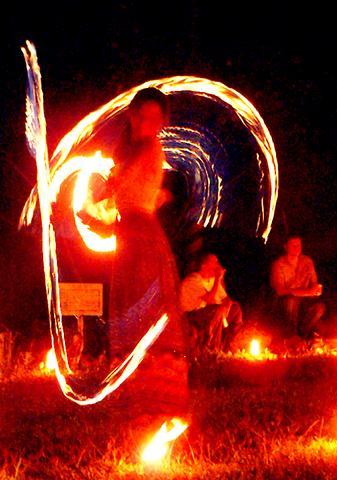
PHOTO COURTESY OF HOPING FOR HOPING
Jindowin, .22, Dakanow, Milk, Dahai, Anglers, Mandala, Schlumpy, The Deported, Chicken Rice, Boosie Chillin, Rocket Girl!, Robin Dale, Wise Maneouvers, and Blacksummerdaycamp will all take the stage of the Night Sky Outdoor BBQ starting at 2pm with an after party featuring DJs from Chi Funk and the rhymes of Elementality.
"Peace," says organizer Dave Nichols. Hoping for Hoping was founded last year by a group consisting mostly of foreign residents of Taiwan opposed to the US' invasion of Iraq. They met with several like-minded locals and drew some 300 people to a protest rally on the steps of the American Institute in Taiwan last February.
Hsia Chu-joe (夏鑄九), a professor at National Taiwan University and long-time political activist, was among them. He offered a history lesson on Taiwan's peace movement.
"After the lifting of martial law, besides the movement for democracy, there were others, such as the labor movement, the farmers' movement, student movement, womens' movement, gay and lesbian movement and the environmental movement, including people opposed to nuclear power," Hsia said. "We were called the pian di kai hua (
Following that rally, Hoping for Hoping held their first peace rally in Taoyuan County, with many of the same musical acts that will be performing at this year's event.
Night Sky BBQ is located at 199, Chung Gang Road, Taichung (
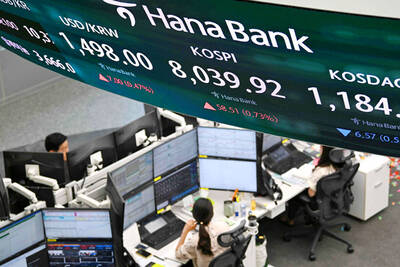
Taiwan’s overtaking of South Korea in GDP per capita is not a temporary anomaly, but the result of deeper structural problems in the South Korean economy says Chang Young-chul, the former CEO of Korea Asset Management Corp. Chang says that while it reflects Taiwan’s own gains, it also highlights weakening growth momentum in South Korea. As design and foundry capabilities become more important in the AI era, Seoul risks losing competitiveness if it relies too heavily on memory chips. IMF forecasts showing Taiwan widening its lead over South Korea have fueled debate in Seoul over memory chip dependence, industrial policy and
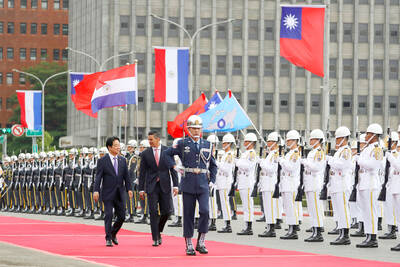
“China wants to unify with Taiwan at the lowest possible cost, and it currently believes that unification will become easier and less costly as time passes,” wrote Amanda Hsiao (蕭嫣然) and Bonnie Glaser in Foreign Affairs (“Why China Waits”) this month, describing how the People’s Republic of China (PRC) is playing the long game in its quest to seize Taiwan. This has been a favorite claim of many writers over the years, easy to argue because it is so trite. Very obviously, if the PRC isn’t attacking Taiwan, it is waiting. But for what? Hsiao and Glaser’s main point is trivial,
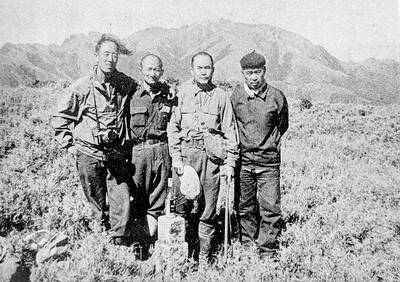
May 18 to May 24 Gathered on Yangtou Mountain (羊頭山) on Dec. 5, 1972, Taiwan’s hiking enthusiasts formally declared the formation of the “100 Peaks Club” (百岳俱樂部) and unveiled the final list of mountains. Famed mountaineer Lin Wen-an (林文安) led this effort for the Chinese Alpine Association (中華山岳協會). Working with other experienced climbers, he chose 100 peaks above 10,000 feet (3,048m) that featured triangulation points and varied in difficulty and character. The list sparked an alpine hiking craze, inspiring many to take up mountaineering and competing to “conquer” the summits. A common misconception is that the 100 Peaks represent Taiwan’s 100 tallest
The Chinese Nationalist Party (KMT), alongside their smaller allies the Taiwan People’s Party (TPP), are often accused of acting on behalf of the Chinese Communist Party (CCP). Some go so far as to call them “traitors.” It is not hard to see why. They regularly pass legislation to stymie the normal functioning of the ruling Democratic Progressive Party’s (DPP) administration, and they have yet to pass this year’s annual budget. They slashed key elements of the government’s proposed NT$1.25 trillion (US$40 billion) special military budget, and in the smaller NT$780 billion package they did pass, it is riddled with provisions that


 RSS
RSS