


Long, disheveled hair and a green dead-pan face, with a long, white robe, standing straight and stiff. This is the classic image of ghosts in Chinese-language films. Different from Western ghost movies, Chinese ghosts are not necessarily scary or evil. They are therefore not categorized as part of the genre of horror films.
The Chinese Phantom Film Festival (
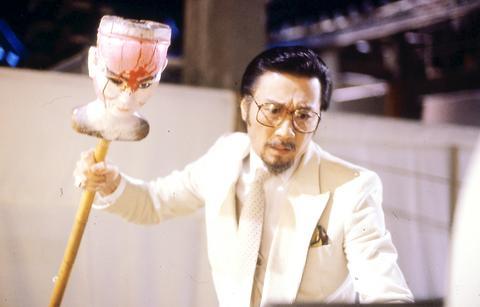
PHOTO COURTESY OF SPOT
As a part of the government-sponsored POP Cinema (
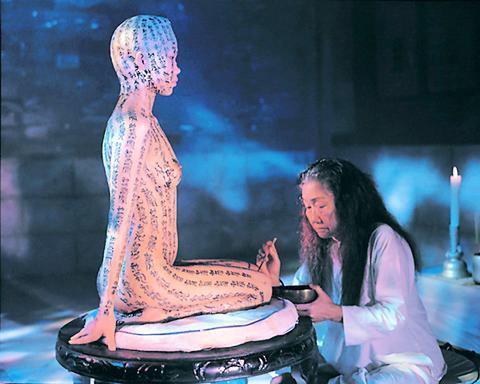
Long before Japanese horror film Ring and its Hollywood remake became hit movies, there have been waves of Chinese-ghost films pulling audiences into
cinemas.
They include Tsui Hark's (
Adapted from the classic novel Liao Chai's Collection of Ghost Stories (
The story was remade into the 1987 hit movie A Chinese Ghost Story, produced by Tsui Hark and starring Leslie Cheung (
At the film festival there will be four screen versions of the same story: The 1960 original, Tsui Hark's 1987 hit and the animated version. There will also be Taiwanese director Yao Feng-pan's (
In the 1980s, kung fu films in Hong Kong declined and the new trend was action and suspense movies, with zombies, or Chinese vampires.
A Chinese vampire is more often than not, more amusing than scary. Most of them wear traditional Chinese outfits such as long gowns or cheongsams and some have funny round hats. Apart from stiff bodies and black kohl around the eyes, these vampires usually have two red, round circles on their cheeks.
In the 10 hit vampire films made in the 1980s, there were a series of weapons to subdue the vampires, such as fire, black sticky rice, Taoist symbols, monk's gowns, peach wood swords, ancestral tablets, even the urine of virgin boys.
For those who missed the recent hit movie Three (
This film has been chosen as the opening film of the festival. For more program information or for English subtitle information, go to www.spot.com.tw.

Last week, Viola Zhou published a marvelous deep dive into the culture clash between Taiwanese boss mentality and American labor practices at the Taiwan Semiconductor (TSMC) plant in Arizona in Rest of World. “The American engineers complained of rigid, counterproductive hierarchies at the company,” while the Taiwanese said American workers aren’t dedicated. The article is a delight, but what it is depicting is the clash between a work culture that offers employee autonomy and at least nods at work-life balance, and one that runs on hierarchical discipline enforced by chickenshit. And it runs on chickenshit because chickenshit is a cultural

My previous column Donovan’s Deep Dives: The powerful political force that vanished from the English press on April 23 began with three paragraphs of what would be to most English-language readers today incomprehensible gibberish, but are very typical descriptions of Democratic Progressive Party (DPP) internal politics in the local Chinese-language press. After a quiet period in the early 2010s, the English press stopped writing about the DPP factions, the factions changed and eventually local English-language journalists could not reintroduce the subject without a long explanation on the context that would not fit easily in a typical news article. That previous
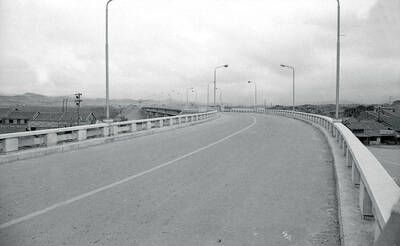
April 29 to May 5 One month before the Taipei-Keelung New Road (北基新路) was set to open, the news that US general Douglas MacArthur had died, reached Taiwan. The military leader saw Taiwan as an “unsinkable aircraft carrier” that was of huge strategic value to the US. He’d been a proponent of keeping it out of Chinese Communist Party (CCP) hands. Coupled with the fact that the US had funded more than 50 percent of the road’s construction costs, the authorities at the last minute renamed it the MacArthur Thruway (麥帥公路) for his “great contributions to the free world and deep
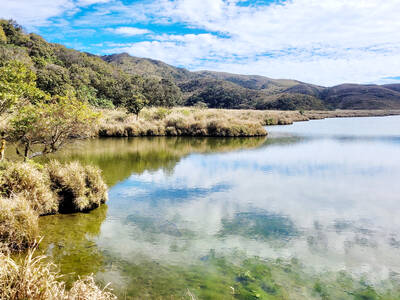
Years ago, I was thrilled when I came across a map online showing a fun weekend excursion: a long motorcycle ride into the mountains of Pingtung County (屏東) going almost up to the border with Taitung County (台東), followed by a short hike up to a mountain lake with the mysterious name of “Small Ghost Lake” (小鬼湖). I shared it with a more experienced hiking friend who then proceeded to laugh. Apparently, this road had been taken out by landslides long before and was never going to be fixed. Reaching the lake this way — or any way that would


 RSS
RSS