


The Stepford Wives, Frank Oz's madcap re-engineering of a dusty, second-rate thriller from 1975, opens with a montage of happy housewives and their household gadgets. Making fun of images like these -- smiling women in Eisenhower-era perms and evening gowns swooning over their automated kitchen cabinets -- has become such a tiresome pop-culture staple that you may wonder if the movie has anything new to say about feminism, suburbia or consumer society. The answer is not really, but it does manage to fire off a handful of decent jokes and a few sneaky insights before losing its nerve and collapsing into incoherence.
The source for both this film and the earlier one, which starred Katharine Ross and Paula Prentiss, is a slim, efficient novel by Ira Levin that uses the conventions of suspense fiction as a vehicle for allegory and social satire. Levin's Stepford, Connecticut, was a pleasant middle-class suburb whose menfolk, threatened by the rather mild feminism of their wives, killed them off and replaced them with subservient, sexually compliant robots.
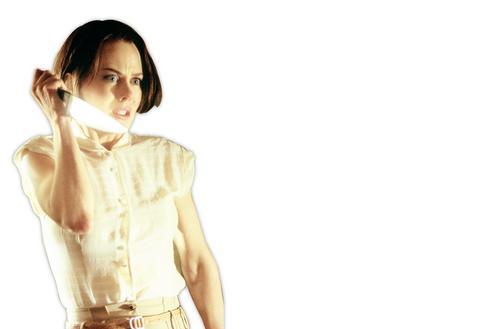
The first Stepford Wives exploited the horror-movie implications of this premise, rather than its comic possibilities. Oz and Paul Rudnick, the screenwriter, swerve maniacally in the opposite direction, whipping up a gaudy, noisy farce that perpetually threatens to spin out of control and eventually does. The music, by David Arnold, is full of overdone, campy melodrama, like an Elmer Bernstein score for a Three Stooges picture. The performances -- in particular that of Glenn Close as Stepford's robot matriarch -- are both sly and overstated, giving Rudnick's sneaky one-liners a chance to be heard amid the cacophonous silliness.
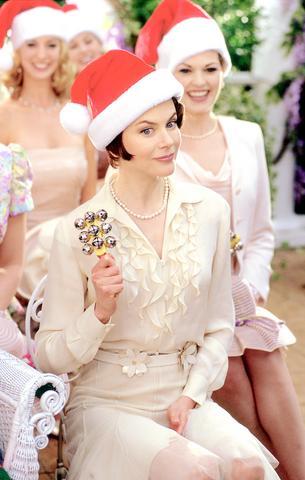
PHOTO COURTESY OF UNIVERSITY
Needless to say, a lot has changed in 30 years: now, Stepford is a gated subdivision full of late-model SUVs and sprawling stone McMansions, where a gay couple is welcomed and where everyone is white. (In Levin's novel a black family had just come to town, but I guess they've moved away.) Sexual politics have also come a long way. Joanna Eberhart, who dabbled in photography when she was played by Ross, is now, in the person of Nicole Kidman, the ruthless, ambitious head of a television network.
Fired in the wake of a reality-show disaster, Joanna has a quick nervous breakdown and is then spirited off to Stepford by her nebbishy, beta-male husband, Walter (Matthew Broderick).
In the earlier Stepford, the flight from New York was implicitly motivated by fear of urban chaos and social collapse. This time, though, the Eberharts are fleeing from the soul-emptying consequences of their own ambition, seeking out the cozy simplicity of an affluent world in which no one seems to have, or to need, a job. The husbands, a collection of lumpy, khaki-wearing dweebs (with the exception of Christopher Walken, their guru of old-school masculinity), congregate in the clubby headquarters of the Men's Association, which is also where their robot workshop is housed. The wives, meanwhile, cheerfully perform their household and bedroom duties, steered by personalized brass remote-control devices wielded by their owners -- 'er, mates.
Though Joanna is repelled by the empty-headed obedience of the Stepford wives, she also wants to repair the damage that her career has inflicted on her husband and children. This damage is mentioned rather than shown, and the repair work is highly theoretical, since children in Stepford are only slightly more visible than black people.
There is, however, a schticky pair of token Jews, played by Jon Lovitz and Bette Midler, whose character, until she is robotized, is a slovenly, loud-mouthed novelist and one of Joanna's few friends.
Rudnick is best at forging tiny verbal darts that tickle more than they sting. (Late in the game, Joanna discovers that one of the robot-designers once worked for AOL. "Is that why the women are so slow?" she asks.) Occasionally, as in the film's clever, cautionary view of gay marriage, you might intuit a crackle of genuine satire, but for the most part The Stepford Wives is as cheerful and inoffensive as its title characters. Every time you think it might be venturing toward social criticism, it pulls back into homily and reassurance, refusing to tell anyone in the audience anything she -- or he -- might not want to hear.
There are, of course, some real tensions and resentments embedded in this story -- the hard choices facing ambitious women, the immaturity and misogyny that surge through so much popular culture, a rampaging materialism that makes the Stepford of 1975 look like a kibbutz -- but the movie, especially in its disastrous and nonsensical final act, works as hard as it can to suppress them.
The Stepford Wives is, in other words, the opposite of satire. It is intended not to provoke but to soothe, to tell us, once again, that we can have it all, that nobody's perfect, and that if there is trouble in the world, or in our own homes, it's nothing we need to worry our pretty little heads about.

In late October of 1873 the government of Japan decided against sending a military expedition to Korea to force that nation to open trade relations. Across the government supporters of the expedition resigned immediately. The spectacle of revolt by disaffected samurai began to loom over Japanese politics. In January of 1874 disaffected samurai attacked a senior minister in Tokyo. A month later, a group of pro-Korea expedition and anti-foreign elements from Saga prefecture in Kyushu revolted, driven in part by high food prices stemming from poor harvests. Their leader, according to Edward Drea’s classic Japan’s Imperial Army, was a samurai

The following three paragraphs are just some of what the local Chinese-language press is reporting on breathlessly and following every twist and turn with the eagerness of a soap opera fan. For many English-language readers, it probably comes across as incomprehensibly opaque, so bear with me briefly dear reader: To the surprise of many, former pop singer and Democratic Progressive Party (DPP) ex-lawmaker Yu Tien (余天) of the Taiwan Normal Country Promotion Association (TNCPA) at the last minute dropped out of the running for committee chair of the DPP’s New Taipei City chapter, paving the way for DPP legislator Su

It’s hard to know where to begin with Mark Tovell’s Taiwan: Roads Above the Clouds. Having published a travelogue myself, as well as having contributed to several guidebooks, at first glance Tovell’s book appears to inhabit a middle ground — the kind of hard-to-sell nowheresville publishers detest. Leaf through the pages and you’ll find them suffuse with the purple prose best associated with travel literature: “When the sun is low on a warm, clear morning, and with the heat already rising, we stand at the riverside bike path leading south from Sanxia’s old cobble streets.” Hardly the stuff of your

April 22 to April 28 The true identity of the mastermind behind the Demon Gang (魔鬼黨) was undoubtedly on the minds of countless schoolchildren in late 1958. In the days leading up to the big reveal, more than 10,000 guesses were sent to Ta Hwa Publishing Co (大華文化社) for a chance to win prizes. The smash success of the comic series Great Battle Against the Demon Gang (大戰魔鬼黨) came as a surprise to author Yeh Hung-chia (葉宏甲), who had long given up on his dream after being jailed for 10 months in 1947 over political cartoons. Protagonist


 RSS
RSS