


Chinese academic Yuan Hongbing can still vividly recall a scene he says he witnessed more than 30 years ago -- a Mongol woman bound at her hands and feet, hung from a tree over a burning cauldron and roasted alive.
She was suspected of being a member of a political party trying to separate the Inner Mongolia region from China.
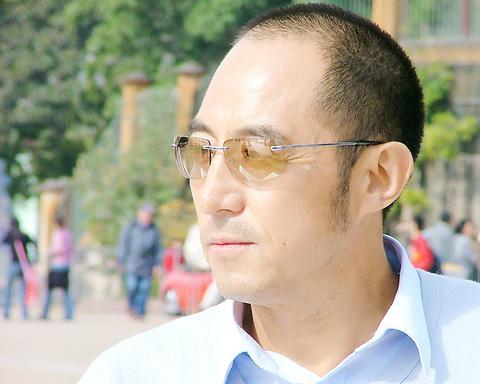
PHOTO: AFP
Yuan, who fled to Sydney in July seeking political asylum, plans to include that account and many others of human rights abuses over the past decades in four books he fled China to publish.
"In order to preserve my writing as a record to the crime and cruelties committed by the Chinese Communist Party against people and humanity, I had no choice but to escape from the clutches of the Communist regime," Yuan said in a statement after his defection.
The law professor's plans could cause embarrassment for the Communist Party by calling attention to abuses that occurred during the sensitive period of the Cultural Revolution (1966 to 1976), namely mistreatment of Mongolians and Tibetans.
Yuan's case, which dissidents say highlights scholars' continuing difficulties in pushing the government's limits on academic freedom, also poses problems for the Australian government which is currently trying to negotiate a free-trade deal with China.
Australian Foreign Minister Alexander Downer is due in China this week.
In 1994 Yuan, a Beijing University law school professor, was jailed for promoting rule of law and democracy and charged with "attempting to overthrow the socialist system."
He was released after six months on the condition he stop writing, never set foot in Beijing despite his wife and daughter living there, and spend his life in remote Guizhou province.
For the past decade, Yuan, 52, toed the Party line and eventually won enough trust to be appointed dean of the Guizhou Normal University Law School.
"They gave me some positions. The goal was the same, to give up wishes of freedom and be their spiritual slave," Yuan said.
But at night Yuan worked on his books. He gave his notes to a friend, Zhao Jing, who secretly transcribed and copied them onto CDs which were smuggled out of China.
Despite his relatively high position, Yuan's home was searched; he found out by gluing a strand of hair between his door and door frame each day. His phone was tapped and spies were planted among his students.
In June, he learned authorities knew about his writings and were collecting evidence to imprison him. He seized the chance to escape when his university allowed him to go on a tour to Australia.
He and Zhao slipped away at Sydney airport on July 21.
The law professor said it was worth leaving his family to be able to publish his books, which touch on issues not mentioned in China's state-controlled media or history books.
In one volume Yuan documented through friends and interviews a massive campaign during the Cultural Revolution in which tens of thousands of Mongol minorities suspected of seeking independence were locked up in detention camps.
An estimated 10,000 died, some by committing suicide, and many others were crippled by punishment beatings and torture, Yuan said.
"It was completely unjust. It was mainly because they didn't trust Mongolians," he said by phone from Sydney, where he and Zhao were being sheltered by dissidents.
"I wrote this novel Freedom in Sunset not to simply record what happened, but to reflect on Mongolian people's beauty, spirit of freedom and the suffering they endured."
Chinese scholars stay away from research into the Cultural Revolution, a period of political chaos whipped up by late leader Mao Zedong (毛澤東) which led to widespread prosecution and violence.
Overseas Chinese historians, however, have written about the campaign against the Mongolians.
Some said 16,222 people were killed and 87,180 people crippled by beatings or torture during the 1967 campaign, with estimates of up to 346,000 Mongolians persecuted.
In his book on Tibetans, Golden Holy Mountain, Yuan depicts how the government forced lamas and nuns to have sex and Tibetans to abandon their ancient tradition of sky burial, insisting on ground burial which is tantamount to sending the dead to hell.
Yuan said he based the book on internal government documents he obtained and confirmed through interviews with lamas, students, herders as well as government officials.
"I want to tell everybody they need to protect Tibetan Buddhism's spirituality," Yuan said. "This type of lifestyle is under threat right now."
He is now anxiously awaiting the Australian government's decision on his asylum plea after Zhao's case was recently rejected. She is appealing.
China has said Yuan's asylum claims were "completely unreasonable" and demanded Australia treat him as an illegal immigrant.
Australian officials in Beijing did not respond to requests for comment.
In recent years, many scholars have fled overseas, frustrated by strict controls on their research and writings.

In late October of 1873 the government of Japan decided against sending a military expedition to Korea to force that nation to open trade relations. Across the government supporters of the expedition resigned immediately. The spectacle of revolt by disaffected samurai began to loom over Japanese politics. In January of 1874 disaffected samurai attacked a senior minister in Tokyo. A month later, a group of pro-Korea expedition and anti-foreign elements from Saga prefecture in Kyushu revolted, driven in part by high food prices stemming from poor harvests. Their leader, according to Edward Drea’s classic Japan’s Imperial Army, was a samurai

The following three paragraphs are just some of what the local Chinese-language press is reporting on breathlessly and following every twist and turn with the eagerness of a soap opera fan. For many English-language readers, it probably comes across as incomprehensibly opaque, so bear with me briefly dear reader: To the surprise of many, former pop singer and Democratic Progressive Party (DPP) ex-lawmaker Yu Tien (余天) of the Taiwan Normal Country Promotion Association (TNCPA) at the last minute dropped out of the running for committee chair of the DPP’s New Taipei City chapter, paving the way for DPP legislator Su
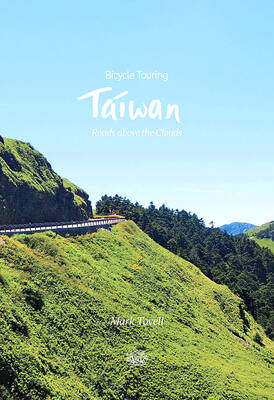
It’s hard to know where to begin with Mark Tovell’s Taiwan: Roads Above the Clouds. Having published a travelogue myself, as well as having contributed to several guidebooks, at first glance Tovell’s book appears to inhabit a middle ground — the kind of hard-to-sell nowheresville publishers detest. Leaf through the pages and you’ll find them suffuse with the purple prose best associated with travel literature: “When the sun is low on a warm, clear morning, and with the heat already rising, we stand at the riverside bike path leading south from Sanxia’s old cobble streets.” Hardly the stuff of your
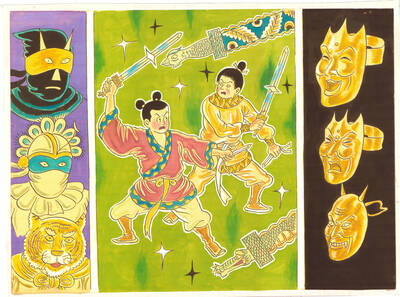
April 22 to April 28 The true identity of the mastermind behind the Demon Gang (魔鬼黨) was undoubtedly on the minds of countless schoolchildren in late 1958. In the days leading up to the big reveal, more than 10,000 guesses were sent to Ta Hwa Publishing Co (大華文化社) for a chance to win prizes. The smash success of the comic series Great Battle Against the Demon Gang (大戰魔鬼黨) came as a surprise to author Yeh Hung-chia (葉宏甲), who had long given up on his dream after being jailed for 10 months in 1947 over political cartoons. Protagonist


 RSS
RSS