


Tigers face extinction in the forests of Indochina, but it's easy to find a trace of the big cats in Vietnam's capital, although not in traditional herbal medicine stores.
In fast-expanding communist Vietnam, the "tiger cage" has been helping thousands of residents battle shrinking living spaces.
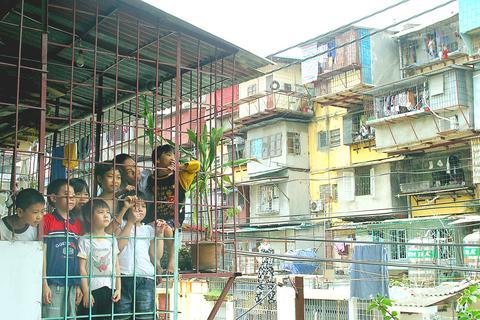
PHOTO: REUTERS
For decades, ingenious dwellers in cramped apartments have built frames of steel bars, dubbed tiger cages, to transform balconies or common corridors into spaces where they can cook, sleep, dry clothes, raise pigs or do a spot of gardening.
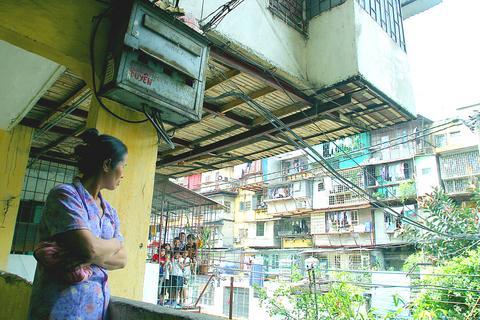
PHOTO: REUTERS
Historically, tiger cages have had a notorious connotation, as slang referring to French prison cells built by Vietnam's former colonial master in the early 1860s to house nationalist insurgents.
But these days the term tiger cages has a happier meaning.
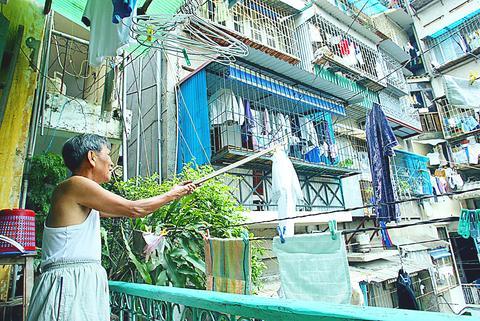
PHOTO: REUTERS
"It gives freedom to a family within that space," said Nguyen Duc Hoan, 36, who lived from 1992 to 2001 in a 32m2 fifth-floor flat with his wife.
The housing innovation is a common sight at state-built apartments in Ho Chi Minh City, Hanoi, Haiphong and Danang, Vietnam's four largest cities and home to nearly 14 million of the Southeast Asian nation's total population of 81 million.
A recent survey in the four cities by the Construction Ministry reveals that each resident is confined to an average living area of 3m2 to 6m2.
SAFE PLAYGROUND
Hoan, who is a private steel trader, said the tiger cage's steel frame, though not constructed according to any code, helps deter break-ins and creates a safe playground above the bustling streets for children, including his son.
"The security reason is the primary goal as doors and windows are all wooden," he said. "People never thought of it as an architectural solution."
Hanoi built its first four-story residential buildings in the late 1950s, initially for state employees. The tiger cage emerged only when the next generation moved in.
In the next 20 years, buildings made from concrete panels sprung up, often with eight families on a floor sharing two pairs of communal toilets and kitchens, an influence of communist allies the Soviet Union and North Korea.
Now the several-decades-old 430 buildings in Hanoi are home to more than 137,000 people but are no longer an ideal accommodation or a sought-after state reward.
Half of them are slum houses with narrow corridors and stairways, low ceilings and leaking pipes. Coal-fired stoves and a lack of parking add to the difficult conditions.
"The daily living is very inconvenient, as many generations share the same one space," Hoan said.
But it isn't easy to upgrade.
"Not everyone can afford to buy a larger place," said a Vietnamese economist who has been living in a 60m2 flat in the past five years in Hanoi.
Hanoi's housing department said 22 of the 430 old buildings must be demolished and another 267 needed urgent repair.
Some who have managed to escape the confining spaces are grateful.
STILL A DREAM
In 2001, Hoan moved to a new house, with a small yard.
"The first feeling is about the freedom, as I can hang out late and come home any time I like and I don't have to push my motorbike all the way up to the fifth floor," he said.
In the old days, an elderly woman who managed the car park at his apartment building locked it up and went to bed at 10pm.
The government controls 21.3 million m2 of residential space, or just 2.9
percent of Vietnam's total, and is unable to pay for the upkeep.
Hoan said his place was repainted just once in nine years.
Yet a flat remains the goal for middle-class people and migrants moving in from the countryside, with monthly rentals ranging between 600,000 dong and 2 million dong (US$38 to US$127).
"It's still a dream for many people to have," said the economist. Per capita income is US$400 a year in Vietnam.
Hoan's fifth-floor flat was sold for 400 million dong (US$25,445), a sum that takes 66 years for state employees on a monthly income of 1.5 million dong (US$95) to accumulate -- provided they can save 500,000 dong each month.
Speculation has been driving up prices on anything from old government-built flats to swanky condominiums.
The government has set an ambitious goal of raising the average living area to 15m2 per person by 2010, with different types of homes to match varying tastes.
As new condominiums are built to replace the old-fashioned flats, new owners vow to hang onto their extra space as long as their families grow.
But the economist said the tiger cage would only become extinct once security of flats was assured.
"The steel bars will still exist for protection," Hoan said. "There would still be a modified tiger cage."
Ajay Verma, a consultant gastroenterologist at Kettering general hospital in Northamptonshire, says our gut is a “complex machine.” “It is constantly providing us with the nutrition we need, initially to grow and develop, and then for us to survive, thrive and repair from injury and illness.” How can we keep it functioning well? Put simply: “Make sure what you put into it is balanced, and that you clear out its waste products adequately,” Verma says. “In a general gastroenterology clinic, the most common conditions we see are irritable bowel syndrome (IBS), gastroesophageal reflux disease, inflammatory bowel disease and constipation,” says Nisha
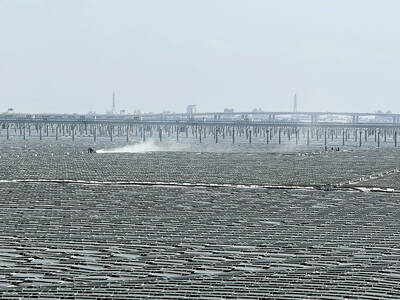
The arithmetic is straightforward and uncomfortable. By the end of 2025, Taiwan had committed itself to a 50-30-20 electricity mix — half natural gas, 30 per cent coal, 20 per cent renewables. The Ministry of Economic Affairs’s (MOEA) own monthly energy reports tell a different story. Natural gas reached 47.8 per cent of generation last year. Coal stood at 35.4 per cent, comfortably above its target ceiling. Renewables came in at 13.1 per cent, well short of the 20 per cent Taipei had pledged a decade earlier. Installed renewable capacity reached roughly half of the 12 gigawatts (GW) the government

Last week US President Donald Trump was asked by a reporter whether he would speak on the phone to the President of Taiwan. “l’ll speak to him. I speak to everybody. We have that situation very well in hand,” Trump said. This marked the second time in a couple of weeks he had said he would talk to the President of Taiwan. In 2016 he famously took a call from then-president Tsai Ing-wen (蔡英文), when he was president-elect. Despite warnings that the apocalypse was nigh because of a phone call, the world quickly forgot about the conversation between two democratically-elected presidents.
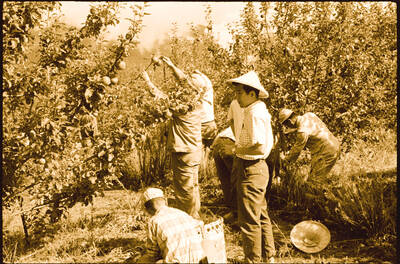
May 25 to May 31 Few believed that apples could be cultivated on a commercial scale in Taiwan’s high mountains. When horticulturalist Cheng Chao-hsiung (程兆熊) first proposed the idea in 1955, both American and Taiwanese colleagues dismissed it as implausible, arguing that temperate fruit could not be reliably grown on a subtropical island, especially on rugged terrain. However, it was this terrain in the Central Mountain Range where many Chinese Civil War veterans were resettled in the late 1950s. With limited job prospects and no family in Taiwan, they were placed on cooperative farms aimed toward self-sufficiency. Some say the conditions


 RSS
RSS