


When the Ministry of Transportation and Communications (MOTC) unveiled plans late last month for the construction of a series of cable car networks that are intended to whisk tourists to the top of several of the nation's highest peaks and traverse some of the country's most picturesque landscapes, it didn't expect its supposedly eco-friendly scheme to raise many eyebrows. But it did. Along with triggering heated debate in the Legislative Yuan, the idea has sparked the ire of environmental groups.
The basic aim of the project, which is part of the government's ongoing plan to double the number of tourists by 2008, is to make it easier for tourists to visit some of Taiwan's most scenic, yet difficult to access, areas.
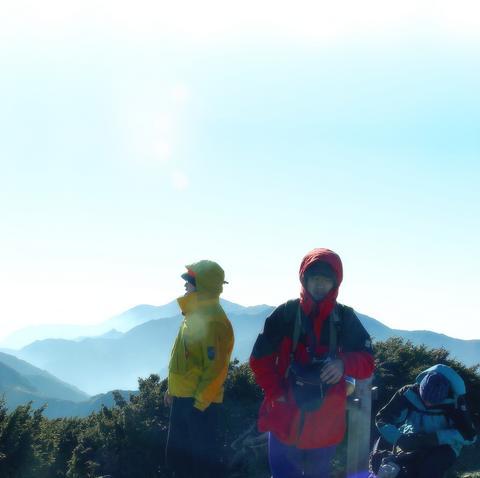
PHOTO COURTESY OF THE SOCIETY OF WILDERNESS
According to an MOTC spokesperson, roads can be widened in certain places, but the construction of new roads destroys the environment and is not always possible, especially in the Central Mountain Range area. Cable cars are, according to the MOTC, the future for 10 of Taiwan's most picturesque and out-of-the-way tourist spots.
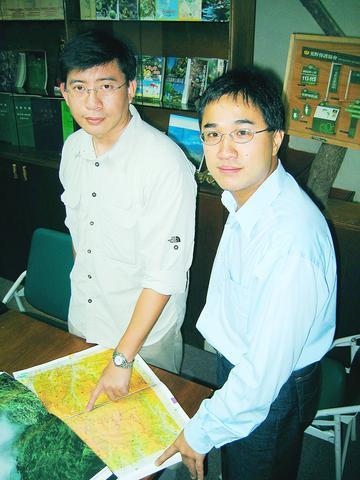
PHOTO: GAVIN PHIPPS, TAIPEI TIMES
A report by local engineering company, ATCI (
The overall combined distance the cable cars would traverse at these four locations alone would measure in the region of 21km. There would need to be a total of 114 pylons in order to support the cable and the heights of these poles would range from between 10m and 50m.
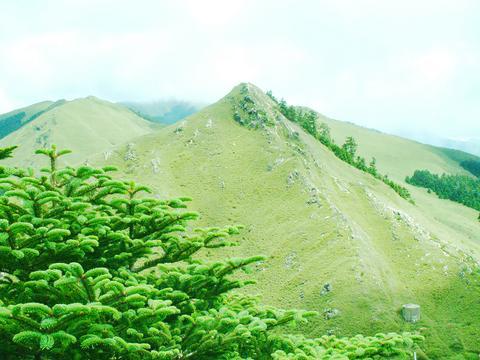
PHOTO COURTESY OF THE SOCIETY OF WILDERNESS
The estimated construction costs at these locations range from NT$102 million to NT$827 million, and operational revenues range from NT$23 million to NT$226 million a year.
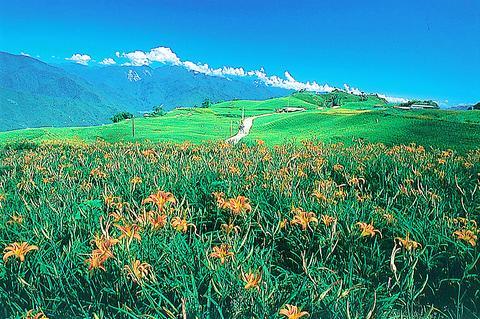
PHOTO COURTESY OF EAST RIFT VALLEY NATIONAL SCENIC AREA
This is money that, according to Liu Man-yi (
"Why spend such large sums of money on something that will destroy, rather than protect the environment? Cable cars will allow more people to see the scenic views, but how many of them will come away with any knowledge of the environments they've seen?" she said. "Using the money to teach people about why these places are special and how to appreciate them is worth more than any fairground ride in the long run."
When contacted about the number-crunching feasibility report that went into great lengths to paint a positive picture of the operation, the installation and cost effectiveness of cable cars, a spokesperson for the engineering company declined to comment. According to the report, however, 65.9 percent of the households questioned were in favor of its construction while 24.2 percent were against.
"The report only skimmed the surface of the matter and didn't take into consideration the environments in which [cable cars] would be constructed," said Chang Hong-lin (
Already a hot topic on several of the nation's leading Chinese language Internet chat sites, the issue is set to leave cyberspace today when members of the Society of Wilderness lead an anti-cable car rally in downtown Taipei.
Set to begin at 10am this morning, the rally -- which has taken the moniker "530: Love the Forests and Mountains Anti-Cable Car Rally" (530-
"We plan to protest, but to do so in an educational, friendly and humorous manner. The rally is a way in which we will be able to explain to the public the impact cable cars will have on both the environment and their future enjoyment of it," said environmental educational instructor, Huang Bo-chun (黃柏鈞).
As a prelude to today's event, members of SOW earlier this week presented Chang Ching-sen (張景森), vice chairman of the CEPD, with a petition listing the reasons behind their opposition to the plan. The 10-point paper included environmental concerns such as the effect of mass tourism on eco-systems, the dangers posed by earthquakes as well as the cost effectiveness of cable car systems.
"The CEPD listened and appeared very interested in some of our points, especially our fears concerning the dangers of increased numbers of visitors and the construction needed on the summits of some of the mountains," Huang said.
While environmentalist groups cast doubt on the plan's feasibility, the director of the Tourism Bureau's Technical Division Mao Cheng-yu (毛正羽), believes that MOTC's cable car project will lead to an increase in tourism, yet at the same time enable the scenic areas to avoid many, if not all of the environmental problems that can arise as the number of visitors increases.
"The project is positive for both tourists and environmentalists. Cable cars can bring in more people without increasing the number of cars and buses on the roads and enable us to avoid costly and controversial road expansions," Mao said. "We have a plan to increase tourism as Taiwan's natural beauty is one of our greatest assets."
A desire to avoid road expansion and construction is agreed on by both sides, but government bodies and environmental groups remain strongly divided in regards the need to increase tourist traffic at some of the nation's most picturesque and, as yet unspoiled, scenic spots.
"At present the number of people able to reach the summit of Yushan is restricted due to the lengthy trek, but once a cable car is constructed we'll see the numbers reach somewhere in the region of 880 people per hour," said Huang. "That's just far too many people."
The MOTC's long term goal of seeing cable cars carry visitors to nearly all of the nation's scenic spots may be a long way away, with bidding not slated to begin until next January, but the government has already earmarked a budget for the first of these projects at Sixty Tan Mountain (
"The area is very beautiful and we'd like to see more visitors come here, but access is limited because of the size and lack of roads in certain areas," said Chu Meng-hung (
Whether the construction of cable cars will prove positive for Taiwan's unspoiled scenic spots depends on who you ask, but environmental groups have already made their minds up in regards cable cars and the environment.
"Anyone can see a man-made structure anywhere in the world, but you can only see certain environments in Taiwan," said Chang. "I'm fearful that the cable cars themselves will become the reason people visit these places rather than for their natural beauty."


On April 26, The Lancet published a letter from two doctors at Taichung-based China Medical University Hospital (CMUH) warning that “Taiwan’s Health Care System is on the Brink of Collapse.” The authors said that “Years of policy inaction and mismanagement of resources have led to the National Health Insurance system operating under unsustainable conditions.” The pushback was immediate. Errors in the paper were quickly identified and publicized, to discredit the authors (the hospital apologized). CNA reported that CMUH said the letter described Taiwan in 2021 as having 62 nurses per 10,000 people, when the correct number was 78 nurses per 10,000

As we live longer, our risk of cognitive impairment is increasing. How can we delay the onset of symptoms? Do we have to give up every indulgence or can small changes make a difference? We asked neurologists for tips on how to keep our brains healthy for life. TAKE CARE OF YOUR HEALTH “All of the sensible things that apply to bodily health apply to brain health,” says Suzanne O’Sullivan, a consultant in neurology at the National Hospital for Neurology and Neurosurgery in London, and the author of The Age of Diagnosis. “When you’re 20, you can get away with absolute

May 5 to May 11 What started out as friction between Taiwanese students at Taichung First High School and a Japanese head cook escalated dramatically over the first two weeks of May 1927. It began on April 30 when the cook’s wife knew that lotus starch used in that night’s dinner had rat feces in it, but failed to inform staff until the meal was already prepared. The students believed that her silence was intentional, and filed a complaint. The school’s Japanese administrators sided with the cook’s family, dismissing the students as troublemakers and clamping down on their freedoms — with

As Donald Trump’s executive order in March led to the shuttering of Voice of America (VOA) — the global broadcaster whose roots date back to the fight against Nazi propaganda — he quickly attracted support from figures not used to aligning themselves with any US administration. Trump had ordered the US Agency for Global Media, the federal agency that funds VOA and other groups promoting independent journalism overseas, to be “eliminated to the maximum extent consistent with applicable law.” The decision suddenly halted programming in 49 languages to more than 425 million people. In Moscow, Margarita Simonyan, the hardline editor-in-chief of the


 RSS
RSS