


Deep in the soft suburban night came a pounding at the door, another stranger haunted by Jack Kerouac's language and legend, seeking a glimpse of this unlikely place he called home for a while.
"Is this it? Is this it?"
Believe it or not, it was: a tin-roofed bungalow in a pleasantly bland neighborhood here, with a back-porch apartment where Kerouac wrote, brooded and hid out in the months after his influential novel On the Road came out in 1957. The visitor, a Navy man stopping en route to this city's better-known cultural attraction, Disney World, was among dozens who have hunted down the Kerouac home recently, as Orlando has begun promoting it as the city's first literary landmark.
That the King of the Beats, a restless icon of nonconformism, would retreat near the peak of his fame to then-sleepy Central Florida -- with his aging mother, no less -- may be hard to fathom. But Kerouac's sister had moved here, and his mother, Gabrielle, wanted to be near her. A devoted son, Kerouac came along, arriving by bus from New York in December 1956.
Now, in the house at 1418 Clouser Ave. where Kerouac's typewriter clattered late into the night, writers from around the world try to channel his manic energy during three-month residencies. He did, after all, write The Dharma Bums, his follow-up to On the Road, in a two-week fit of inspiration here in 1957, and a poem called Orlanda Blues.
Marty Cummins, who owns one of Orlando's only independent bookstores, thought up the writer-in-residence program in 1997, after The Orlando Sentinel ran an article about the house. It had languished in obscurity for decades and was in sorry condition. Bob Kealing, a local TV reporter, had discovered it after a friend from Kansas City tipped him off to the fact that Kerouac had lived in Orlando. Kealing says the Kerouac biographies do not even mention it.
What kind of literary scene exists in this city hemmed in by big-box retail, resort hotels and theme parks? "It's pretty thin," Cummins said, adding that he had put a restaurant in his shop, Chapters, because nobody was buying the books.
Yet people have been intrigued enough by Orlando's Kerouac connection to help along a nonprofit corporation Cummins created, the Kerouac Project. Darden Restaurants, which owns Olive Garden and Red Lobster, fixtures of the Central Florida landscape, is among the donors who helped save the bungalow from developers.
And while Orlando is not Yaddo, Taos or Key West, a steady stream of writers has applied to live on Clouser Avenue.
Ted May, a Chicago native whose residency at the house ended March 5, used his three months to work on a novel and a blues musical. On his last Sunday night here, he gave a reading at Stardust, a local coffee house, and was surprised by the size and enthusiasm of the crowd.
"A lot of people have asked me if I want to stay," he said. "Everybody is bending over backwards because they really want authentic people here, they really want to make things happen."
Yet May had a hard time persuading friends to visit him here, just as Kerouac did. In a 1961 letter to the poet Lawrence Ferlinghetti, Kerouac wrote, "On your trip to Taos and New Orleans, why not come to Orlando also and dig crazy Florida scene of spotlessly clean highways and fantastic supermarkets and Cape Canaveral?" Ferlinghetti declined.
Truth be told, Kerouac himself never stayed here long. There were trips to Mexico, Morocco and New York. After living with his sister for a few months, Kerouac, then 35, persuaded his mother to hop a bus with him to California. But she hated it, and they returned to Orlando in July 1957, renting the bungalow apartment. On the Road would be published months later, and Kerouac could have been living large in New York.
Instead, he and his mother lived in Orlando on and off for five years, eventually abandoning the bungalow for a ranch house in a subdivision called Kingswood Manor. Though more famous than ever, he lived there in relative anonymity, enjoying air conditioning, a reclining chair and other bourgeois amenities but also mocking his surroundings.
"Across the street big boring Americans looking for togetherness," he wrote in a notebook unearthed by Kealing. "But won't get it from this old seadog."
In a new book, Kerouac in Florida: Where the Road Ends, Kealing documents Kerouac's alcoholic decline and his travels back and forth between Florida, Long Island and Massachusetts over the last decade of his life, always with his mother in tow.
Kerouac's final move was to St. Petersburg, on Florida's Gulf Coast, in 1968. He had lived there several years earlier, moved to Massachusetts, then returned at his mother's behest, little resembling the intense young man who wrote like the wind in Orlando. He drank himself to death in St. Petersburg in 1969, at 47. His ghost is said to haunt Haslam's, a bookstore he frequented there.
Orlando has enjoyed more prominence than usual in the Kerouac pantheon this winter: It was the first stop for a traveling exhibit of the 40m scroll on which Kerouac wrote On the Road. The scroll, which will move on to at least 11 other cities over the next four years, is at the Orange County Regional History Center in California until March 21.
Meanwhile, the trickle of pilgrims here grows. Besides the Navy man, whom he said he did not let in because it was 2:30am, May met a local grandmother and granddaughter, a father and son from Louisiana and more late-night visitors whose camera flash glinted off the bedroom blinds.
A sign on the door now asks visitors not to disturb the writer in residence. But those who chance to gaze on the tiny bedroom where Kerouac wrote or the stoop where he ate tangerines from backyard trees might experience something strange.
"There's a great concentration of energy in the back of the house," May said. "I feel him back there; I do."

In late October of 1873 the government of Japan decided against sending a military expedition to Korea to force that nation to open trade relations. Across the government supporters of the expedition resigned immediately. The spectacle of revolt by disaffected samurai began to loom over Japanese politics. In January of 1874 disaffected samurai attacked a senior minister in Tokyo. A month later, a group of pro-Korea expedition and anti-foreign elements from Saga prefecture in Kyushu revolted, driven in part by high food prices stemming from poor harvests. Their leader, according to Edward Drea’s classic Japan’s Imperial Army, was a samurai

The following three paragraphs are just some of what the local Chinese-language press is reporting on breathlessly and following every twist and turn with the eagerness of a soap opera fan. For many English-language readers, it probably comes across as incomprehensibly opaque, so bear with me briefly dear reader: To the surprise of many, former pop singer and Democratic Progressive Party (DPP) ex-lawmaker Yu Tien (余天) of the Taiwan Normal Country Promotion Association (TNCPA) at the last minute dropped out of the running for committee chair of the DPP’s New Taipei City chapter, paving the way for DPP legislator Su
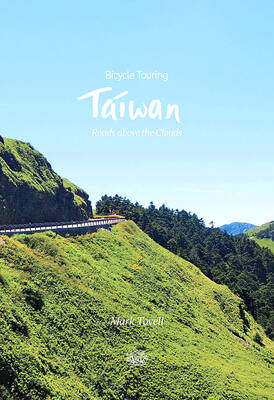
It’s hard to know where to begin with Mark Tovell’s Taiwan: Roads Above the Clouds. Having published a travelogue myself, as well as having contributed to several guidebooks, at first glance Tovell’s book appears to inhabit a middle ground — the kind of hard-to-sell nowheresville publishers detest. Leaf through the pages and you’ll find them suffuse with the purple prose best associated with travel literature: “When the sun is low on a warm, clear morning, and with the heat already rising, we stand at the riverside bike path leading south from Sanxia’s old cobble streets.” Hardly the stuff of your
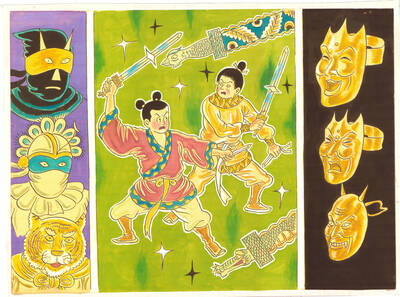
April 22 to April 28 The true identity of the mastermind behind the Demon Gang (魔鬼黨) was undoubtedly on the minds of countless schoolchildren in late 1958. In the days leading up to the big reveal, more than 10,000 guesses were sent to Ta Hwa Publishing Co (大華文化社) for a chance to win prizes. The smash success of the comic series Great Battle Against the Demon Gang (大戰魔鬼黨) came as a surprise to author Yeh Hung-chia (葉宏甲), who had long given up on his dream after being jailed for 10 months in 1947 over political cartoons. Protagonist


 RSS
RSS