


Asia's largest slum lies smack bang between a high-tech business district with gleaming glass skyscrapers and a tiny Mumbai suburb dotted with grand Art Deco mansions.
The 600,000 residents of Dharavi are crammed into rows and rows of make-shift shanties, cobbled together with nothing more than asbestos sheets, bamboo sticks, discarded canvas bags, wooden planks, old car tires and plastic sheets.
For many, this ramshackle district in a city of 12 million is merely a reminder that, despite impressive economic growth in recent years, India remains a very poor country.
But for its residents, stuck in the middle of India's high-rent financial capital, Dharavi is more than that. It is an affordable place to live, and to work.
With general elections only a few months away, India's ruling coalition, led by Hindu nationalists, has announced plans for a billion-dollar redevelopment project in Dharavi.
The federal government hopes to capitalize on an economic boom, strong gains in recent state elections and prospects of peace with Pakistan to return it to a second term in power.
Poll dates have not been set yet, but the independent election commission is expected to announce them soon, possibly for the months of April and May.
For Dharavi the plan means its sea of shanties will be replaced by swank residential buildings, while the polluting, cottage industry factories will be moved to a modern industrial zone.
That might sound like progress, but the reality is more complicated.
"In popular imagination, Dharavi is a dirty, pest-ridden locality without basic services where thousands of people live in sub-human conditions. It is partly this, but it is much more," journalist Kalpana Sharma wrote in Rediscovering Dharavi, a recent book.
"Dharavi ... is a bustling collection of contiguous settlements, each with its own distinct identity."
Its fly-infested lanes and garbage dumps have not only provided a backdrop for books and movies, but it has also become a tourist curiosity on the map of visitors, including Prince Charles, who want to see a slice of the "real India."
SEA OF SHANTIES
After years on the political and social sidelines, the sprawling slum in India's "City of Dreams" is about to get a 60 billion rupee (US$1.3 billion) facelift that will transform it into a modern housing and business district, all rolled into one.
It is an ambitious plan for what was originally a small fishing village by a creek, which has grown over the years into a magnet of opportunity for people of all religions migrating to Mumbai from every corner of India.
The federal government will pump in more money for roads, drainage, electricity, water, schools and training institutes for potters and tanners.
"This plan basically uses land as a resource by giving free multi-storeyed housing to slum-dwellers on part of the land, while developing the rest on a commercial basis," Mukesh Mehta, a builder in charge of the project said.
"It will have high-tech buildings for business as well as schools, hospitals and recreational spaces."
But changing Dharavi won't be easy. Spread across 175 hectares in the heart of Mumbai, it is home to a motley mix of leather-workers, embroiderers and pickle-makers.
This is not the first time the shantytown has been subjected to a facelift. In 1985, former prime minister Rajiv Gandhi decided to upgrade part of the slum, transforming parts of it into neat blocks of apartments with lighting, paved streets and water.
But instead of living there themselves, many shanty residents saw the flats as a source of easy cash, and sold them to clerks and other workers at the lower end of the housing market.
It is a chaotic warren of factories and homes where tanners beat large strips of leather and potters work at their wheels in dimly-lit rooms, while people cook, eat, sleep and bathe on adjoining pavements.
Out of the squalor have emerged success stories, including a poor migrant who launched his own brand of peanut butter, providing further encouragement for the thousands who pour into Mumbai every day hoping to make a living, if not a fortune.
over development
"Development is fine. But we also need land for the kiln, to store clay and to make pots," said Raju Wala, whose family has been fashioning pots out of clay in Dharavi for generations.
Dharavi inhabitants, seen as encroachers who rarely pay for electricity and water, fear redevelopment will saddle them with huge bills and leave them without a roof over their heads.
"How will the new project help me? Property taxes will be high and as it is I have so many bills to pay for," said Bhimavati Maitre, who makes ends meet by washing dishes.
Mohammad Kuddus Sheikh, who runs an embroidery unit in a cramped little room where half a dozen people sit hunched over their frames surrounded by swathes of fabric, insists his business would suffer if he was forced to move.
He echoed the views of others sitting by vast sheets of dried red chillies, spread out near open drains swarming with flies.
"Settlement is a complex issue; it is not just an architectural or engineering job," said Sheela Patel, director of the Society for the Promotion of Area Resource Centers, a group that helps people with housing.
"The state must understand the need to bring in investments and fulfill people's dreams."
The government believes it is up to the challenge.
"It is a big and a complicated exercise. But we are confident we can give a total facelift to Dharavi," said Suresh Joshi, a senior official in the Maharashtra state housing department.
"It will become a model township in the country."

In late October of 1873 the government of Japan decided against sending a military expedition to Korea to force that nation to open trade relations. Across the government supporters of the expedition resigned immediately. The spectacle of revolt by disaffected samurai began to loom over Japanese politics. In January of 1874 disaffected samurai attacked a senior minister in Tokyo. A month later, a group of pro-Korea expedition and anti-foreign elements from Saga prefecture in Kyushu revolted, driven in part by high food prices stemming from poor harvests. Their leader, according to Edward Drea’s classic Japan’s Imperial Army, was a samurai

The following three paragraphs are just some of what the local Chinese-language press is reporting on breathlessly and following every twist and turn with the eagerness of a soap opera fan. For many English-language readers, it probably comes across as incomprehensibly opaque, so bear with me briefly dear reader: To the surprise of many, former pop singer and Democratic Progressive Party (DPP) ex-lawmaker Yu Tien (余天) of the Taiwan Normal Country Promotion Association (TNCPA) at the last minute dropped out of the running for committee chair of the DPP’s New Taipei City chapter, paving the way for DPP legislator Su
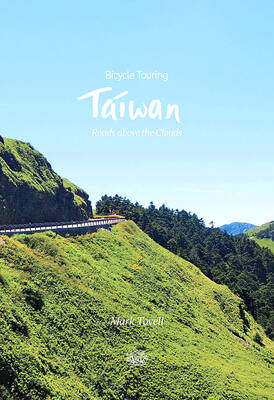
It’s hard to know where to begin with Mark Tovell’s Taiwan: Roads Above the Clouds. Having published a travelogue myself, as well as having contributed to several guidebooks, at first glance Tovell’s book appears to inhabit a middle ground — the kind of hard-to-sell nowheresville publishers detest. Leaf through the pages and you’ll find them suffuse with the purple prose best associated with travel literature: “When the sun is low on a warm, clear morning, and with the heat already rising, we stand at the riverside bike path leading south from Sanxia’s old cobble streets.” Hardly the stuff of your

April 22 to April 28 The true identity of the mastermind behind the Demon Gang (魔鬼黨) was undoubtedly on the minds of countless schoolchildren in late 1958. In the days leading up to the big reveal, more than 10,000 guesses were sent to Ta Hwa Publishing Co (大華文化社) for a chance to win prizes. The smash success of the comic series Great Battle Against the Demon Gang (大戰魔鬼黨) came as a surprise to author Yeh Hung-chia (葉宏甲), who had long given up on his dream after being jailed for 10 months in 1947 over political cartoons. Protagonist


 RSS
RSS