


It's something of a ritual. You go in your favorite bar or restaurant and, pausing at a table in the breezeway, leaf through piles of flyers advertising the coming weekend's entertainment: A DJ from the UK, a party at the beach, a stage show about an anthropomorphic eyeball. As varied as the events are, so too are the handbills that advertise them. The one thing they have in common is that they showcase their designers' talents in a way few other media can.
"Flyers allow you to try things that you might not try otherwise," said local designer Issa (
Club owners and party promoters rely on Issa and a dozen other well-known local designers to stir interest in an event. Regardless of how much money has been spent on a party or concert or who is headlining, a well-crafted flyer has the ability to create the "cool" factor. By passing them among friends, it generates the most potent advertising all: word-of-mouth.
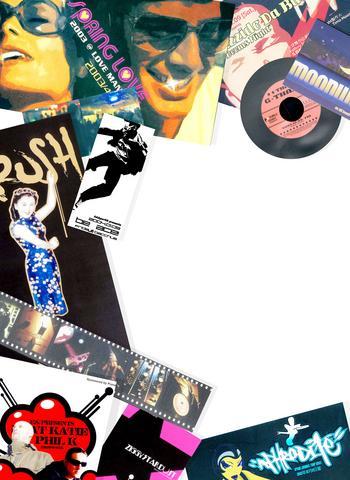
Of course, this is nothing new. Handbills have been distributed to advertise live music events since printing became widely available. It reached something of an art form in the late 1960s with psychedelic rock bands producing wildly imaginative posters and flyers that, 30 years later, command high prices on eBay.
A limited edition, hand-colored reprint of a Ken Kesey and the Merry Pranksters Acid Test poster will cost you some US$6,000. A small handbill for a Dec. 22, 1967 concert with The Doors and Iron Butterfly has an asking price of US$1,200. Also in 1967, Gary Grimshaw designed a small poster for the Dec. 10 John Sinclair Freedom Rally at the University of Michigan. Sinclair was arrested and sentenced to 10 years in prison for possession of two marijuana cigarettes. The subsequent rally drew such notables as Alan Ginsberg, John Lennon and Yoko Ono. An extant original of Grimshaw's poster, with its illustration of Sinclair toking a joint, is now worth US$1,200. A handbill for the 1972 follow-up "John is Free!" concert will set you back US$400.
These are advertisements that have transcended their use to become historical documents and cultural markers. While the flyers being produced for events in Taiwan aren't widely considered collector's items, it may only be a matter of time until they are.
Issa reckons that Taiwan's flyer culture started some seven or eight years ago when the nation's godfather of electronic music, DJ @llen, teamed up with designer Tico (
It's a subject about which he has done a lot of thinking. He's even penned an article about the philosophy of flyer design for electronic music review Web site, Upstairs.com. Because flyers are so often advertising music events, he explains, they allow designers to tap into their deepest creative resources. "Any powerful or unconstrained style idea or design esthetic can be put on a flyer."
Few people understand this better than Cindy Liu (
But will the give-aways she and other designers make become collectors' items like those that mark the rock revolution of the 1960s and 1970s? Western designers working in Taiwan seem hesitant to say one way or the other.
"I would like to believe so," said Kent Steiner, who has produced handbills for several local music events. "Designers in Taiwan are in the middle of an educational period."
Fellow designer Dominik Tyliszczak agrees. "There are a lot of young designers here who may well develop into great designers," he said, explaining that the work they produce now might increase in value as their professional stars rise.
Perhaps the best hope for the survival of flyers as an art form is the tie that binds each of these designers together: a love of music. Issa and Tyliszczak are both VJs. Steiner is perhaps better known as DJ K Fancy. Liu is easily found on the dance floor at Luxy.
Issa's prediction seems sensible: "If the music transcends, the artwork likely will too."

Last week, Viola Zhou published a marvelous deep dive into the culture clash between Taiwanese boss mentality and American labor practices at the Taiwan Semiconductor (TSMC) plant in Arizona in Rest of World. “The American engineers complained of rigid, counterproductive hierarchies at the company,” while the Taiwanese said American workers aren’t dedicated. The article is a delight, but what it is depicting is the clash between a work culture that offers employee autonomy and at least nods at work-life balance, and one that runs on hierarchical discipline enforced by chickenshit. And it runs on chickenshit because chickenshit is a cultural

My previous column Donovan’s Deep Dives: The powerful political force that vanished from the English press on April 23 began with three paragraphs of what would be to most English-language readers today incomprehensible gibberish, but are very typical descriptions of Democratic Progressive Party (DPP) internal politics in the local Chinese-language press. After a quiet period in the early 2010s, the English press stopped writing about the DPP factions, the factions changed and eventually local English-language journalists could not reintroduce the subject without a long explanation on the context that would not fit easily in a typical news article. That previous
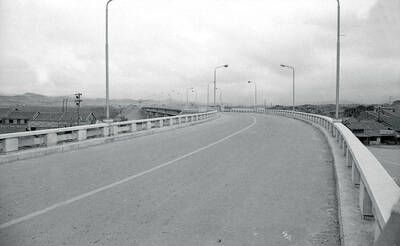
April 29 to May 5 One month before the Taipei-Keelung New Road (北基新路) was set to open, the news that US general Douglas MacArthur had died, reached Taiwan. The military leader saw Taiwan as an “unsinkable aircraft carrier” that was of huge strategic value to the US. He’d been a proponent of keeping it out of Chinese Communist Party (CCP) hands. Coupled with the fact that the US had funded more than 50 percent of the road’s construction costs, the authorities at the last minute renamed it the MacArthur Thruway (麥帥公路) for his “great contributions to the free world and deep

Years ago, I was thrilled when I came across a map online showing a fun weekend excursion: a long motorcycle ride into the mountains of Pingtung County (屏東) going almost up to the border with Taitung County (台東), followed by a short hike up to a mountain lake with the mysterious name of “Small Ghost Lake” (小鬼湖). I shared it with a more experienced hiking friend who then proceeded to laugh. Apparently, this road had been taken out by landslides long before and was never going to be fixed. Reaching the lake this way — or any way that would


 RSS
RSS