


'Tis the season for festive chants and the Taipei Philharmonic Chorus and Chamber Choir has come up with Carl Orff's Catulli Carmina and a Christmas concert packed so full of old chestnuts it could bring the singer in you out of the closet.
For the first part of the program, however, it is pretty serious stuff, with one of Orff's lesser-known works taking center stage, rather than Carmina Burana -- the music that goes ba-ba-ba-baaa through the horror flick The Omen and is now a hot-selling polyphonic ringtone.
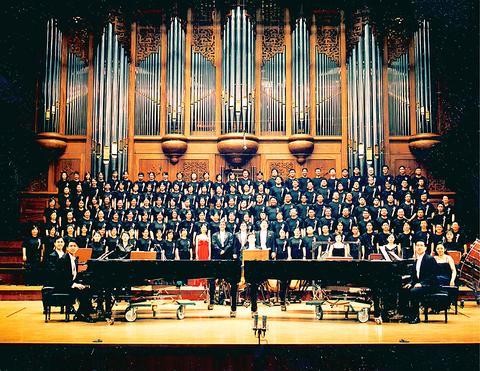
PHOTO COURTESY TAIPEI PHILHARMONIC CHORUS AND CHAMBER CHOIR
The Munich-born German Carl Orff (1895 to 1982) was known for his classical and folk works featuring peasant dance elements. It was this combination in Carmina Burana that made it so lively and passionate, yet classical and inspiring at the same time.
Along with his best-known work, Orff added two other cantatas to make up the Trionfi tryptich, which includes Catulli Carmina and Trionfo di Afrodite. They are rarely recorded so it is a refreshing move on the part of the Philharmonic Chorus to try something a little bit different.
Catulli Carmina or "Songs of Catullus" sets to music seven poems by Verona's Gaius Valerius Catullus, who was popular when Italy had an empire. The text is pretty racy, with references to sexual organs and five love scenes in the first of the three acts.
There are a number of parts that are "vintage" Orff in terms of the vocal arrangements and stylistic conventions, though Catulli is said to be more demanding on the voice than Carmina.
The story is about love and how, "My mind has been brought to such a point, my Lesbia, by your guilt, and has so destroyed itself by its own devotion, that I cannot wish you well, however virtuous you may become, or cease to love you, however low you sink." Love wins out, however, so expect an ending on a high note.
Part two of the Philharmonic Chorus concert is given over to some lighthearted entertainment, with lullaby carols, bell carols, We Wish You a Merry Christmas, Holy Night and the Ode to Joy section from Georg Friedrich Handel's Hallelujah Chorus.

In late October of 1873 the government of Japan decided against sending a military expedition to Korea to force that nation to open trade relations. Across the government supporters of the expedition resigned immediately. The spectacle of revolt by disaffected samurai began to loom over Japanese politics. In January of 1874 disaffected samurai attacked a senior minister in Tokyo. A month later, a group of pro-Korea expedition and anti-foreign elements from Saga prefecture in Kyushu revolted, driven in part by high food prices stemming from poor harvests. Their leader, according to Edward Drea’s classic Japan’s Imperial Army, was a samurai

The following three paragraphs are just some of what the local Chinese-language press is reporting on breathlessly and following every twist and turn with the eagerness of a soap opera fan. For many English-language readers, it probably comes across as incomprehensibly opaque, so bear with me briefly dear reader: To the surprise of many, former pop singer and Democratic Progressive Party (DPP) ex-lawmaker Yu Tien (余天) of the Taiwan Normal Country Promotion Association (TNCPA) at the last minute dropped out of the running for committee chair of the DPP’s New Taipei City chapter, paving the way for DPP legislator Su
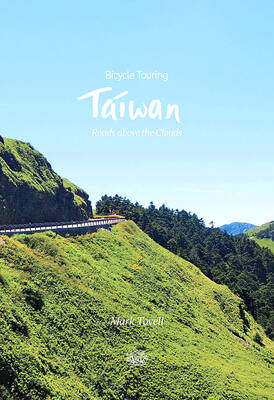
It’s hard to know where to begin with Mark Tovell’s Taiwan: Roads Above the Clouds. Having published a travelogue myself, as well as having contributed to several guidebooks, at first glance Tovell’s book appears to inhabit a middle ground — the kind of hard-to-sell nowheresville publishers detest. Leaf through the pages and you’ll find them suffuse with the purple prose best associated with travel literature: “When the sun is low on a warm, clear morning, and with the heat already rising, we stand at the riverside bike path leading south from Sanxia’s old cobble streets.” Hardly the stuff of your
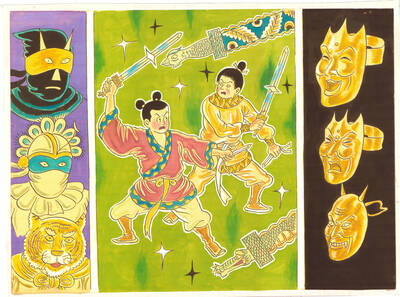
April 22 to April 28 The true identity of the mastermind behind the Demon Gang (魔鬼黨) was undoubtedly on the minds of countless schoolchildren in late 1958. In the days leading up to the big reveal, more than 10,000 guesses were sent to Ta Hwa Publishing Co (大華文化社) for a chance to win prizes. The smash success of the comic series Great Battle Against the Demon Gang (大戰魔鬼黨) came as a surprise to author Yeh Hung-chia (葉宏甲), who had long given up on his dream after being jailed for 10 months in 1947 over political cartoons. Protagonist


 RSS
RSS