


The Chinese A Cappella Center (現
The Pickets will treating local audiences to a cappella cover tunes from its recently released album, Live in Hamburg -- the first release with the current line-up of Andrea Figallo, Dylan Foster, Andy Laycock, Henrik Wager and Michael Henry -- as well plenty of other pop and rocks classics.

PHOTO COURTESY OF THE CHINESE A CAPPELLA CENTER
They are tunes that over the past 20 years have established the combo as one of the world's leading pop/rock a-cappella, or popapella-cum-rockapella acts.
Originally formed in 1982 by members of the socialist fringe theater group, 7:84 Theatre, the group took its name from the protesters who traveled the UK to man picket lines during the minor's strike of early 1980s. From its early days spent trawling the clubs and pubs of London the group went on to become a household name in the UK in a remarkably short period of time.
In 1983 the group released its debut record, Live at the Albany Empire, sales of which were impressive enough to warrant the attention of Virgin Records. Signing the group the same year, Virgin released the Flying Pickets' first single, a cover version of the Yazoo hit, Only You in Nov. 1983. The tune went straight to number one in the UK pop, where it remained for five weeks and brought a cappella into the mainstream, turning the Flying Pickets into singing socialist superstars almost overnight.
Although continuing to play to full houses throughout the UK, the group never again repeated its initial chart success. The closest it came was in April 1984, when the group's a cappella version of The Marvelettes' When You're Young and In Love, reached number seven in the UK pop charts.
Along with touring extensively and releasing nine more albums throughout the 1980s and 1990s, the combo also wrote a musical for the London-based Theatre Royal and penned the score for the popular BBC television adaptation of Tom Sharpe's, Porterhouse Blue.
The Flying Pickets' most recent album was recorded at the Fliegende Bauten in Hamburg last year and was released earlier this year. It is the first since 1989's Vox Pops and features a selection of atypical Pickets' popapella covers. It includes Michael Jackson's, Billy Jean, Ricky Martin's Livin' la Vida Loca Robbie Williams's Let Me Entertain You and of course, Yazoo's Only You, among others.
The Flying Pickets will perform at 7pm this evening at the Family Theatre (台北市政府親子劇場), on the second floor at Taipei City Hall (台北市市府路一號二樓). Tickets cost from NT$400 to NT$800 and are available at the door.
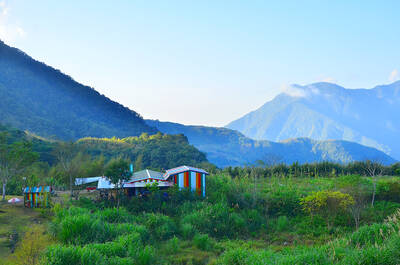
If one asks Taiwanese why house prices are so high or why the nation is so built up or why certain policies cannot be carried out, one common answer is that “Taiwan is too small.” This is actually true, though not in the way people think. The National Property Administration (NPA), responsible for tracking and managing the government’s real estate assets, maintains statistics on how much land the government owns. As of the end of last year, land for official use constituted 293,655 hectares, for public use 1,732,513 hectares, for non-public use 216,972 hectares and for state enterprises 34 hectares, yielding

The March/April volume of Foreign Affairs, long a purveyor of pro-China pablum, offered up another irksome Beijing-speak on the issues and solutions for the problems vexing the People’s Republic of China (PRC) and the US: “America and China at the Edge of Ruin: A Last Chance to Step Back From the Brink” rang the provocative title, by David M. Lampton and Wang Jisi (王緝思). If one ever wants to describe what went wrong with US-PRC relations, the career of Wang Jisi is a good place to start. Wang has extensive experience in the US and the West. He was a visiting
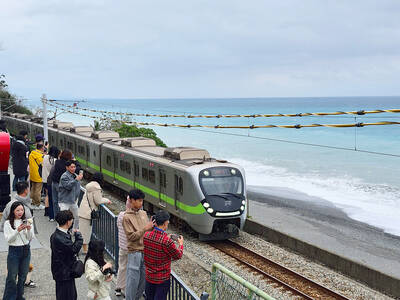
The small platform at Duoliang Train Station in Taitung County’s Taimali Township (太麻里) served villagers from 1992 to 2006, but was eventually shut down due to lack of use. Just 10 years later, the abandoned train station had become widely known as the most beautiful station in Taiwan, and visitors were so frequent that the village had to start restricting traffic. Nowadays, Duoliang Village (多良) is known as a bit of a tourist trap, with a mandatory, albeit modest, admission fee of NT$10 giving access to a crowded lane of vendors with a mediocre view of the ocean and the trains

One of the challenges with the sheer availability of food in today’s world is that lots of us end up spending many of our waking hours eating. Whether it’s full meals, snacks or desserts, scientists have found that it’s not uncommon for us to be mindlessly grazing at some point during all of our 16 or so waking hours. The problem? As soon as this food hits the bloodstream in the form of glucose, it initiates the release of the hormone insulin. This in turn activates a switch present in every one of our cells, which is responsible for driving cell


 RSS
RSS