


At the peak of his celebrity in the late 1930s, Seabiscuit, a runty, crooked-legged racehorse rescued from obscurity by a California car dealer, was the most famous mammal in America, surpassing even Franklin D. Roosevelt in media attention and popular esteem. In her best-selling book, Seabiscuit: An American Legend, published two years ago, Laura Hillenbrand ascribed the horse's renown to several causes, including the marketing savvy of his owner, Charles Howard; the growth of a national mass culture fueled by rural electrification, photographic wire services and cheap radios; and the ardent identification of Depression-weary Americans with a scrappy, indomitable underdog.
The current wave of Seabiscuit mania, which crests today with the release of Gary Ross's film adaptation of Hillenbrand's book, may reflect a similar hunger for optimism and inspiration. It seems more likely, though, that Seabiscuit's 21st-century second act is primarily a result of Hillenbrand's skill as a historian and a storyteller. Her book, while saturated in fascinating, often arcane detail about the folkways of jockeys and the wisdom of trainers, is one of those rare chronicles of the past that manage to bridge the gap between the old days and the present, immersing the reader in the sounds and smells of the racetrack even as it illuminates a larger story of technological and social change.
Ross, whose interest in the subject was piqued long before the book's appearance, when he came across an article by Hillenbrand in American Heritage magazine, has done his best to preserve both the sweep of her narrative and its meticulousness. Inevitably, the story has been compressed to fit the dramatic conventions of a feature film; characters have been synthesized and subtle insights turned into neon signs.
But there can be no doubt that Ross, the writer of Big and Dave and the director of Pleasantville, has been faithful to his source. (What liberties he has taken are nothing compared with those in The Story of Seabiscuit, an engagingly fluffy picture from 1949, starring Shirley Temple, though not in the title role.) The main problem with Seabiscuit, indeed, is a surfeit of reverence. It turns the thrilling celebration of a collection of rambunctious, maverick characters into an exercise in high-minded, responsible sentimentality.
There has already been a documentary about Seabiscuit, but Ross has nonetheless chosen to punctuate his film with lofty voiceovers read by the popular historian David McCullough, whose sonorous disquisitions accompany black-and-white archival photographs of automobile assembly lines and dust bowl refugees. The words and images tie the lives of Seabiscuit and his human handlers to the rise of the automobile and the ascendancy of the New Deal, but they feel both ponderous and glib, weighing down the more intimate human and equine dramas and denying the characters time to emerge as individuals. This is a shame, since the human cast includes some of the finest actors working in movies today.
As Charles Howard, Jeff Bridges shows some of the raffish, entrepreneurial charm that made Francis Ford Coppola's Tucker better than it had a right to be and he rounds it off with a gentle melancholy. Howard, who made a fortune selling Buicks in post-earthquake San Francisco, lost a son in a car accident, a tragedy that hastened the collapse of his first marriage. (His second wife, Marcela, whom he met at a Tijuana racetrack, is played, with lovely Old Hollywood grace, by Elizabeth Banks.) The way Bridges carries Howard's grief in his eyes and shoulders makes the director's telegraphic reminders of his loss feel heavy-handed and superfluous. The score, a rare exercise in humorlessness by Randy Newman, has the same effect.
These actors are thoroughbreds, and you may find yourself wishing that Ross would open up and let them run. From time to time, Seabiscuit does shake off its air of sober restraint. The racing scenes are crisply edited and genuinely exciting, especially the climactic one-on-one grudge match between Seabiscuit and War Admiral, the Triple Crown winner whose owner, in black suit and bowler hat, represents East Coast plutocracy against Howard's self-made Western man of the people.
The rivalry between these two horses was itself a kind of class war: although Seabiscuit set speed records in a string of victories out West, he was, to the Eastern racing establishment, a "glorified plater," too old and obscure to compete in their hallowed venues. Howard's relentless media campaign was ultimately successful, but Pollard suffered a calamitous injury shortly before the race. His friend and sometime rival, George Woolf (played by Gary Stevens, a real-life Hall of Fame jockey), rode Seabiscuit in front of 40,000 spectators at Baltimore's Pimlico racetrack.

In late October of 1873 the government of Japan decided against sending a military expedition to Korea to force that nation to open trade relations. Across the government supporters of the expedition resigned immediately. The spectacle of revolt by disaffected samurai began to loom over Japanese politics. In January of 1874 disaffected samurai attacked a senior minister in Tokyo. A month later, a group of pro-Korea expedition and anti-foreign elements from Saga prefecture in Kyushu revolted, driven in part by high food prices stemming from poor harvests. Their leader, according to Edward Drea’s classic Japan’s Imperial Army, was a samurai

The following three paragraphs are just some of what the local Chinese-language press is reporting on breathlessly and following every twist and turn with the eagerness of a soap opera fan. For many English-language readers, it probably comes across as incomprehensibly opaque, so bear with me briefly dear reader: To the surprise of many, former pop singer and Democratic Progressive Party (DPP) ex-lawmaker Yu Tien (余天) of the Taiwan Normal Country Promotion Association (TNCPA) at the last minute dropped out of the running for committee chair of the DPP’s New Taipei City chapter, paving the way for DPP legislator Su
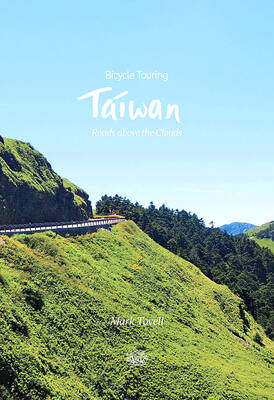
It’s hard to know where to begin with Mark Tovell’s Taiwan: Roads Above the Clouds. Having published a travelogue myself, as well as having contributed to several guidebooks, at first glance Tovell’s book appears to inhabit a middle ground — the kind of hard-to-sell nowheresville publishers detest. Leaf through the pages and you’ll find them suffuse with the purple prose best associated with travel literature: “When the sun is low on a warm, clear morning, and with the heat already rising, we stand at the riverside bike path leading south from Sanxia’s old cobble streets.” Hardly the stuff of your
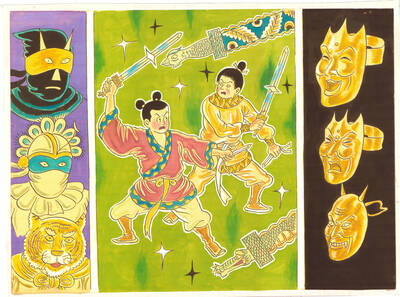
April 22 to April 28 The true identity of the mastermind behind the Demon Gang (魔鬼黨) was undoubtedly on the minds of countless schoolchildren in late 1958. In the days leading up to the big reveal, more than 10,000 guesses were sent to Ta Hwa Publishing Co (大華文化社) for a chance to win prizes. The smash success of the comic series Great Battle Against the Demon Gang (大戰魔鬼黨) came as a surprise to author Yeh Hung-chia (葉宏甲), who had long given up on his dream after being jailed for 10 months in 1947 over political cartoons. Protagonist


 RSS
RSS