


Arthur Kempton's Boogaloo is partly music history, tracing the will to cross over to white audiences through the careers of several extraordinary black American pop stars. It is partly a music-business book about how black pop stars and their managers gained control of publishing rights and at the same time let the dictates of commerce overtake and corrupt the values of cultural tradition.
And at times it is a provocative, overdramatized, subtly moralizing book about how great black pop started rolling downhill in the late 1960s, in reaction to drug epidemics and the wearing away of traditional conservative family values among black Americans.
Elegantly written, at first widescreened and undogmatic, the book ends up rather thin-blooded and chiding. It's finally hard to know exactly what the author's angle is. Here's a middle-age white American who favors the outdated, Harlem-Renaissance contraction "Aframerican;" who has such abomination and curiosity about the word "nigger" that he repeatedly uses the phrase "n((egro)) rich," rendered just like that, to describe ostentatious pop-star wealth; who, by his own adaptation of language, uses a rather specific term (the black-Latino soul music fusion of the late 1960s) for the entire continuum of black-vernacular music through the 20th century in America.

The areas of black American popular music covered in Boogaloo have been chronicled many times but never in this particular combination. Arthur Kempton begins with Thomas Dorsey, known as the "father of gospel music," but mostly father of the idea that money could be made in gospel music. He then looks at Sam Cooke, a gospel prodigy who imagined a world in which he could be as popular with white kids as with black kids; Motown and Stax records, which each played out their sordid corporate sagas, Detroit- and Memphis-style; and the Los Angeles hip-hop record label Death Row, which
institutionalized the notion that being murdered was the best way for a rapper to sell records.
There are detours along the way, dealing briefly with Bessie Smith, Mahalia Jackson, Aretha Franklin, Gene Chandler, James Brown, Curtis Mayfield and George Clinton, among others. Kempton is concerned with greased-lightning hits, the superstars and publishing catalogs that changed the business.
As much as it comes close to it, this is not an aesthetic history, even if Kempton can't resist writing some descriptive passages about the way this music feels and sounds. But at a certain point this book seems to lift up from its moorings and take leave of music-as-music almost entirely.
It happens about two-thirds of the way through, while telling the tale of Berry Gordy, the founder and owner of Motown Records. Dealing with Gordy, Kempton turns acidulous. He mentions the record executive's early career as a failed pimp, and thereafter, keeps applying apposite quotes from
Iceberg Slim's memoir, Pimp: The Story of My Life to describe Gordy's style of controlling his performers' destinies. (His larger point, and a central one to the book, is that in the 1960s, the pimp supplanted the sharecropper's ideal of "getting over" -- using wiles to beat the system.
Accordingly, Kempton shows how Gordy played favorites, cultivated "puppets," dropped gifted artists from his affections without warning. There is cleverness and insight at work here, but also a strange discomfort with the fact that crooked people have usually been involved with great popular music.
The Cooke chapter is the book's long, effective centerpiece. Though most of the research for Boogaloo is secondary -- the Cooke section draws heavily on Daniel Wolff's Cooke biography -- Kempton talks about the music, parsing songs like A Change Is Gonna Come. And he also acts as a general analyst of the race-and-class game, sometimes assuming knowledge (apparently without having conducted many interviews) of a particular person's deep psychology. This is a perilous game, but Kempton plays it with gusto.
Kempton tends to construct boa-constrictor sentences with pile-up metaphors. (Parts of the book were adapted from articles written for The New York Review of Books; the author is the son of the journalist Murray Kempton, who wrote about politicians like an art critic, often for the same publication.) And at times his writing turns sophistic, dancing in obscure circles of logic. "Once Cooke knew that white people liked the abstraction of him that appeared on television," he writes, "he worked at composing his public surface into an abstaction of the qualities he thought they liked."
But in certain matters Kempton's overnuanced style is a blessing: He is great at pitting white reactions against black reactions to various kinds of black music. He describes the rock 'n' roll "caravan" shows that Cooke performed in during the late 1950s thus: "There was no use here for the skills admired here in the `deep,' gut-twisting singers of his former workplaces; these white kids had backward reactions, shrieking through the fast songs and sitting restively through the slow ones."
By the time he gets to Suge Knight, proprietor of Death Row, the story loses focus, growing cold and distant. The book becomes bogged down in details about Tupac Shakur's crime record and the general litigious atmosphere around Knight's outfit.
Although in earlier chapters Kempton writes so that you can hear the music, both as it played out in theaters and on a record, here he begins the information-bank plunge, citing New York Times articles about the white suburban hip-hop audience. Tellingly, he calls NWA's song **** tha Police a "song," in quotation marks, implying that he holds his nose with one hand while typing with the other. But he doesn't deal with the elements of NWA that made them so effective in the boogaloo business either, the fact that that song, irresponsible as it was, and miles away from Sam Cooke's natural and practiced brilliance, had, in fact, an incredible power.

Last week, Viola Zhou published a marvelous deep dive into the culture clash between Taiwanese boss mentality and American labor practices at the Taiwan Semiconductor (TSMC) plant in Arizona in Rest of World. “The American engineers complained of rigid, counterproductive hierarchies at the company,” while the Taiwanese said American workers aren’t dedicated. The article is a delight, but what it is depicting is the clash between a work culture that offers employee autonomy and at least nods at work-life balance, and one that runs on hierarchical discipline enforced by chickenshit. And it runs on chickenshit because chickenshit is a cultural

My previous column Donovan’s Deep Dives: The powerful political force that vanished from the English press on April 23 began with three paragraphs of what would be to most English-language readers today incomprehensible gibberish, but are very typical descriptions of Democratic Progressive Party (DPP) internal politics in the local Chinese-language press. After a quiet period in the early 2010s, the English press stopped writing about the DPP factions, the factions changed and eventually local English-language journalists could not reintroduce the subject without a long explanation on the context that would not fit easily in a typical news article. That previous
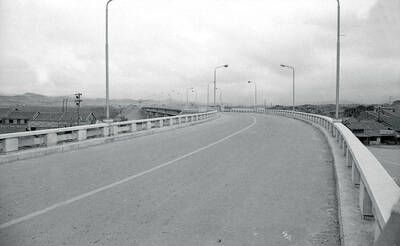
April 29 to May 5 One month before the Taipei-Keelung New Road (北基新路) was set to open, the news that US general Douglas MacArthur had died, reached Taiwan. The military leader saw Taiwan as an “unsinkable aircraft carrier” that was of huge strategic value to the US. He’d been a proponent of keeping it out of Chinese Communist Party (CCP) hands. Coupled with the fact that the US had funded more than 50 percent of the road’s construction costs, the authorities at the last minute renamed it the MacArthur Thruway (麥帥公路) for his “great contributions to the free world and deep

Years ago, I was thrilled when I came across a map online showing a fun weekend excursion: a long motorcycle ride into the mountains of Pingtung County (屏東) going almost up to the border with Taitung County (台東), followed by a short hike up to a mountain lake with the mysterious name of “Small Ghost Lake” (小鬼湖). I shared it with a more experienced hiking friend who then proceeded to laugh. Apparently, this road had been taken out by landslides long before and was never going to be fixed. Reaching the lake this way — or any way that would


 RSS
RSS