


This is a teahouse with a modern wooden decor and a slight Zen feeling. A quite, simple place where you can easily allow yourself to revisit the Japanese colonial days. There are certainly other teahouses with a similar atmosphere elsewhere in Taipei, but in Tienmu, where Western-style restaurants reign, this is a rare find. Meigetsutou is a perfect place to feel mellow on a Sunday afternoon, sipping green tea, tasting Japanese sweets, and peering at the trees lining Chungcheng Rd.
The house's winter special is Strawberry Daifuku (
According to Yang Kuo-chun, manager of this 70-year-old house, Japanese sweets, (wakashi in Japanese) have just three basic ingredients: rice, beans and sugar, nothing more. And employing different methods, techniques and proportions, the store offers hundreds of different kinds of wakashi. "Generally, Japanese sweets are simple deserts. The tastes are purer and simpler than Western deserts, with differences so fine as to be easily neglected while eating," said Yang. In other words, gulping the desert down in a single bite is not recommended.
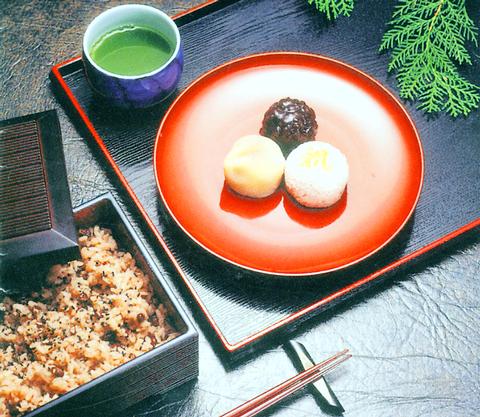
PHOTO COURTESY OF MEIGETSUTOU
The same goes for the tea. Macha (green tea) is a must in this teahouse. Made from powder ground from fresh green tea leaves, the tea is placed in a large bowl and has a froth on top when hot water is added. The proper way to drink the tea is to use both hands to hold the bowl. There will be the taste of fresh grass along with the mellow taste of milk, if you so desire to add it. For clearer colored tea, boiled tea
In Chinese deserts, animal oil is an essential, just as butter plays a central role in Western deserts. But for Japanese deserts, there is never any oil. "So, it's a healthy desert," said Yang. The teahouse also offers light meals such as sausage rice with cream sauce and curry beef rice.
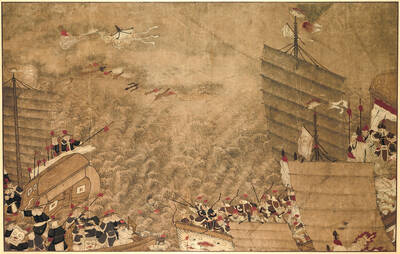
For many centuries from the medieval to the early modern era, the island port of Hirado on the northwestern tip of Kyushu in Japan was the epicenter of piracy in East Asia. From bases in Hirado the notorious wokou (倭寇) terrorized Korea and China. They raided coastal towns, carrying off people into slavery and looting everything from grain to porcelain to bells in Buddhist temples. Kyushu itself operated a thriving trade with China in sulfur, a necessary ingredient of the gunpowder that powered militaries from Europe to Japan. Over time Hirado developed into a full service stop for pirates. Booty could

Politically charged thriller One Battle After Another won six prizes, including best picture, at the British Academy Film Awards on Sunday, building momentum ahead of Hollywood’s Academy Awards next month. Blues-steeped vampire epic Sinners and gothic horror story Frankenstein won three awards each, while Shakespearean family tragedy Hamnet won two including best British film. One Battle After Another, Paul Thomas Anderson’s explosive film about a group of revolutionaries in chaotic conflict with the state, won awards for directing, adapted screenplay, cinematography and editing, as well as for Sean Penn’s supporting performance as an obsessed military officer. “This is very overwhelming and wonderful,” Anderson

Social media addiction has been compared to casinos, opioids and cigarettes. While there’s some debate among experts about the line between overuse and addiction, and whether social media can cause the latter, there is no doubt that many people feel like they can’t escape the pull of Instagram, TikTok, Snapchat and other platforms. The companies that designed your favorite apps have an incentive to keep you glued to them so they can serve up ads that make them billions of dollars in revenue. Resisting the pull of the endless scroll, the dopamine hits from short-form videos and the ego boost and validation

When sifting through the seemingly endless collection of documents in the Epstein files gets to be too much and Ellie Leonard needs a break, she takes a walk outside. Then it’s back to the computer. The New Jersey mother of four is among hundreds of citizen-journalists, or sleuths, absorbed by the material connected to the late Jeffrey Epstein. She’s determined to learn the stories behind his illicit sex ring and relationships with some of the world’s most powerful people, and publish what she finds on Substack. “I like a good puzzle,” Leonard said. “I like an investigation. I like things that we


 RSS
RSS