


In response to US President Donald Trump’s policy of maximum pressure, Iran has seized a second foreign oil tanker. Trump’s approach to bringing Iran’s Islamic regime to heel clearly is not working. If anything, it has created another Middle East flashpoint, undermined transatlantic relations, benefited Russia and China, and struck a serious blow to the Nuclear Non-Proliferation Treaty. Where to from here?
Trump’s biggest problem is that the other signatories to the 2015 nuclear agreement — officially known as the Joint Comprehensive Plan of Action (JCPOA) — from which he has withdrawn the US, have remained committed to the deal.
The UK, France, Germany, Russia and China have also opposed Trump’s imposition of crippling economic sanctions on Iran. They are committed to preserving the agreement and to doing everything possible to persuade Iran’s leaders to continue to adhere to it.
The European signatories have established a special mechanism to facilitate trade and business with Iran at the risk of US retaliation, while Russia and China have expanded their economic and strategic ties with the Islamic Republic, marking the first time in the history of the Western alliance that the US’ European allies have joined forces with its rivals.
These powers’ support for Iran is not adequate to compensate for US secondary sanctions, which punish all governments and companies that do business there.
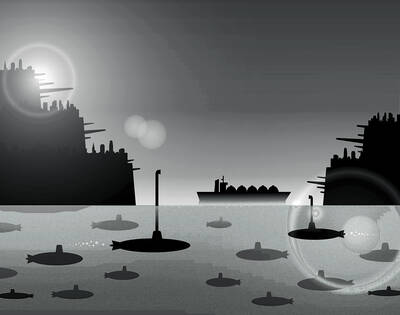
However, it can soften the sanctions’ effects and strengthen the Iranian regime’s resilience. Iran has already shown its capacity to resist by downing a US spy drone, allegedly targeting six oil tankers and seizing two more in the vicinity of the Strait of Hormuz. It has thus signaled its ability to choke the strait, through which one-fifth of the world’s oil passes, despite the US show of force in the Persian Gulf to ensure maritime safety.
Trump’s usual confusing policy pronouncements have not helped him either. He has moved from one end of the spectrum, defined by hawkish US Secretary of State Mike Pompeo, US National Security Adviser John Bolton and Israeli Prime Minister Benjamin Netanyahu, to act militarily against Iran, to the other end, where his own “no war” impulses have prevailed.
He seeks to use the US’ economic power, combined with threats, rather than military might, to achieve his objectives.
However, when it comes to Iran, he has picked the wrong target. He and his advisers have shown a very poor understanding of the nature of the Iranian regime and have underestimated its reactive capability in a highly complex region.
Trump’s team has missed the point that the regime is well entrenched and benefits from a robust regional security structure, stretching from Afghanistan to Lebanon and Yemen. It is ideological in character, but pragmatic when it comes to its survival. The fortunes of the ruling clerics and their supporters are intertwined with the regime’s survival.
The highest echelons of the regime still comprise those who are very distrustful of the US, owing to Washington’s long years of support for the monarchy of Mohammad Reza Shah Pahlavi. Ayatollah Ruhollah Khomeini, who led the 1979 revolution that toppled the Shah, sought to build an Islamic polity with the capacity to withstand its internal and external adversaries.
Khomeini died in mid-1989, but his successor, Ayatollah Ali Khamenei, has essentially followed in his footsteps, acting both ideologically and pragmatically to ensure the continuity of the Islamic regime.
While resentful of the US and its allies, he has been flexible enough, for example, to bless the JCPOA, forge close relations with Russia and China, and maintain reasonable ties with European powers to cope with US pressure.
Meanwhile, the Islamic regime has worked intensively to build its soft and hard power, involving a network of sectarian and strategic partners across the region. It has nurtured an asymmetrical warfare strategy not only to survive a foreign attack, but to turn it into a devastating regional confrontation. It has lived with US sanctions for most of its 40 years and mastered a variety of methods to circumvent US pressure.
This does not mean that the regime is unwilling to renegotiate the JCPOA. It has already signaled a willingness to do so, but only if this does not threaten its domestic and regional security and only if given sufficient economic and strategic incentives to do so.
The regime remains factionalized between hardliners and moderates, with the former in control of more levers of power than the latter.
However, it would be erroneous to assume that in the face of a serious external threat all the factions would not unite and be supported by a majority of the public, who have historically been known for their fierce nationalist sentiment.
The US policy of confronting and containing the regime has not borne fruit. Former US president Barack Obama’s policy of engagement proved to be more productive, as the conclusion of the JCPOA showed.
Trump, however, has painted himself into a corner, and now faces the prospect of an unwinnable military confrontation with far-reaching regional and wider implications, including economically devastating effects on oil supplies and prices.
Amin Saikal is a professor of political science at the Australian National University.
Copyright: Project Syndicate
In the event of a war with China, Taiwan has some surprisingly tough defenses that could make it as difficult to tackle as a porcupine: A shoreline dotted with swamps, rocks and concrete barriers; conscription for all adult men; highways and airports that are built to double as hardened combat facilities. This porcupine has a soft underbelly, though, and the war in Iran is exposing it: energy. About 39,000 ships dock at Taiwan’s ports each year, more than the 30,000 that transit the Strait of Hormuz. About one-fifth of their inbound tonnage is coal, oil, refined fuels and liquefied natural gas (LNG),
On Monday, the day before Chinese Nationalist Party (KMT) Chairwoman Cheng Li-wun (鄭麗文) departed on her visit to China, the party released a promotional video titled “Only with peace can we ‘lie flat’” to highlight its desire to have peace across the Taiwan Strait. However, its use of the expression “lie flat” (tang ping, 躺平) drew sarcastic comments, with critics saying it sounded as if the party was “bowing down” to the Chinese Communist Party (CCP). Amid the controversy over the opposition parties blocking proposed defense budgets, Cheng departed for China after receiving an invitation from the CCP, with a meeting with
Chinese Nationalist Party (KMT) Chairwoman Cheng Li-wun (鄭麗文) is leading a delegation to China through Sunday. She is expected to meet with Chinese President Xi Jinping (習近平) in Beijing tomorrow. That date coincides with the anniversary of the signing of the Taiwan Relations Act (TRA), which marked a cornerstone of Taiwan-US relations. Staging their meeting on this date makes it clear that the Chinese Communist Party (CCP) intends to challenge the US and demonstrate its “authority” over Taiwan. Since the US severed official diplomatic relations with Taiwan in 1979, it has relied on the TRA as a legal basis for all
The two major opposition parties, the Chinese Nationalist Party (KMT) and the Taiwan People’s Party (TPP), jointly announced on Tuesday last week that former TPP lawmaker Chang Chi-kai (張啟楷) would be their joint candidate for Chiayi mayor, following polling conducted earlier this month. It is the first case of blue-white (KMT-TPP) cooperation in selecting a joint candidate under an agreement signed by their chairpersons last month. KMT and TPP supporters have blamed their 2024 presidential election loss on failing to decide on a joint candidate, which ended in a dramatic breakdown with participants pointing fingers, calling polls unfair, sobbing and walking


 RSS
RSS