


The term mabao (媽寶, literally: “mama’s baby”) has been in the news quite often of late. For example, on Wednesday, a 26-year-old man was questioned by police regarding allegations of fraud and money laundering in Tainan.
The man has wealthy parents and lived in a NT$30 million (US$981,804) apartment without a stable job, and according to reports he cried during police questioning and asked to consult his mother.
On the other end of the spectrum, a few weeks ago reports chronicled a woman’s relationship with a mabao who would ask his mother for permission to do anything — including breaking up with her.
These are extreme examples, but there seems to be something seriously wrong with parenting in Taiwan, where parents dote on children so much that they are incapable of making their own decisions and taking responsibility for their actions.
In many Western countries, they would have been kicked out of the house when they turned 18. However, here, they are expected to stay at home until they get married — and even then some live at home with their spouse. Such practices make it even harder for parents to figure out when or how to let go.
Some reports say that this has gone from “helicopter parenting” to the next level: “lawnmower parenting,” where the parents scurry in front of their children, carefully planning their life route and clearing any obstacles.
Such parents will not let their children face their own problems, taking it upon themselves to do things as trivial as making sure that there is air conditioning in their dorm rooms at school — something the adult child could easily request by themselves.
Business Today addressed the issue in a June 20 article, excerpts from which are being shown on screens in the Taipei MRT system. The article called overparenting a “national security issue,” which is not that much of an exaggeration.
The piece focused on college students and cited several more examples, such as a mother who drives her daughter to university every day, a mother who requested that the school change the date of its final exam because it conflicted with a family vacation and a mother who asked a school not to give her son low marks so that he would not get frustrated.
It appears to be the same in the army.
A report in April said that parents call the 1985 military hotline incessantly about issues such as torn clothes, badly fitting shoes and fish allergies.
There are differences between Western and Eastern cultures, but students elsewhere in Asia — including Hong Kong and Macau, but not China — would not consider such behavior normal.
In a poll conducted by the magazine, 56 percent of respondents said that Taiwanese parents are overprotective and almost 50 percent said that students rely on their parents too much when making decisions.
The bottom line is that students are by no means “children” — they are fully grown adults who need to learn to take responsibility.
However, by the time they are grown, it is likely too late to rectify the course. One cannot be overprotective for a long time and then suddenly let go. Parents need to start teaching their children to be responsible at a young age.
It is alarming how many parents do not have any control of their children in public, who seem to have every toy they want, including the latest iPhone, and are running around screaming at the top of their lungs while harassing others and sometimes destroying public property with no consequences.
A good way to start would be to make children clean up their own messes. It truly would be a national security issue if there were no responsible people to keep the nation afloat.
KMT Chairwoman Cheng Li-wun’s (鄭麗文) recent visit to Beijing and her upcoming visit to Washington will serve as a high-level test of her diplomatic mettle. In Beijing, Cheng was received with symbolic gestures, a warm reception, and high-level access. In Washington, she will receive far less pomp and far sharper questions about the KMT’s vision for the future of Taiwan. Her challenge will be to persuade Washington that the KMT’s engagement with China can coexist with strong deterrence. Cheng’s April 7-12 visit to mainland China coincided with an intense period of conflict in Iran. Despite the strategic significance of Cheng’s trip,
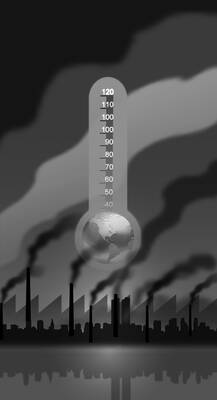
The closure of the Strait of Hormuz has sent the vast Asian chemicals industry into a tailspin. Deprived of the likes of Qatari natural gas and Saudi Arabian oil, the region’s fertilizer and plastics plants are slowing production or even shutting down. Everywhere except China, that is. In petrochemicals, China is unique. As well as a traditional industry that uses oil and gas as feedstock, it has parallel output that relies on its abundant domestic coal. Unsurprisingly, India and other regional powers want to copy and paste the Chinese method. This would not be easy — or climate friendly. The
Indonesian President Prabowo Subianto says he knows how to fix the problems facing Indonesia. Yet his economic mismanagement and authoritarian tendencies are steering the nation toward a familiar mix of currency instability and political chaos. The world’s fourth-most populous nation risks reversing the hard-won democratic and business reforms that came after the Asian Financial Crisis in 1997. At that time, the rupiah collapsed and the political upheaval that followed forced former president Haji Mohamed Suharto from power. Prabowo’s administration is ignoring similar warning signs. That disconnect was apparent in a national address on Wednesday, when Prabowo projected the swagger that has
“Of course you can choose not to be Taiwanese, just do not stay here,” chairwoman of Taipei 101 operator Taipei Financial Center Corp Janet Chia (賈永婕) said in an online interview with local entertainer Tai Chih-yuan (邰智源), triggering intense discussion on social media, with politicians across party lines weighing in. In the interview, which was aired on May 14, Chia and Tai’s discussion over a meal in Taipei 101 covered Chia’s career change from entertainer to chairwoman and US climber Alex Honnold’s free solo climb up the Taipei 101 building. During the interview, Chia said, “Being on this land, we


 RSS
RSS