


Can the New Taipei City Government really have planted more than 1 million trees in Yonghe District (永和) as it has claimed?
The city government’s landscaping department said that it planted more than 1.46 million trees in Jhonghe (中和) and Yonghe districts between 2014 and last year, and 250,000 in the same two districts this year.
Hsu Chao-shing (許昭興), who is one of four city councilors representing Yonghe, said that residents had not noticed so many trees being planted.
The figures do not seem realistic from either a scientific or practical point of view.
To put it in perspective, we might consider the case of the Linkou Power Plant (林口發電廠). The plant’s 2008 environmental impact assessment included a resolution to compensate for its carbon emissions by planting 1 million trees on 1,000 hectares.
However, it could only find enough land in New Taipei City to plant 863 trees, so in 2015, it got permission on the grounds of “changed environmental conditions” to install 80,000 energy-saving LED lights instead, and that was the end of the matter.
The landscaping department said that its figure was audited, but the only way they could have planted so many is if all the trees planted had died within a year and this mass die-off had happened repeatedly.
If they really did plant all those trees without bothering to ensure their survival by watering and caring for them, then the whole exercise would appear to be a huge waste of public funds, and it would also suggest that the auditing offices have been seriously negligent in monitoring the civil service’s budgetary performance.
The amount of green space available to New Taipei City residents is the second lowest of Taiwan’s six special municipalities, only ahead of Taoyuan. As of 2015, each New Taipei City resident had just 3.18m2 of green space on average — much less than the WHO’s recommendation of 8m2 per person and less than cities such as Paris, with 12m2 per person, and Beijing, with 15m2.
This figure puts it 24 years behind Taipei, where the amount of green space per person reached 3.44m2 in 1991. The figure for New Taipei City’s main urban areas is just 1.4m2, putting it 34 years behind Taipei, which achieved 1.84m2 per person in 1981.
Yonghe has the least green space per person in New Taipei City, despite having originally been planned as a garden district.
This is because budgets for parks and other green spaces have been canceled or cut over a long period of time. So many people have moved into the district that they outnumber the original inhabitants several times over.
Consequently, the average amount of green space per person is a mere 0.42m2, or less than the size of a newspaper. This puts Yonghe 50 years behind Taipei, which achieved 0.72m2 per person in 1968.
Furthermore, the target figures in New Taipei City’s 2015 environmental impact assessment report are not expected to be reached until 2026.
The report said the city plans to “increase the average amount of green space per person in main urban areas from 1.4m2 to 2m2 by 2026, and if riverside parks are included there [will] be 5.4m2 per person.”
New Taipei City Mayor Eric Chu (朱立倫) would be well advised to reassess the city government’s key performance indicators for protecting and planting trees, and maintaining green spaces.
The landscaping department should define the number of trees planted as only including what most people would recognize as actual trees, rather than bushes and shrubs, and it should count the trees that are cared for and survive, rather than just those that are planted.
It should not be miserly about recognizing and listing protected trees, and should stop using restrictive standards as a pretext for not listing them. Its subordinate administrative districts should not report fewer trees for listing than civic groups do.
As for the figures used for assessing urban plans, the New Taipei City Government tends to publicize numbers such as the additional floor space available in concrete buildings after urban rezoning, the higher bids offered, and governance indicators that are slanted in favor of real-estate corporations.
When formulating urban plans, it should concentrate on setting aside at least 10 percent of the land for parks and other green spaces, as required by the Urban Planning Act (都市計畫法), to increase the overall amount of green space per person and meet the WHO’s goals for healthy cities.
That is the only way to turn New Taipei City into a livable place that consumes less energy, emits less carbon and offers its residents happiness.
Pan Han-chiang is secretary-general of the Association of Taiwan Tree-Huggers and a tree protection group in the Jhonghe and Yonghe districts of New Taipei City.
Translated by Julian Clegg
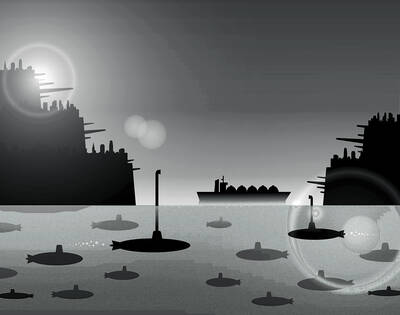
In the event of a war with China, Taiwan has some surprisingly tough defenses that could make it as difficult to tackle as a porcupine: A shoreline dotted with swamps, rocks and concrete barriers; conscription for all adult men; highways and airports that are built to double as hardened combat facilities. This porcupine has a soft underbelly, though, and the war in Iran is exposing it: energy. About 39,000 ships dock at Taiwan’s ports each year, more than the 30,000 that transit the Strait of Hormuz. About one-fifth of their inbound tonnage is coal, oil, refined fuels and liquefied natural gas (LNG),
On Monday, the day before Chinese Nationalist Party (KMT) Chairwoman Cheng Li-wun (鄭麗文) departed on her visit to China, the party released a promotional video titled “Only with peace can we ‘lie flat’” to highlight its desire to have peace across the Taiwan Strait. However, its use of the expression “lie flat” (tang ping, 躺平) drew sarcastic comments, with critics saying it sounded as if the party was “bowing down” to the Chinese Communist Party (CCP). Amid the controversy over the opposition parties blocking proposed defense budgets, Cheng departed for China after receiving an invitation from the CCP, with a meeting with
To counter the CCP’s escalating threats, Taiwan must build a national consensus and demonstrate the capability and the will to fight. The Chinese Communist Party (CCP) often leans on a seductive mantra to soften its threats, such as “Chinese do not kill Chinese.” The slogan is designed to frame territorial conquest (annexation) as a domestic family matter. A look at the historical ledger reveals a different truth. For the CCP, being labeled “family” has never been a guarantee of safety; it has been the primary prerequisite for state-sanctioned slaughter. From the forced starvation of 150,000 civilians at the Siege of Changchun
The two major opposition parties, the Chinese Nationalist Party (KMT) and the Taiwan People’s Party (TPP), jointly announced on Tuesday last week that former TPP lawmaker Chang Chi-kai (張啟楷) would be their joint candidate for Chiayi mayor, following polling conducted earlier this month. It is the first case of blue-white (KMT-TPP) cooperation in selecting a joint candidate under an agreement signed by their chairpersons last month. KMT and TPP supporters have blamed their 2024 presidential election loss on failing to decide on a joint candidate, which ended in a dramatic breakdown with participants pointing fingers, calling polls unfair, sobbing and walking


 RSS
RSS