


The US’ withdrawal from the Paris Agreement has naturally set the tongues of commentators and pundits all over the world wagging, because of its abruptness and its implications.
Ignore for the moment the technical reality that the US cannot formally extricate itself from this accord before Nov. 4, 2020; the criticisms and judgements are still justified.
A prime motive among signatory nations is the growing and expressed realization that whatever a nation’s size, all people share a common home on planet Earth, and with that home is the mutual goal of interdependent survival.
The fate of the Earth in issues like climate change can now be linked to the actions of any and all member nations, but in particular to the actions of larger nations like the US.
The reality of this shared dependency and responsibility is found in the well-known saying of the ancient Jewish scholar Hillel HaGadol, in which he presented the dialectic of individual and community: “If I am not for myself, who will be for me; but if I am only for myself, what am I? If not now, then when?”
In examining this dialectic from a macro perspective where nations are seen as individuals in a community of nations, it is clear that any nation can and should have legitimate self-interests, but that national self-interest should never be at the expense of the planet and the survival of all.
While a greater burden falls on the competitiveness of larger and more influential nations, that does not mean that they can ignore the needs of others.
For example, the dystopia George Orwell painted in his prophetic novel 1984 comes to mind.
Based on what he knew at the end of World War II, Orwell projected a world that was divided into three competing powers: Oceania, Eurasia and Eastasia, which seemed to always be at war with each other and be seeking to control the remaining other territories.
The exactness of Orwell’s thought could be contested, but in today’s world, there are indeed three major powers: the US, Russia and China. The national interests of these three are frequently in contention with each other, and so other nations — particularly smaller nations — will often suffer in their zero-sum games.
A deeper issue is that many people in the three major nations still maintain a cyclic perspective on history and can only see their greatness as a return to the glory days of yore.
They fail to see that human life and actions are linear and are becoming more interdependent.
Process is the norm and the world continues to change and become smaller in scope. There might be regression, because process is not always progress, but the world continues in process.
People can never go home again; a new global paradigm is developing.
The election promise of US President Donald Trump to “make America great again” is one such lost cry.
It is primarily supported by those who miss the past glory days of the 1950s when US manufacturing, untouched by the ravages of war, led the world.
Those people fail to see that US manufacturing purposely moved overseas because of the nation’s desire for cheap consumer goods produced by cheap labor in a globally competitive market.
Taiwan learned this lesson in the 1980s — it is now linear in thinking and does not seek to return to its one-party state days, but the US still looks back.
Russia under President Vladimir Putin seeks to nostalgically return to the pre-perestroika and pre-glasnost days of the Soviet Union where Russia was a much stronger power under the banner of Marx. It wants a return to past control while still allowing for its newfound capitalist oligarchies.
China of course wishes to return to Middle Kingdom glory days by keeping the lands the Manchus conquered and seeking to forget their “century of humiliation,” but it now faces new challenges as double-digit GDP growth is no longer possible and a demand for transparency increases while its population ages. It might not avoid the same fate as Russia.
Each of these three nations faces its own problems and thinks they can be solved by a cyclic restoration of past greatness.
All fail to see linear history and how with a “shrinking planet,” Hillel’s concepts demonstrate that a paradigm shift is in order.
In the new world order, no one nation can be the dominant leader. In addition to national self-interest, all nations must be willing to jointly protect the home planet.
Writing more than 70 years ago, Orwell can be excused for various omissions. He wrote about nations at the end of World War II and in particular a world where mid-sized states had not established their key role.
Orwell could not have anticipated an EU made up of mid-sized nations; he would have had have no idea how it would deal with Brexit.
He could also not see the future importance of a vast continent full of mid-sized nations like Africa, and he could not have foreseen the challenge of a nation like Taiwan.
Among the mid-sized nations, perhaps the greatest anomaly and challenge is that of Taiwan.
Taiwan has a population larger than 70 percent of the nations in the UN and its GDP is larger than 80 percent of all nations. It is No. 14 among about 200 nations in global competitiveness, and even takes the words of Hillel seriously: It is for itself, but it is also for others.
By all standards, it should be recognized as a great contributor, but it is not.
Taiwan is shut out by the selfishness of one nation, and that provides a continuous danger to the world, including the health of the planet. For example, its knowledgeable representatives were not allowed in the WHO’s World Health Assembly.
Following the words of Hillel, leadership in most EU member states sense that the nation cannot be only for themselves.
It also now appears that British Prime Minster Theresa May, who wanted a stronger hand going into Brexit talks, will most likely not get it, while in the US, many cities and states are resisting Trump’s decision to pull out of the Paris accord and promising to abide by it.
Trump must once again face the fact that although he won by the quirk of the electoral college, he lost by 3 million votes, and in Russia, whatever happens, it will not regain many of the Eastern block countries it lost.
The double anomaly of Taiwan can be a beacon, and play a beacon’s role in this changing landscape. Other nations, particularly mid-sized ones, can sense the discredit it has received while acknowledging its distinctive prominence.
Taiwan must be for itself, but it also remains committed to the global community. It is time for the global community to accept and welcome the reality of Taiwan.
Jerome Keating is a commentator in Taipei.
KMT Chairwoman Cheng Li-wun’s (鄭麗文) recent visit to Beijing and her upcoming visit to Washington will serve as a high-level test of her diplomatic mettle. In Beijing, Cheng was received with symbolic gestures, a warm reception, and high-level access. In Washington, she will receive far less pomp and far sharper questions about the KMT’s vision for the future of Taiwan. Her challenge will be to persuade Washington that the KMT’s engagement with China can coexist with strong deterrence. Cheng’s April 7-12 visit to mainland China coincided with an intense period of conflict in Iran. Despite the strategic significance of Cheng’s trip,
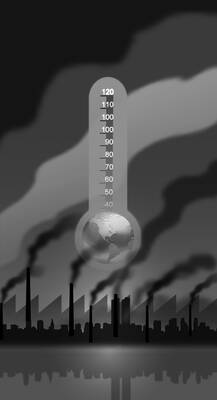
The closure of the Strait of Hormuz has sent the vast Asian chemicals industry into a tailspin. Deprived of the likes of Qatari natural gas and Saudi Arabian oil, the region’s fertilizer and plastics plants are slowing production or even shutting down. Everywhere except China, that is. In petrochemicals, China is unique. As well as a traditional industry that uses oil and gas as feedstock, it has parallel output that relies on its abundant domestic coal. Unsurprisingly, India and other regional powers want to copy and paste the Chinese method. This would not be easy — or climate friendly. The
Indonesian President Prabowo Subianto says he knows how to fix the problems facing Indonesia. Yet his economic mismanagement and authoritarian tendencies are steering the nation toward a familiar mix of currency instability and political chaos. The world’s fourth-most populous nation risks reversing the hard-won democratic and business reforms that came after the Asian Financial Crisis in 1997. At that time, the rupiah collapsed and the political upheaval that followed forced former president Haji Mohamed Suharto from power. Prabowo’s administration is ignoring similar warning signs. That disconnect was apparent in a national address on Wednesday, when Prabowo projected the swagger that has
“Of course you can choose not to be Taiwanese, just do not stay here,” chairwoman of Taipei 101 operator Taipei Financial Center Corp Janet Chia (賈永婕) said in an online interview with local entertainer Tai Chih-yuan (邰智源), triggering intense discussion on social media, with politicians across party lines weighing in. In the interview, which was aired on May 14, Chia and Tai’s discussion over a meal in Taipei 101 covered Chia’s career change from entertainer to chairwoman and US climber Alex Honnold’s free solo climb up the Taipei 101 building. During the interview, Chia said, “Being on this land, we


 RSS
RSS