


Earlier this month, Pxmart Co Ltd president Hsu Chung-jen (徐重仁) commented on the issue of low wages among Taiwan’s young people and accused them of spending more money than other age groups, triggering a strong backlash online.
Some people said Hsu lacked sympathy for young Taiwanese and their way of life, while others said he seemed to have the mindset of a demanding boss who is only good at pointing fingers at others.
Aware of the potential consequences of such a backlash to his business, the retail veteran later posted an apology on Facebook, saying that he should not pass judgement too quickly on the younger generation and that he had decided to speak less and listen more.
Regardless of whether Hsu should make an apology over his personal opinion and whether his observation was wrong, the matter has sparked further discussion among the public about the problems of stagnant wage growth and widening inequality in the nation.
Discussions about low wages and the wealth gap have been going on for many years. Policymakers from both major parties have repeatedly vowed to use all available resources to address these problems. However, apart from hapless attempts to morally persuade Taiwan’s employers, the government has done little to alleviate people’s concerns.
Data about median wages in the nation’s industrial and service sectors released by the Directorate-General of Budget, Accounting and Statistics (DGBAS) late last month showed that the situation is worsening.
The overall median wage last year declined 0.6 percent from a year earlier to NT$40,612 per month, which means that about half of the nation’s employees earned less than NT$40,000 per month. As the median wage for last year was lower than the average wage of NT$48,790 and the gap between the two figures widened from NT$6,026 in 2009 to NT$7,673 in 2015 and to NT$8,178 last year, it is clear that income inequality is growing.
The ratio of median to average wages last year dropped to 83.24 percent from 84.25 percent the previous year, the lowest level since the 2008 global financial crisis. This is another sign that the distribution is skewed toward low wages.
The DGBAS last week pointed to the relocation of local manufacturers to other nations as the main cause of low wages. As the high-paying manufacturing base is shrinking, while the number of low-paying retail and food service jobs is rapidly increasing, it is hardly surprising that wage level growth has nearly stalled over the past 16 years, the DGBAS said.
However, the problem of low wages involves a complicated set of factors and the DGBAS’ reasoning only relates to changes in the nation’s economic structure and social development in the past two decades.
The problems could originate from businesses’ legitimate concerns over taxes, environmental rules, labor competitiveness and other cost issues, but to some extent, it could also be blamed on corporations’ greed and selfishness, exploitation in the workplace or distortions in the labor market.
The government has failed to put enough pressure on businesses for too long.
The nation’s flawed political mechanism is a cause for concern, slowing down policymaking, limiting the scope and effectiveness of relevant policies and making scant progress in fostering an environment where companies have better access to investment funds and can stay profitable — and willing to offer higher pay.
We often hear people say that it will take some time to transform the nation’s economic structure and upgrade its industrial sector, but nothing will happen unless all of us get down to work.
KMT Chairwoman Cheng Li-wun’s (鄭麗文) recent visit to Beijing and her upcoming visit to Washington will serve as a high-level test of her diplomatic mettle. In Beijing, Cheng was received with symbolic gestures, a warm reception, and high-level access. In Washington, she will receive far less pomp and far sharper questions about the KMT’s vision for the future of Taiwan. Her challenge will be to persuade Washington that the KMT’s engagement with China can coexist with strong deterrence. Cheng’s April 7-12 visit to mainland China coincided with an intense period of conflict in Iran. Despite the strategic significance of Cheng’s trip,
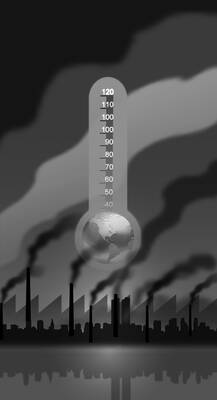
The closure of the Strait of Hormuz has sent the vast Asian chemicals industry into a tailspin. Deprived of the likes of Qatari natural gas and Saudi Arabian oil, the region’s fertilizer and plastics plants are slowing production or even shutting down. Everywhere except China, that is. In petrochemicals, China is unique. As well as a traditional industry that uses oil and gas as feedstock, it has parallel output that relies on its abundant domestic coal. Unsurprisingly, India and other regional powers want to copy and paste the Chinese method. This would not be easy — or climate friendly. The
US President Donald Trump recently repeated his claim that “Taiwan stole America’s chip industry,” reigniting public debate on the issue. As a former Taiwanese minister of economic affairs and an entrepreneur deeply involved in semiconductor supply chain development, I feel a responsibility to clarify this misunderstanding. From the perspective of global industrial evolution and the economic principle of comparative advantage, such a statement appears overly simplistic and risks obscuring the essence of the issue. The rise of Taiwan’s semiconductor industry was not built on “replacing America,” but rather emerged as a result of countries pursuing different development paths within the
Indonesian President Prabowo Subianto says he knows how to fix the problems facing Indonesia. Yet his economic mismanagement and authoritarian tendencies are steering the nation toward a familiar mix of currency instability and political chaos. The world’s fourth-most populous nation risks reversing the hard-won democratic and business reforms that came after the Asian Financial Crisis in 1997. At that time, the rupiah collapsed and the political upheaval that followed forced former president Haji Mohamed Suharto from power. Prabowo’s administration is ignoring similar warning signs. That disconnect was apparent in a national address on Wednesday, when Prabowo projected the swagger that has


 RSS
RSS