


Lord Palmerston said: “Nations have no permanent friends or allies, they only have permanent interests.” This is particularly true for the Philippines, whose President Rodrigo Duterte shocked the world when last week he announced his intention to break strategic and economic ties with the US and form an alliance with China.
While Duterte has a tendency to make outrageous public statements that he later retracts, his actions manifest a nationalist sentiment among Philippine elites and represents a new attempt to pursue an independent foreign policy.
This fiasco caused a great deal of confusion in Washington, Manila and other East Asian capitals. First, Duterte’s announcement came as a significant victory for China on the eve of the 80th anniversary of the Chinese Red Army’s Long March — a series of military retreats by Chinese Communists to evade the hostile pursuit of Chinese Nationalist soldiers during the early 1930s.
A week ago, Beijing was still coming to grips with the aftermath of diplomatic setbacks like South Korea’s deployment of the US Terminal High Altitude Area Defense anti-missile system against North Korea and the July ruling by the Permanent Court of Arbitration at The Hague, the Netherlands, that rebuked China’s historic claims over the South China Sea. Duterte’s rapprochement has re-energized Beijing’s ongoing efforts to lay claim to and militarize the area.
Second, Duterte completely reversed former Philippine president Benigno Aquino III’s tough stand on maritime sovereignty issues. When The Hague urged Beijing to suspend further expansion into the Philippines’ proclaimed territories, the Scarborough Shoal (Huangyan Island, 黃岩島) and Mischief Reef (Meiji Reef, 美濟礁), it was a legal victory for Manila. For months, Beijing has been contemplating whether to withdraw from the UN Convention on the Law of the Sea or to adhere to international law and reconcile with the Philippines.
When Duterte publicly acknowledged Beijing’s claims to maritime resources in the South China Sea in exchange for US$24 billion in Chinese investment and loan pledges, he gave China a face-saving platform to escape the legal crisis.
Third, some officials in the West have been frustrated by Duterte’s adventurism, seeing him as a wild card and have demonized him as “a [North Korean Leader} Kim Jong-un, minus the nukes.”
Whether Duterte is playing China against the US and Japan to extract further gains remains to be seen.
Politically savvy and pragmatic, Duterte understands that Washington has little room to maneuver. If it sets out to downgrade ties with Manila in retaliation, it gives Duterte a reason to reassess the mutual defense treaty of 1951 and prompt fresh anxieties for Tokyo, Seoul and other nations about their strategic agreements with the US.
As Washington has been strengthening ties with traditional allies in the Asia-Pacific, many Asian nations are seizing the opportunity to reset their own diplomatic and developmental agendas in a highly fluid landscape of geopolitics. Duterte’s Philippines is no exception. This regional rebalancing could prompt the next US president to rethink the East Asian strategy and identify new partners.
In this regard, Taiwan might want to reprioritize its “new southbound policy” from an economic to a geopolitical strategy. Besides looking for business opportunities, Taiwan should position itself as a new stabilizing force and support US allies in creating a multilateral platform to address maritime sovereignty disputes. Only by doing so can Taiwan effectively respond to China’s renewed international campaign to isolate the nation.
Joseph Tse-hei Lee is professor of history at Pace University in New York.
KMT Chairwoman Cheng Li-wun’s (鄭麗文) recent visit to Beijing and her upcoming visit to Washington will serve as a high-level test of her diplomatic mettle. In Beijing, Cheng was received with symbolic gestures, a warm reception, and high-level access. In Washington, she will receive far less pomp and far sharper questions about the KMT’s vision for the future of Taiwan. Her challenge will be to persuade Washington that the KMT’s engagement with China can coexist with strong deterrence. Cheng’s April 7-12 visit to mainland China coincided with an intense period of conflict in Iran. Despite the strategic significance of Cheng’s trip,
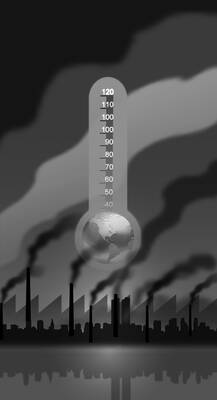
The closure of the Strait of Hormuz has sent the vast Asian chemicals industry into a tailspin. Deprived of the likes of Qatari natural gas and Saudi Arabian oil, the region’s fertilizer and plastics plants are slowing production or even shutting down. Everywhere except China, that is. In petrochemicals, China is unique. As well as a traditional industry that uses oil and gas as feedstock, it has parallel output that relies on its abundant domestic coal. Unsurprisingly, India and other regional powers want to copy and paste the Chinese method. This would not be easy — or climate friendly. The
US President Donald Trump recently repeated his claim that “Taiwan stole America’s chip industry,” reigniting public debate on the issue. As a former Taiwanese minister of economic affairs and an entrepreneur deeply involved in semiconductor supply chain development, I feel a responsibility to clarify this misunderstanding. From the perspective of global industrial evolution and the economic principle of comparative advantage, such a statement appears overly simplistic and risks obscuring the essence of the issue. The rise of Taiwan’s semiconductor industry was not built on “replacing America,” but rather emerged as a result of countries pursuing different development paths within the
Indonesian President Prabowo Subianto says he knows how to fix the problems facing Indonesia. Yet his economic mismanagement and authoritarian tendencies are steering the nation toward a familiar mix of currency instability and political chaos. The world’s fourth-most populous nation risks reversing the hard-won democratic and business reforms that came after the Asian Financial Crisis in 1997. At that time, the rupiah collapsed and the political upheaval that followed forced former president Haji Mohamed Suharto from power. Prabowo’s administration is ignoring similar warning signs. That disconnect was apparent in a national address on Wednesday, when Prabowo projected the swagger that has


 RSS
RSS