


The US Department of State in October last year released the International Religious Freedom Report for 2014, which strongly criticized Beijing for persecuting Christians, Muslims and Falun Gong practitioners. According to last year’s report, which was released this month, the Chinese government’s crackdown on religious freedom and human rights activists continues even more intensely.
Xinhua news agency on Aug. 2 reported that human rights activist Hu Shigen (胡石根) was sentenced to seven-and-a-half years in prison for subversion. In addition, the Chinese government is in the process of pressing the same charges against several other human rights advocates.
Hu, 61, is a leading figure in many underground Christian groups. He has been advocating free speech and the right to protest for years. Prior to his sentence, he had served 16 years in prison for his campaign to raise awareness about the 1989 student protests at Tiananmen Square.
According to Xinhua, Hu was found guilty of disseminating subversive ideas that threaten national security through an “illegal” church organization.
On Aug. 2, another activist, Zhai Yanmin (翟巖民), was given a three-year suspended sentence for organizing protests to criticize the government.
According to Radio Free Asia, Chinese authorities late last month began demolishing the Larung Gar Buddhist Academy in the Garze Tibetan Autonomous Prefecture in Sichuan Province.
The US State Department on Aug. 8 expressed concern over the demolition, urging Beijing to communicate with the academy’s leaders to protect the religious freedom of Tibetans.
Although China touts itself as a nation of religious freedom, it says one thing and does another. Considering this, will the Vatican establish diplomatic ties with China despite the relentless crackdowns on Christians and other religious groups?
The Vatican is the only country in Europe with which Taiwan has formal diplomatic relations. It does not have diplomatic relations with China because of Beijing’s tight restrictions on religious activities, including Catholicism, and its interference with the Vatican’s clerical appointments.
According to the Hong Kong weekly Kung Kao Pao, Hong Kong Cardinal John Tong (湯漢) earlier this month said that Beijing and the Vatican are about to reach a preliminary agreement on several issues, including the appointment of bishops, with Beijing offering a list with the names of potential bishops from which the pope can select the next bishop. A similar proposal had been rejected by previous popes, including Pope Benedict XVI, who said that it contradicts Catholic doctrine that state entities extraneous to the church should “place themselves above the bishops and guide the life of the ecclesiastical community.”
Pope Francis has made friendly gestures and expressed a will to engage in dialogue with Beijing. If he is willing to concede to Beijing’s requests, it is only a matter of time before the Vatican establishes diplomatic relations with China and severs ties with Taiwan.
Vice President Chen Chien-jen (陳建仁) is to visit the Vatican on Sunday. Whether his visit can fix the situation is yet to be determined.
Should the Vatican decide to compromise with China on its infringement of human rights and religious freedoms, it would be sending the worst possible message to the world — and that would be a serious mistake.
Parris Chang, professor emeritus of political science at Penn State University and president of the Taiwan Institute for Political, Economic and Strategic Studies, served as a Democratic Progressive Party legislator and deputy secretary-general of the National Security Council.
KMT Chairwoman Cheng Li-wun’s (鄭麗文) recent visit to Beijing and her upcoming visit to Washington will serve as a high-level test of her diplomatic mettle. In Beijing, Cheng was received with symbolic gestures, a warm reception, and high-level access. In Washington, she will receive far less pomp and far sharper questions about the KMT’s vision for the future of Taiwan. Her challenge will be to persuade Washington that the KMT’s engagement with China can coexist with strong deterrence. Cheng’s April 7-12 visit to mainland China coincided with an intense period of conflict in Iran. Despite the strategic significance of Cheng’s trip,
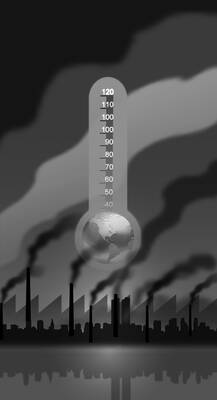
The closure of the Strait of Hormuz has sent the vast Asian chemicals industry into a tailspin. Deprived of the likes of Qatari natural gas and Saudi Arabian oil, the region’s fertilizer and plastics plants are slowing production or even shutting down. Everywhere except China, that is. In petrochemicals, China is unique. As well as a traditional industry that uses oil and gas as feedstock, it has parallel output that relies on its abundant domestic coal. Unsurprisingly, India and other regional powers want to copy and paste the Chinese method. This would not be easy — or climate friendly. The
History might remember 2026, not 2022, as the year artificial intelligence (AI) truly changed everything. ChatGPT’s launch was a product moment. What is happening now is an anthropological moment: AI is no longer merely answering questions. It is now taking initiative and learning from others to get things done, behaving less like software and more like a colleague. The economic consequence is the rise of the one-person company — a structure anticipated in the 2024 book The Choices Amid Great Changes, which I coauthored. The real target of AI is not labor. It is hierarchy. When AI sharply reduces the cost
US President Donald Trump recently repeated his claim that “Taiwan stole America’s chip industry,” reigniting public debate on the issue. As a former Taiwanese minister of economic affairs and an entrepreneur deeply involved in semiconductor supply chain development, I feel a responsibility to clarify this misunderstanding. From the perspective of global industrial evolution and the economic principle of comparative advantage, such a statement appears overly simplistic and risks obscuring the essence of the issue. The rise of Taiwan’s semiconductor industry was not built on “replacing America,” but rather emerged as a result of countries pursuing different development paths within the


 RSS
RSS