


The Executive Yuan’s publication of information about areas susceptible to soil liquefaction has come as a bombshell for Taiwan’s usually quiet society. The revelations have thrown a lot of people into a state of worry and confusion.
Cabinet spokesperson Sun Lih-chyun (孫立群) said that there is no reason to panic, as the government has drawn up a full set of complementary measures.
However, the online database and a telephone hotline have been overloaded with inquiries, showing just how anxious people are.
Why were the authorities in such a rush to release the data, which are important enough to have an impact on social stability, at this key moment when the outgoing government is preparing to transfer power to an incoming one and social stability should be a priority? It really has been done in too much of a rush.
The Executive Yuan said that the data on soil liquefaction is only “preliminary.” Although the data are very rough, consisting of maps with simply defined “red areas,” they have been enough to throw the public into turmoil, while the real-estate, mortgage and insurance markets have been unsettled. The atmosphere of anxiety is undoubtedly making things worse for Taiwan’s stagnant economy.
The Executive Yuan said that the government has a complete set of complementary measures already in place, but the measures all require the cooperation of the legislature and local governments. At present, just as government authority is being handed over and the Chinese Nationalist Party’s (KMT) “blue sky” is giving way to the Democratic Progressive Party’s (DPP) “green earth,” to what extent is this caretaker Cabinet actually capable of implementing the measures? Everyone knows the answer to that question.
A caretaker Cabinet should focus on maintaining stability. It should be obvious to anyone that releasing such crucial data that involves complementary measures would stir up trouble.
Has the transitional Cabinet not overstepped its remit by making such a move?
The Executive Yuan is trying to put out the flames by offering policy benefits.
It said that the government is to contribute NT$24 billion (US$738 million) over the next six years to pay for “health checks” for old buildings and to fund measures to prevent or reduce soil liquefaction.
However, the announcement also goes beyond the role of a caretaker Cabinet.
Common sense tells that announcing which areas are susceptible to soil liquefaction was bound to have a tremendous negative impact on social stability, as well as on business growth and economic activity.
Did the Executive Yuan instruct the National Development Council to carry out a regulatory impact analysis beforehand, or to propose risk mitigation countermeasures to deal with the negative consequences that it might have? Evidently not. The complementary measures that people are hearing about are media versions of the “official line.”
What needs to be done next? Local governments have no idea, and the public has even less of a clue.
According to Construction and Planning Agency figures, more than 3.68 million households in Taiwan live in buildings that are more than 30 years old. These older buildings are mainly concentrated in the six special municipalities, with at least 450,000 such households in Taipei. What is to be done with these older buildings? Surely that is the most urgent question.
However, while the central government is trumpeting its policies, local governments have not even drawn up budgets to deal with the issue and potential contractors are even less prepared to handle it.
People can only hope that the incoming government would quickly pick up the reins and deal with the issue, rather than just putting it off and hoping for the best.
Ted Chiou is a professor in the Department of Social and Policy Sciences at Yuan Ze University.
Translated by Julian Clegg
A gap appears to be emerging between Washington’s foreign policy elites and the broader American public on how the United States should respond to China’s rise. From my vantage working at a think tank in Washington, DC, and through regular travel around the United States, I increasingly experience two distinct discussions. This divergence — between America’s elite hawkishness and public caution — may become one of the least appreciated and most consequential external factors influencing Taiwan’s security environment in the years ahead. Within the American policy community, the dominant view of China has grown unmistakably tough. Many members of Congress, as

After declaring Iran’s military “gone,” US President Donald Trump appealed to the UK, France, Japan and South Korea — as well as China, Iran’s strategic partner — to send minesweepers and naval forces to reopen the Strait of Hormuz. When allies balked, the request turned into a warning: NATO would face “a very bad” future if it refused. The prevailing wisdom is that Trump faces a credibility problem: having spent years insulting allies, he finds they would not rally when he needs them. That is true, but superficial, as though a structural collapse could be caused by wounded feelings. Something
Former Taipei mayor and Taiwan People’s Party (TPP) founding chairman Ko Wen-je (柯文哲) was sentenced to 17 years in prison on Thursday, making headlines across major media. However, another case linked to the TPP — the indictment of Chinese immigrant Xu Chunying (徐春鶯) for alleged violations of the Anti-Infiltration Act (反滲透法) on Tuesday — has also stirred up heated discussions. Born in Shanghai, Xu became a resident of Taiwan through marriage in 1993. Currently the director of the Taiwan New Immigrant Development Association, she was elected to serve as legislator-at-large for the TPP in 2023, but was later charged with involvement
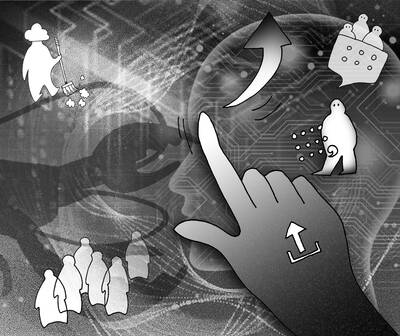
Weeks into the craze, nobody quite knows what to make of the OpenClaw mania sweeping China, marked by viral photos of retirees lining up for installation events and users gathering in red claw hats. The queues and cosplay inspired by the “raising a lobster” trend make for irresistible China clickbait. However, the West is fixating on the least important part of the story. As a consumer craze, OpenClaw — the AI agent designed to do tasks on a user’s behalf — would likely burn out. Without some developer background, it is too glitchy and technically awkward for true mainstream adoption,


 RSS
RSS