


Because of his essay Say Goodbye to Taiwan, US realist John Mearsheimer has been regarded as a proponent of the view that the US should abandon Taiwan. However, when Mearsheimer met with Democratic Progressive Party (DPP) Chairperson Tsai Ing-wen (蔡英文) on Tuesday last week, he made a clarification, saying his essay was misinterpreted because the editor of the US journal that published it gave it an incorrect title.
In his opinion, the US should not give up Taiwan. He emphasized that Taiwan is strategically significant to the US and that if the US were to give up Taiwan, the move would have a serious impact on trust in the US among its allies, especially Japan.
However, Mearsheimer also said that as China’s economic power continues to increase, so would its military strength and this would be a big challenge to the US.
Taiwan is, after all, in closer proximity to China than to the US. If China’s power continues to grow, the US will face a greater challenge in maintaining its interests in Southeast Asia.
For the past 25 years, China’s military budget has seen double-digit percentage growth almost every year, restructuring power and causing instability in East Asia, including tensions in the South and East China seas. This is a challenge not only to Taiwan and the US, but also to all East Asian nations.
On May 21, US Deputy Assistant Secretary for East Asian and Pacific Affairs Susan Thornton delivered a comprehensive report on the US’ Taiwan policy. She said that Taiwan is a vital US partner in East Asia and that the US and Taiwan have a friendly and intimate relationship. She added that the US is willing to continue to forge a comprehensive, sustainable and mutually beneficial relationship with Taiwan.
When this is considered alongside Mearsheimer’s clarification, it is obvious that relinquishing Taiwan is the opinion of only a very few US academics and not an important or mainstream opinion among US academics and think tanks, much less the official policy of the US government.
Faced with the military threat from China, Taiwan can only strive for support from the US and other nations, which is the most basic principle in diplomacy. Indeed, Taiwan fears being abandoned by the US, hence it should strive for convergence between Taiwan’s and the US’ interests, security and values, as well as mutual trust and understanding between the two nations. Doing so would consolidate their partnership and assure peace across the Taiwan Strait. At this stage, US support is an important source of confidence — as Taiwan conducts exchanges and talks with China — and is beneficial for cross-strait development.
Any view on the Taiwan-US relationship from a Chinese or US perspective that treats Taiwan as a mere a puppet of the US fails to take into account Taiwan’s subjectivity and national interests, and is therefore unworthy of commendation. Nevertheless, this view also reminds Taiwan that the US has its own subjectivity and national interests.
Hence, to assure its national security and interests, Taiwan must, on one hand, step up its collaboration with the US, and reinforce mutual trust and understanding between the two states, while on the other, reducing conflict with China and not depending excessively on US support.
Conversely, if China does not wish Taiwan to become a US ally or move closer to the US, it must reduce its military threat and diplomatic blockade of Taiwan.
In addition, China and Taiwan should at least enhance exchanges and dialogue, since that would be the only way to establish mutual trust and understanding across the Taiwan Strait, diminish the US’ role in the cross-strait relationship and increase the possibility of reconciliation and long-lasting peace between Taiwan and China.
Moreover, China must communicate with the DPP, because the party represents at least 45 percent of public opinion in Taiwan.
Without the DPP’s participation and consent, cross-strait political negotiations are unlikely to happen.
To sum up, Taiwan must move closer to the US before it can make peace with China. US support for Taiwan is a crucial force in maintaining peace in the Taiwan Strait; it will give Taiwan the confidence to engage in exchanges and dialogue with China, and make China realize that it must negotiate pragmatically with Taiwan on cross-strait political issues. This is the only way to create the conditions for cross-strait reconciliation and peace.
Tung Chen-yuan is a distinguished professor at National Chengchi University’s Graduate Institute of Development Studies.
Translated by Ethan Zhan
A gap appears to be emerging between Washington’s foreign policy elites and the broader American public on how the United States should respond to China’s rise. From my vantage working at a think tank in Washington, DC, and through regular travel around the United States, I increasingly experience two distinct discussions. This divergence — between America’s elite hawkishness and public caution — may become one of the least appreciated and most consequential external factors influencing Taiwan’s security environment in the years ahead. Within the American policy community, the dominant view of China has grown unmistakably tough. Many members of Congress, as
The Hong Kong government on Monday gazetted sweeping amendments to the implementation rules of Article 43 of its National Security Law. There was no legislative debate, no public consultation and no transition period. By the time the ink dried on the gazette, the new powers were already in force. This move effectively bypassed Hong Kong’s Legislative Council. The rules were enacted by the Hong Kong chief executive, in conjunction with the Committee for Safeguarding National Security — a body shielded from judicial review and accountable only to Beijing. What is presented as “procedural refinement” is, in substance, a shift away from
The shifting geopolitical tectonic plates of this year have placed Beijing in a profound strategic dilemma. As Chinese President Xi Jinping (習近平) prepares for a high-stakes summit with US President Donald Trump, the traditional power dynamics of the China-Japan-US triangle have been destabilized by the diplomatic success of Japanese Prime Minister Sanae Takaichi in Washington. For the Chinese leadership, the anxiety is two-fold: There is a visceral fear of being encircled by a hardened security alliance, and a secondary risk of being left in a vulnerable position by a transactional deal between Washington and Tokyo that might inadvertently empower Japan
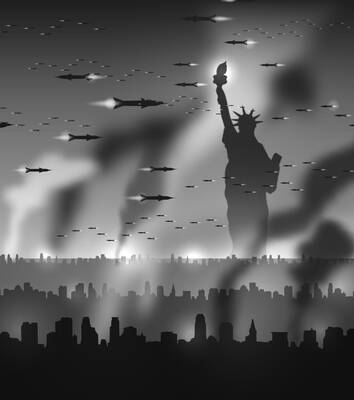
After declaring Iran’s military “gone,” US President Donald Trump appealed to the UK, France, Japan and South Korea — as well as China, Iran’s strategic partner — to send minesweepers and naval forces to reopen the Strait of Hormuz. When allies balked, the request turned into a warning: NATO would face “a very bad” future if it refused. The prevailing wisdom is that Trump faces a credibility problem: having spent years insulting allies, he finds they would not rally when he needs them. That is true, but superficial, as though a structural collapse could be caused by wounded feelings. Something


 RSS
RSS