


There was uproar from all quarters following the Taipei City Government’s announcement that responsibility for the conservation of the city’s trees will be transferred from the Department of Cultural Affairs to the Public Works Department. However, the criticism should not be seen as a lack of trust in the officials of the Public Works Department to carry out their new role; rather it is a result of the conservation of trees not simply being a technical matter of trimming and transplantation.
Taipei’s Tree Conservation Act was conceived and brought about by former minister of culture Lung Ying-tai (龍應台) during her time as head of the Department of Cultural Affairs. The department’s remit broadly concerns conservation from the viewpoint of culture, landscape and ecology. Perhaps due to its work in the specific area of tree conservation, a number of development projects have suffered delay, though this will have been music to the ears of many conservation groups.
From tree conservation to neighborhood parks and entire garden cities, metropolitan ecological habitats raise a number of issues. Whether pastoral fields or inner-city gardens, in each case the answer is not to superficially engage in the planting of crops or plants, since this would simply be the shallow pursuit of a narrow utopian dream. One hopes that, during the course of industrialization and urbanization, the public will not sacrifice the rural environment on the altar of economic growth, but instead choose to preserve open stretches of countryside, where the water is clean and the air is pure — only then will Taiwan have achieved its vision of “ecological cities.”
Many mayors have expressed a wish to learn from — or even surpass — Singapore. Fifty years ago, founding father and former Singaporean president Lee Kuan Yew (李光耀) made the establishment of a “garden city” a national objective, hoping to change the appearance of the city-state and attract foreign investment. The second phase consisted of promoting green buildings and infrastructure; developing green spaces, public gardens, smaller neighborhood gardens and tree-lined boulevards; and even reservoirs, a green belt and a string of country parks.
Aside from their aesthetic appeal, these additional elements improved the “green lung” of the city. The planned third phase is to evolve Singapore into a “city within a garden,” thereby achieving Lee’s goal of a genuine garden city. Here, the term “garden” is not simply a description of ornamental green gardens, it also represents nature throughout the city.
Third-generation garden and green space design involves the fusion of ecological habitats and the restoration of multiple “life support systems.” It examines areas such as whether a city’s drainage system can incorporate a wildlife corridor and the adaption of traffic safety islands into mini-rainwater gardens to construct a citywide, landscaped pedestrian network.
As for the present talk of garden cities and tree conservation in Taiwan, if it turns out to be simply a papering over of the cracks without a set of clear and transparent green policies and organizational structures, blame will undoubtedly lie at the feet of the national parks administration and the Tourism Bureau. And yet, New York, Tokyo, Beijing, Paris — even Jakarta — all have a “city parks office” or “city gardens agency” or “parks and recreation office” that are able to conserve and use the resources of their parks and green spaces at a macro level.
To this day, Taiwan’s cities and counties lack a single organizational body responsible for parks and green spaces. Until the central government creates such a body, each local administration should take the initiative and forge ahead together, so it is good to support Taipei Mayor Ko Wen-je’s (柯文哲 ) green policy.
After all, there is much Taipei can achieve if every public garden, green space, tree-lined street and ancient tree — even community farms and rooftop gardens — can, under the jurisdiction of a citywide ecological system, use safe layouts and be responsive to the nation’s aging society.
If Ko’s administration could do this, and also implement policy guidance and provide technical advice to assist non-governmental organizations and increase the responsibility of neighborhood and district leaders for the management of the ecological environment and social welfare, then Taipei can truly become a leader in green-city policy.
Monica Kuo is the chair of the Department of Landscape Architecture at Chinese Culture University.
Translated by Edward Jones
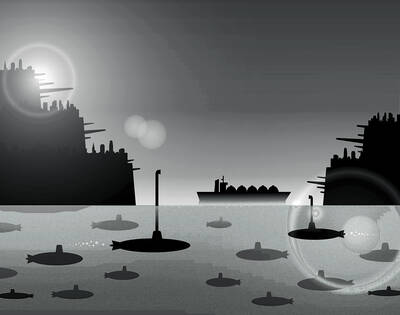
In the event of a war with China, Taiwan has some surprisingly tough defenses that could make it as difficult to tackle as a porcupine: A shoreline dotted with swamps, rocks and concrete barriers; conscription for all adult men; highways and airports that are built to double as hardened combat facilities. This porcupine has a soft underbelly, though, and the war in Iran is exposing it: energy. About 39,000 ships dock at Taiwan’s ports each year, more than the 30,000 that transit the Strait of Hormuz. About one-fifth of their inbound tonnage is coal, oil, refined fuels and liquefied natural gas (LNG),
On Monday, the day before Chinese Nationalist Party (KMT) Chairwoman Cheng Li-wun (鄭麗文) departed on her visit to China, the party released a promotional video titled “Only with peace can we ‘lie flat’” to highlight its desire to have peace across the Taiwan Strait. However, its use of the expression “lie flat” (tang ping, 躺平) drew sarcastic comments, with critics saying it sounded as if the party was “bowing down” to the Chinese Communist Party (CCP). Amid the controversy over the opposition parties blocking proposed defense budgets, Cheng departed for China after receiving an invitation from the CCP, with a meeting with
To counter the CCP’s escalating threats, Taiwan must build a national consensus and demonstrate the capability and the will to fight. The Chinese Communist Party (CCP) often leans on a seductive mantra to soften its threats, such as “Chinese do not kill Chinese.” The slogan is designed to frame territorial conquest (annexation) as a domestic family matter. A look at the historical ledger reveals a different truth. For the CCP, being labeled “family” has never been a guarantee of safety; it has been the primary prerequisite for state-sanctioned slaughter. From the forced starvation of 150,000 civilians at the Siege of Changchun
The two major opposition parties, the Chinese Nationalist Party (KMT) and the Taiwan People’s Party (TPP), jointly announced on Tuesday last week that former TPP lawmaker Chang Chi-kai (張啟楷) would be their joint candidate for Chiayi mayor, following polling conducted earlier this month. It is the first case of blue-white (KMT-TPP) cooperation in selecting a joint candidate under an agreement signed by their chairpersons last month. KMT and TPP supporters have blamed their 2024 presidential election loss on failing to decide on a joint candidate, which ended in a dramatic breakdown with participants pointing fingers, calling polls unfair, sobbing and walking


 RSS
RSS