


The two recent gas explosion disasters have unexpectedly brought the country’s history as a one-party state back into the limelight, and along with it a slogan popular among some young activists which says that the Chinese Nationalist Party’s (KMT) downfall is the key to securing a better future. Although the dictum might be an overstatement or a naive response to the country’s political quagmire, it captures the younger generation’s frustration with the residue of the nation’s authoritarian past.
Shin Shin Natural Gas Co — the company accused of shrugging its shoulders at a natural gas leak that is suspected to have led to an explosion last week in a third-floor apartment in Taipei’s Sindian District (新店) that killed two people and injured 13 — is one of 16 natural gas companies that the Veterans Affairs Council has invested in.
The blast occurred shortly after the Legislative Yuan’s Budget Center released a report denouncing the Vocational Training Center for turning 27 companies it holds shares of into homes for “fat cats.” More than 13 of these firms have retired high-ranking military officers as chairmen and CEOs, instead of gas-related professionals, the report said, adding that seven officers had “seamlessly” assumed chairmanships the day they retired from the military.
What the Vocational Training Center did not reveal is that of the 16 natural gas corporations it has investments in — a near monopoly, as the 16 account for almost two-thirds of the nation’s 25 natural gas companies — seven are chaired by private shareholders who are in one way or another related to the KMT.
To name a few: Shin Shin is chaired by former KMT Central Standing Committee member Chen Ho-chia (陳何家); Chu Kuen-tu (朱坤塗), the chairman of Shin Chang, Shin Nan and Shin Hsiung, is the head of the advisers’ team at the KMT’s Hsinchu office; Greater Tainan Natural Gas Co (previously called Shin Ying) is headed by Kao Yu-jen (高育仁), a former KMT legislator and father-in-law of New Taipei City Mayor Eric Chu (朱立倫).
The petrochemical sector — which has come under scrutiny due to the gas pipeline blasts in Greater Kaohsiung on July 31 and Aug. 1 that killed 30 and injured hundreds — is no less linked with the party, which became heavily involved in the sector in the 1970s.
In the 1960s, Taiwan was exporting processed plastic and textile products, and importing intermediate petrochemical materials from Japan and the US. It evolved its domestic petrochemical industry after the first naphtha cracker was built in 1968. The sector’s expansion involved state and private investments, with the latter controlled mainly by KMT capital. Other private shareholders, though not part of the KMT, had to form a symbiotic relationship with the party.
Hsu Jie-lin (許介麟), an academic specializing in Taiwan’s politico-economic history, said that once the midstream petrochemical industry became protected by the economic policies of the KMT government in the 1980s, the benefits for state-run CPC Corp, Taiwan — the upstream business — would sometimes be sacrificed to subsidize the midstream infiltrated by KMT capital.
The veneer of the KMT’s image as an ordinary political party was marred recently by another incident — unrelated to the explosions — in which Singfor Life Insurance Co Ltd, unable to stem its financial losses, was placed under government receivership by the Financial Supervisory Commission, which announced the move on Tuesday last week. The insurance company was one of the KMT’s assets until 2006 and the party in 2000 used insurance packages as an incentive for members to pay party fees. More than 300,000 of the firm’s 520,000 policyholders are KMT members.
The catchphrase uttered by some young people calling for the party to be brought down might be naive, but it illustrates how they feel about the ingrained, ubiquitous existence of the former party-state that continues to cast a long shadow over the nation’s political scene and society.
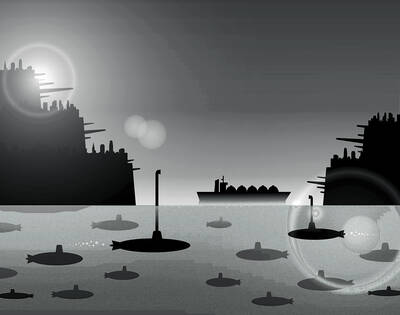
In the event of a war with China, Taiwan has some surprisingly tough defenses that could make it as difficult to tackle as a porcupine: A shoreline dotted with swamps, rocks and concrete barriers; conscription for all adult men; highways and airports that are built to double as hardened combat facilities. This porcupine has a soft underbelly, though, and the war in Iran is exposing it: energy. About 39,000 ships dock at Taiwan’s ports each year, more than the 30,000 that transit the Strait of Hormuz. About one-fifth of their inbound tonnage is coal, oil, refined fuels and liquefied natural gas (LNG),
To counter the CCP’s escalating threats, Taiwan must build a national consensus and demonstrate the capability and the will to fight. The Chinese Communist Party (CCP) often leans on a seductive mantra to soften its threats, such as “Chinese do not kill Chinese.” The slogan is designed to frame territorial conquest (annexation) as a domestic family matter. A look at the historical ledger reveals a different truth. For the CCP, being labeled “family” has never been a guarantee of safety; it has been the primary prerequisite for state-sanctioned slaughter. From the forced starvation of 150,000 civilians at the Siege of Changchun
The two major opposition parties, the Chinese Nationalist Party (KMT) and the Taiwan People’s Party (TPP), jointly announced on Tuesday last week that former TPP lawmaker Chang Chi-kai (張啟楷) would be their joint candidate for Chiayi mayor, following polling conducted earlier this month. It is the first case of blue-white (KMT-TPP) cooperation in selecting a joint candidate under an agreement signed by their chairpersons last month. KMT and TPP supporters have blamed their 2024 presidential election loss on failing to decide on a joint candidate, which ended in a dramatic breakdown with participants pointing fingers, calling polls unfair, sobbing and walking
In recent weeks, Taiwan has witnessed a surge of public anxiety over the possible introduction of Indian migrant workers. What began as a policy signal from the Ministry of Labor quickly escalated into a broader controversy. Petitions gathered thousands of signatures within days, political figures issued strong warnings, and social media became saturated with concerns about public safety and social stability. At first glance, this appears to be a straightforward policy question: Should Taiwan introduce Indian migrant workers or not? However, this framing is misleading. The current debate is not fundamentally about India. It is about Taiwan’s labor system, its


 RSS
RSS