


While the New York Times likes to say it runs “all the news that’s fit to print,” getting the news out from their Beijing offices is becoming more and more challenging. China’s propaganda minders see red when they see Western journalists publishing negative news about their “ideal” communist country.
Reporters’ phones are tapped and their e-mails are hacked. It is not easy being a foreign reporter in Chinese President Xi Jinping’s (習近平) land that looks more and more like a setting from George Orwell’s famous novel 1984. Except it is 2013 and things are not looking good for newspapers like the New York Times.
In a recent article headlined “The Thorny Challenge of Covering China,” the newspaper’s in-house media observer Margaret Sullivan asked a vexing question: “How do major American news organizations write about a communist country with the world’s second-largest economy — a country that doesn’t believe in press rights and that punishes tough-minded coverage?”
She gave US readers four choices: “Aggressively? Cautiously? Fearlessly? Competitively?”
It is true, as the Times noted, that doing business in China, be it news coverage or import/export deals, is lucrative.
The Western media want to be there.
However, it is getting increasingly difficult to report the news from China. Last year, the Times published an article about the enormous wealth of China’s ruling family. The article won a Pulitzer Prize in the US for reporting. As a result, Beijing shuttered the Times’ Web site in China at a cost of about US$3 million in lost revenue, Sullivan said.
The other day, Chinese “officials” walked uninvited into the US-based Bloomberg News offices in Shanghai and Beijing to conduct what they said were routine “inspections.” Welcome to the free and open press in China, which the government promised would result from it being awarded the 2008 Summer Olympics. Fat chance.
The New York Times news service, which the Taipei Times subscribes to (as do several major Chinese-language dailies in Taiwan), has 12 reporters inside China with official accreditation from the Chinese government. The New York Times also has a few reporters working in Hong Kong with official press passes.
The New York Times will continue to report all the news it can from China, and hopefully, the paper’s editors and the Bejing propaganda ministry will come to be on better terms. For now, in today’s climate, being a Western reporter inside the Chinese behemoth is indeed a thorny gig.
So, while Chinese authorities have been withholding visas for New York Times reporters in alleged retaliation for earlier news articles about the wealth accumulated by some party leaders’ families, the Western media wait to see what will happen next.
The Foreign Correspondents’ Club of China recently said that none of the correspondents working for the New York Times inside China have been able to renew their residence visas for 2014, noting in a press release: “The authorities have given no public explanation for their actions, leading to the impression that they have been taken in reprisal for reporting that displeased the government.”
When US Vice President Joe Biden met with New York Times journalists working in Beijing during his recent visit, he stood up for freedom of the press and publicly criticized the way the Chinese government has been treating the media.
Biden also reportedly raised the issue directly with Xi.
One wonders at the shocked expression that must have been on Xi’s face when the US vice president raised the subject. A polite smile? A grimace?
Dan Bloom is a writer in Taiwan.
KMT Chairwoman Cheng Li-wun’s (鄭麗文) recent visit to Beijing and her upcoming visit to Washington will serve as a high-level test of her diplomatic mettle. In Beijing, Cheng was received with symbolic gestures, a warm reception, and high-level access. In Washington, she will receive far less pomp and far sharper questions about the KMT’s vision for the future of Taiwan. Her challenge will be to persuade Washington that the KMT’s engagement with China can coexist with strong deterrence. Cheng’s April 7-12 visit to mainland China coincided with an intense period of conflict in Iran. Despite the strategic significance of Cheng’s trip,
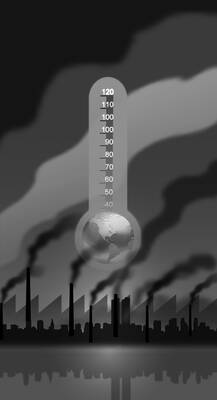
The closure of the Strait of Hormuz has sent the vast Asian chemicals industry into a tailspin. Deprived of the likes of Qatari natural gas and Saudi Arabian oil, the region’s fertilizer and plastics plants are slowing production or even shutting down. Everywhere except China, that is. In petrochemicals, China is unique. As well as a traditional industry that uses oil and gas as feedstock, it has parallel output that relies on its abundant domestic coal. Unsurprisingly, India and other regional powers want to copy and paste the Chinese method. This would not be easy — or climate friendly. The
Indonesian President Prabowo Subianto says he knows how to fix the problems facing Indonesia. Yet his economic mismanagement and authoritarian tendencies are steering the nation toward a familiar mix of currency instability and political chaos. The world’s fourth-most populous nation risks reversing the hard-won democratic and business reforms that came after the Asian Financial Crisis in 1997. At that time, the rupiah collapsed and the political upheaval that followed forced former president Haji Mohamed Suharto from power. Prabowo’s administration is ignoring similar warning signs. That disconnect was apparent in a national address on Wednesday, when Prabowo projected the swagger that has
“Of course you can choose not to be Taiwanese, just do not stay here,” chairwoman of Taipei 101 operator Taipei Financial Center Corp Janet Chia (賈永婕) said in an online interview with local entertainer Tai Chih-yuan (邰智源), triggering intense discussion on social media, with politicians across party lines weighing in. In the interview, which was aired on May 14, Chia and Tai’s discussion over a meal in Taipei 101 covered Chia’s career change from entertainer to chairwoman and US climber Alex Honnold’s free solo climb up the Taipei 101 building. During the interview, Chia said, “Being on this land, we


 RSS
RSS