


The toxicologist Lin Chieh-liang (林杰樑) has died, but I hope that Taiwan’s food safety will survive him. Amid the latest scandal that has left the Top Pot Bakery chain teetering, who else is going to keep us informed about the artificial flavorings that are all around us?
People are angry that the “natural” food they had been promised was not what the chain delivered. The trouble is, is this not the case throughout the entire bread and bakery industry? It is as natural for people to be attracted to all these artificial flavorings and to be dazzled by the wide range of food colorings used as it is for butterflies and bees to be attracted to the different colors and scents proffered by flowers. In this, our larger brains do not serve us any better than those of tiny insects.
Actually, anyone who has ever made their own bread knows that trying to do it with completely natural fruit is a time-consuming, complex process, not suited to mass production, and that there is no way mass-produced, fruity bread can be made using natural fruit. So, what did we expect of Top Pot?
Nowadays, marketing relies on hyperbole and celebrity endorsements. If people had any sense they would never have believed these lies about no artificial flavorings and purely natural yeasts that Top Pot bragged of in the first place.
A healthy dash of cynicism and distrust are essential virtues for living in the modern world.
Top Pot’s rise and imminent fall have been as scorching as the ovens in which they bake their bread. It really has been quite engrossing. However, food manufacturers have for ages been using artificial flavorings and additives in processed foods stocking the shelves of our supermarkets, convenience stores and traditional markets. They are ubiquitous.
Surely our cynical natures do not require Lin and his proteges to remind us that these countless food additives are accumulating in our livers and kidneys, or that the riotous proliferation of these toxins is related to Taiwan having the highest rate of people on dialysis in the world.
However, it is not just artificial flavorings and food colorings. Sugar is another additive that people have ignored and lowered their guard against. If you care to pay attention to it, you will discover that virtually everything we eat and drink outside the home has had added sugar. And we are not talking about small amounts of sugar. We are talking about the kind of calories that you would have trouble burning off even if you ran 5km every day.
All of the latest research and commentary says that the main culprit for cardiovascular disease is not fat alone, and neither is it the fact that people are not exercising enough. It is also because people today consume too much sugar, and it is sugar that is mainly responsible for the current global obesity epidemic. According to a 12-year study carried out in the UK, children nowadays are not actually less physically active than children were 50 years ago, which many will find surprising.
If there is no appreciable difference in the amount of calories we are expending compared to two generations ago, how is it that we are getting fatter and fatter? It is not that we are any more gluttonous than previous generations. The crux of the problem lies in what we are putting into our stomachs. And the biggest problem is that sugar is added to all the food products we buy. Again, it is not a matter of one or two sugar cubes; it is actually more like 20 or 30 in all kinds of drinks and foods.
Sugar started becoming a problem in 1971. Then-US president Richard Nixon was facing pressure over his imminent re-election campaign. His approval ratings were trailing because of the Vietnam War, but perhaps more serious for his re-election chances was the problem of soaring food prices. Nixon appointed Earl Butz as secretary of agriculture to try to bring food prices down. Butz oversaw a major restructuring of farming in the US, encouraging a new model of industrial-scale corporate farm production heavily reliant on corn. These reforms radically changed the food that we eat.
This corn was also used as livestock feed, fattening up US farm animals, and the availability of cooking oil from corn saw the increasing popularity of fried food, while corn-based breakfast cereals, cookies and corn flour became staples on supermarket shelves the world over. Industrially produced corn made cheap food available. Butz introduced a free market in farming, and small US farms were transformed overnight into big businesses and international corporations.
By the mid-1970s, there was a surplus in corn production in the US, and Butz flew to Japan to learn about the newly created high fructose corn syrup. This led the way to mass production of processed food, and from this point, fructose started to be used in every imaginable kind of food product.
This was a silent food revolution that has led to all of the pain and expense of obesity and all its related health problems.
Chiang Sheng is an attending physician in the Department of Obstetrics and Gynecology at Mackay Memorial Hospital.
Translated by Paul Cooper
KMT Chairwoman Cheng Li-wun’s (鄭麗文) recent visit to Beijing and her upcoming visit to Washington will serve as a high-level test of her diplomatic mettle. In Beijing, Cheng was received with symbolic gestures, a warm reception, and high-level access. In Washington, she will receive far less pomp and far sharper questions about the KMT’s vision for the future of Taiwan. Her challenge will be to persuade Washington that the KMT’s engagement with China can coexist with strong deterrence. Cheng’s April 7-12 visit to mainland China coincided with an intense period of conflict in Iran. Despite the strategic significance of Cheng’s trip,
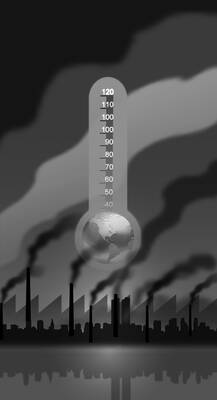
The closure of the Strait of Hormuz has sent the vast Asian chemicals industry into a tailspin. Deprived of the likes of Qatari natural gas and Saudi Arabian oil, the region’s fertilizer and plastics plants are slowing production or even shutting down. Everywhere except China, that is. In petrochemicals, China is unique. As well as a traditional industry that uses oil and gas as feedstock, it has parallel output that relies on its abundant domestic coal. Unsurprisingly, India and other regional powers want to copy and paste the Chinese method. This would not be easy — or climate friendly. The
Indonesian President Prabowo Subianto says he knows how to fix the problems facing Indonesia. Yet his economic mismanagement and authoritarian tendencies are steering the nation toward a familiar mix of currency instability and political chaos. The world’s fourth-most populous nation risks reversing the hard-won democratic and business reforms that came after the Asian Financial Crisis in 1997. At that time, the rupiah collapsed and the political upheaval that followed forced former president Haji Mohamed Suharto from power. Prabowo’s administration is ignoring similar warning signs. That disconnect was apparent in a national address on Wednesday, when Prabowo projected the swagger that has
“Of course you can choose not to be Taiwanese, just do not stay here,” chairwoman of Taipei 101 operator Taipei Financial Center Corp Janet Chia (賈永婕) said in an online interview with local entertainer Tai Chih-yuan (邰智源), triggering intense discussion on social media, with politicians across party lines weighing in. In the interview, which was aired on May 14, Chia and Tai’s discussion over a meal in Taipei 101 covered Chia’s career change from entertainer to chairwoman and US climber Alex Honnold’s free solo climb up the Taipei 101 building. During the interview, Chia said, “Being on this land, we


 RSS
RSS