


Greenpeace recently announced the results of tests for pesticide residues made on a random sampling of 102 pieces of fruit purchased in traditional markets in Taiwan. These results showed that half of the sample — 51 pieces of fruit — tested positive for pesticide residues. Of these, 16 had levels considered excessive, 25 had residues from three to seven different kinds of pesticide, and four had tested positive for excessive amounts of highly toxic chemicals.
Clearly this considerably high fail rate is substantially at odds with the government’s hopes of differentiating Taiwan’s agricultural products from the cheap imports flooding the domestic market, and not very helpful for its attempts to promote locally produced goods against that competition.
Food safety is something that concerns consumers the world over, and involves governments, producers, wholesalers and consumers, all of whom are responsible for maintaining it. Over the past several years, to increase the quality of agricultural produce and consumer confidence, Taiwan’s agricultural authorities have been actively subsidizing and promoting organic foods and the verification of the production cycle of different foods.
However, these efforts have been limited by factors such as poor soil and water quality, water shortages, dustfall pollution and inadequate buffer zones that otherwise ought to prevent inadvertent contamination by synthetic farm chemicals from adjacent fields, as well as finicky and expensive testing and verification procedures, not to mention that not many agricultural products are tested or pass a verification process.
At present, the agriculture industry in Taiwan primarily employs traditional farming methods. Therefore, if the government is to ensure food safety for consumers, it needs to direct its assistance at farmers using traditional farming methods, making sure they are informed about how to use pesticides correctly.
The problem requires the proper approach if we are to address the concerns that exist over the kinds of unwanted residues — agricultural pesticides, heavy metals and antibiotics — that are found on agricultural products being sold on the market, and to rebuild consumer confidence in domestic agricultural goods.
Regrettably, in dealing with the frequent public outcries over domestic agricultural products over the past few years, the authorities have chosen not to look into the shortcomings in the use and management of agricultural pesticides, believing instead that the impractical nature of the laws and regulations governing the supervision of food and drugs — including inconsistent standards on pesticide residues and unclear regulations on their use — is at the root of the problem.
The possibility that similarly lax testing standards will be applied in future to veterinarian products, additives and pesticide residues, further eroding food safety controls, is a real concern.
Certainly, there is a need to review Taiwan’s current standards on the use and residues of veterinary products, additives and agricultural pesticides, which need to be brought up to date, but it needs to be done properly and openly, and not in such a way that it just creates more work for the already overworked authorities.
Given the threat posed by foreign imports in an increasingly open market, Taiwan should use the quality — read safety — of its agricultural products to help them stand out against those produced overseas.
It should also be applying more stringent controls to the safety of these imports, and implement these controls more efficiently, so that consumers both here and abroad will trust these products. This is another way our domestically produced goods can be competitive.
An international study has suggested that Taiwanese farmers tend to use high amounts of fertilizers and pesticides. The government should, firstly, educate farmers at source on the proper way to use these chemicals, and secondly, it should work out how to conduct safety checks so that farmers, sellers and shops do not think they can get away with it, and consumers can be reassured.
First, the government should set up simple, easy to understand biochemical labs in farmers’ associations and cooperatives, and use the test results that come out of these labs to establish priorities for providing government subsidies to those who apply for them. The government should also be encouraging the use of this testing — by making them free — with qualifying items being approved for sale, whereas items which fail to qualify should be subjected to subsequent tests until such time as they do pass, otherwise they will not be approved.
Second, the government should conduct frequent random sampling tests on products at special chemical labs to maintain safety controls, and should ramp up this random sampling on products which are considered likely to have these pesticide residues, and on the products of manufacturers considered particularly sensitive.
For those farmers, vendors and stores that consistently violate the rules, the government should, in addition to fining them, name and shame them: identifying them, their business, their products and the number of violations, to bring to bear the practical sanction of a public boycott.
It should also “name and acclaim” — announcing names, the company and the product — of those that do qualify, so that consumers can seek them out accordingly.
Finally, the government should be proactive in ensuring that agricultural products are safe, and provide a mobile unit that can go to farmers and help them with disease prevention, pesticide use and improved production techniques, as well as keeping itself more up to date about the situation on the ground and the farmers more informed about government directives.
In this way, Taiwan can become recognized as a production base for safe agricultural products and compete against imported products.
Du Yu is chief executive officer of the Chen-Li Task Force for Agricultural Reform.
Translated by Paul Cooper
KMT Chairwoman Cheng Li-wun’s (鄭麗文) recent visit to Beijing and her upcoming visit to Washington will serve as a high-level test of her diplomatic mettle. In Beijing, Cheng was received with symbolic gestures, a warm reception, and high-level access. In Washington, she will receive far less pomp and far sharper questions about the KMT’s vision for the future of Taiwan. Her challenge will be to persuade Washington that the KMT’s engagement with China can coexist with strong deterrence. Cheng’s April 7-12 visit to mainland China coincided with an intense period of conflict in Iran. Despite the strategic significance of Cheng’s trip,
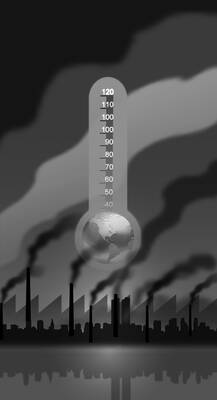
The closure of the Strait of Hormuz has sent the vast Asian chemicals industry into a tailspin. Deprived of the likes of Qatari natural gas and Saudi Arabian oil, the region’s fertilizer and plastics plants are slowing production or even shutting down. Everywhere except China, that is. In petrochemicals, China is unique. As well as a traditional industry that uses oil and gas as feedstock, it has parallel output that relies on its abundant domestic coal. Unsurprisingly, India and other regional powers want to copy and paste the Chinese method. This would not be easy — or climate friendly. The
Indonesian President Prabowo Subianto says he knows how to fix the problems facing Indonesia. Yet his economic mismanagement and authoritarian tendencies are steering the nation toward a familiar mix of currency instability and political chaos. The world’s fourth-most populous nation risks reversing the hard-won democratic and business reforms that came after the Asian Financial Crisis in 1997. At that time, the rupiah collapsed and the political upheaval that followed forced former president Haji Mohamed Suharto from power. Prabowo’s administration is ignoring similar warning signs. That disconnect was apparent in a national address on Wednesday, when Prabowo projected the swagger that has
“Of course you can choose not to be Taiwanese, just do not stay here,” chairwoman of Taipei 101 operator Taipei Financial Center Corp Janet Chia (賈永婕) said in an online interview with local entertainer Tai Chih-yuan (邰智源), triggering intense discussion on social media, with politicians across party lines weighing in. In the interview, which was aired on May 14, Chia and Tai’s discussion over a meal in Taipei 101 covered Chia’s career change from entertainer to chairwoman and US climber Alex Honnold’s free solo climb up the Taipei 101 building. During the interview, Chia said, “Being on this land, we


 RSS
RSS