


It has been going on for several months. And with the passage of time and exposure to the elements, their skin color has been darkening, their bodies becoming leaner and the battle wounds — a scratch here, a bruise there — have been adding up.
Over the past year, hundreds, perhaps thousands of young Taiwanese, most university students, though some still in high school, have mobilized against a variety of issues. They have protested across Taiwan, organizing information sessions and concerts, developing a slew of Web sites to monitor developments and to provide documents, photographs and film clips.
With the exception of the anti-monopolization of Taiwan’s media industry and protesting against China’s growing influence within the sector, all the causes have been what we could describe as “local.” In Taipei’s Huaguang Community (華光); in New Taipei City’s (新北市) Sinjhuang District (新莊) at the Losheng (Happy Life) Sanatorium; and in Miaoli County’s Dapu Village (大埔) the young activists have rallied to try to stop the destruction of homes and livelihoods.
They have fought against the construction of wind turbines close to homes in Yuanli (苑裡), again in Miaoli County; a hotel resort on Aboriginal land on Taitung County’s Shanyuan Beach (杉原); and a cement factory in Dongcing Village (東清) on Lanyu (蘭嶼).
To do this, they have pulled all-nighters, compromised their studies and their health in Taiwan’s intense climate, undergone surveillance and been taunted, arrested and beaten up.
They did none of this for the sake of self-aggrandizement, as some critics have proposed, but rather to draw attention to causes whose outcomes they believe are key to their homeland’s identity.
Leaders have emerged in the process, doing so well that their efforts have been attacked, for example by those incredulous at their ability to raise large sums of money. Others have come forward as reluctant public figures, pulled from obscurity, among a maelstrom of greater forces threatening to destroy lives in the name of “progress.”
Through their efforts, acts of injustice that would likely have gone unnoticed have intensified into issues that speak to the nation at large, attracting local, and in some instances international, media attention.
They have brought out the very worst in individuals in positions of authority, forcing them to show their true colors. Government officials have been exposed as liars, corporate leaders as thugs, media moguls as unprincipled, legislators as self-serving and county commissioners as crooks.
To understand the depth of their determination, one needs to be there, in their midst, repelling PVC shields and muscle, seeing the tears and the rage on muddied faces, as protesters and victims fight for what they believe in, or for something as basic as the right to keep a roof over one’s head.
There are the lesser reported angles of the story: the police officer’s sympathy for the protesters as a youth is taken into a police station (“if someone built wind power units this close to my home, I’d be protesting, too”), the hired muscle who calls it quits as he no longer wishes to fight “his own people,” the cop crying as people sing old Taiwanese songs outside the Legislative Yuan, another officer with tears running down her cheeks as an old farmer, her way of life threatened, confronts a member of the Executive Yuan.
Beauty and ugliness have been witnessed throughout. Some Taiwanese have donated money, rented tents, provided shelter, food and encouragement. Others — including legislators from both sides of politics, who should know better because three decades ago they (and their parents) were storming the barricades — have libelously referred to the activists as “professional protesters,” or accused them of undermining social stability.
Others have accused the youth of being naive, of being played by unseen corporate forces, or of being mere pawns in the struggle between — in one case — the nuclear and wind power industries. Yet as anyone who bothers to get to know them will quickly realize, those same protesters — many graduates from the top universities — have mastered their subjects to a tee, and often offer commentary that goes well beyond the simplified accounts in the media or those given by officials.
Then there are those who will give the young activists a patronizing pat on the head, but urge them to grow up and tackle “real” issues that touch on Taiwan’s relations with China.
However, there is shortsightedness in regarding “local” protests as if they are somehow disconnected from the larger problems of cross-strait relations, for in fact, the two are closely related. After all, how can we expect this government to keep Taiwan’s best interests at heart in its negotiations with China when it cannot play fairly with its own citizens?
How can Vice President Wu Den-yih (吳敦義), who many believe has presidential aspirations for 2016, be a credible candidate when time and again he has proven the reason for his unflattering nickname (hint: it rhymes with “friar”)?
Equally, how can people place their hopes in the Democratic Progressive Party (DPP) when it selects issues based on their value as a tool to make the Chinese Nationalist Party (KMT) look bad ahead of important elections?
Or when one of its most esteemed legislators, who comes from a family with an unassailable tradition of opposing injustice, browbeats other DPP legislators into silence over a project that involves a form energy that she has espoused, yet the implementation of the project has led to undeniable (and repeated) violations of human rights?
How can people place their hopes in a party that itself acted inhumanely when in power, sometimes on the very issues that engender protests today?
In fact, all these “local” issues are directly related to national ones. Keeping officials honest, while ensuring that the rights of all inhabitants on this island are respected — whether they are rich or poor, young or old — by those in power are inherently about Taiwan’s relations with China. This is because they speak to the nature, spirit and character of the government that rules over this nation.
If officials in Taipei cannot ensure that Ms Zhang’s house in Dapu isn’t bulldozed to make way for a road, despite promises by then-premier Wu in 2010 that such an outcome would be averted; if Mr Chiang cannot be treated fairly by a city government that wants to build a wonderland for the super-wealthy on the ashes of Huaguang, how can we possibly expect these officials to be fair when they strike deals with the authoritarian vultures in Beijing?
If crooks and miscreants are allowed to retain positions of power in Taiwan, they will remain crooks and miscreants in their dealings with China, except quite possibly in amplified form.
The battle for Taiwan’s future, and for its democracy, starts here at home through endeavors that will ensure that honest and qualified individuals, people who have Taiwan’s interests at heart, are given the responsibilities of high office.
This is what the young protesters are doing. They are fully aware of what is at stake, both locally and nationally.
J. Michael Cole is a deputy news editor at the Taipei Times.
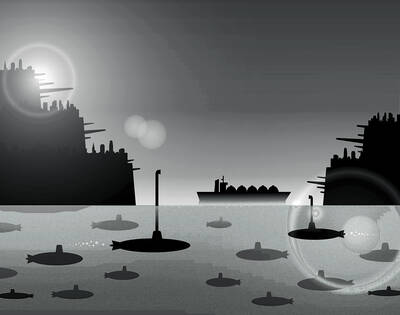
In the event of a war with China, Taiwan has some surprisingly tough defenses that could make it as difficult to tackle as a porcupine: A shoreline dotted with swamps, rocks and concrete barriers; conscription for all adult men; highways and airports that are built to double as hardened combat facilities. This porcupine has a soft underbelly, though, and the war in Iran is exposing it: energy. About 39,000 ships dock at Taiwan’s ports each year, more than the 30,000 that transit the Strait of Hormuz. About one-fifth of their inbound tonnage is coal, oil, refined fuels and liquefied natural gas (LNG),
On Monday, the day before Chinese Nationalist Party (KMT) Chairwoman Cheng Li-wun (鄭麗文) departed on her visit to China, the party released a promotional video titled “Only with peace can we ‘lie flat’” to highlight its desire to have peace across the Taiwan Strait. However, its use of the expression “lie flat” (tang ping, 躺平) drew sarcastic comments, with critics saying it sounded as if the party was “bowing down” to the Chinese Communist Party (CCP). Amid the controversy over the opposition parties blocking proposed defense budgets, Cheng departed for China after receiving an invitation from the CCP, with a meeting with
Chinese Nationalist Party (KMT) Chairwoman Cheng Li-wun (鄭麗文) is leading a delegation to China through Sunday. She is expected to meet with Chinese President Xi Jinping (習近平) in Beijing tomorrow. That date coincides with the anniversary of the signing of the Taiwan Relations Act (TRA), which marked a cornerstone of Taiwan-US relations. Staging their meeting on this date makes it clear that the Chinese Communist Party (CCP) intends to challenge the US and demonstrate its “authority” over Taiwan. Since the US severed official diplomatic relations with Taiwan in 1979, it has relied on the TRA as a legal basis for all
The two major opposition parties, the Chinese Nationalist Party (KMT) and the Taiwan People’s Party (TPP), jointly announced on Tuesday last week that former TPP lawmaker Chang Chi-kai (張啟楷) would be their joint candidate for Chiayi mayor, following polling conducted earlier this month. It is the first case of blue-white (KMT-TPP) cooperation in selecting a joint candidate under an agreement signed by their chairpersons last month. KMT and TPP supporters have blamed their 2024 presidential election loss on failing to decide on a joint candidate, which ended in a dramatic breakdown with participants pointing fingers, calling polls unfair, sobbing and walking


 RSS
RSS