


As drought becomes increasingly common, farmers worldwide are struggling to maintain crop yields. In the US, farmers are experiencing the most severe drought in more than a half-century. As a result, global corn, wheat and soybean prices rose in July and last month, and remain high.
However, the severe dry spell parching croplands across the US is only the latest in a global cycle of increasingly frequent and damaging droughts. In Africa’s Sahel region, millions of people are facing hunger for the third time since 2005. Lack of rain in the region and volatile global food prices have made a bad situation worse. Indeed, it is the world’s poor — particularly those in rural areas — that suffer the most from these combined factors.
This does not bode well for our future. By 2050, global food production will have to increase by 60 percent to meet demand from a growing world population with changing consumption habits. To ensure food security for all, we will have to increase not just food production, but also availability, especially for those living in developing countries. That means breaking down barriers and inequalities, building capacity and disseminating knowledge. In Africa, smallholder farmers — who provide 80 percent of the sub-Saharan region’s food — need infrastructure for agricultural development, including irrigation and roads, as well as better market organization and access to technology.
The International Fund for Agricultural Development sees enormous potential in Africa’s agricultural sector, which experienced 4.8 percent growth in 2009, compared to 3.8 percent in the Asia-Pacific region and only 1.4 percent in Latin America and the Caribbean. Given that agriculture amounts to roughly 30 percent of sub-Saharan Africa’s GDP, and accounts for more than 60 percent of employment in most African countries, the sector’s development could reduce poverty in the region substantially.
Not only in Africa — in countries like Burkina Faso and Ethiopia — but also in emerging countries like China, India and Vietnam, experience has repeatedly shown that smallholder farmers can lead agricultural growth while stimulating broader economic development. Small farmers, both women and men, are Africa’s biggest agricultural investors. Agriculture-driven GDP growth is more than twice as effective in reducing poverty as growth in other sectors.
However, African farmers encounter significant barriers to achieving their potential. On average, they apply less than 10kg of fertilizer per hectare, compared with 140kg in India. Furthermore, less than 5 percent of agricultural land is irrigated and improved crop varieties are rarely used.
Therefore, agricultural development efforts should focus on promoting the growth and sustainability of smallholder farmers and small rural businesses. This requires a more supportive regulatory environment, technical assistance as well as connections to suppliers, distributors, and finance providers.
Countries that are experiencing significant agricultural growth, such as Brazil and Thailand, have benefited from public-sector investment in research and infrastructure development. We should consider not only how to improve the ability of smallholder farmers to grow food; we also must strengthen their ability to participate in markets, while improving the way those markets function.
Moreover, sustainable investment linkages between smallholder farmers and the private sector are needed. By enabling farmers to increase their output and incomes, smallholder-inclusive private investment can bolster economic growth and food security. Finally, farmers’ organizations, which are crucial intermediaries between producers and corporate investors, must be involved in the formulation of plans and policies aimed at agricultural development.
A vibrant rural sector can generate demand for locally produced goods and services, thereby stimulating sustainable employment growth in agro-processing, services, and small-scale manufacturing. Such opportunities would allow young people to thrive in their rural communities, rather than being forced to search for work in urban areas.
Africa can feed itself. However, that is not all: With knowledge, technology, infrastructure and enabling policies, smallholder farmers in Africa and elsewhere can drive sustainable agricultural development, contribute to global food security and catalyze economic growth worldwide.
Kanayo Nwanze is president of the International Fund for Agricultural Development.
Copyright: Project Syndicate
Minister of Labor Hung Sun-han (洪申翰) on April 9 said that the first group of Indian workers could arrive as early as this year as part of a memorandum of understanding (MOU) between the Taipei Economic and Cultural Center in India and the India Taipei Association. Signed in February 2024, the MOU stipulates that Taipei would decide the number of migrant workers and which industries would employ them, while New Delhi would manage recruitment and training. Employment would be governed by the laws of both countries. Months after its signing, the two sides agreed that 1,000 migrant workers from India would
On March 31, the South Korean Ministry of Foreign Affairs released declassified diplomatic records from 1995 that drew wide domestic media attention. One revelation stood out: North Korea had once raised the possibility of diplomatic relations with Taiwan. In a meeting with visiting Chinese officials in May 1995, as then-Chinese president Jiang Zemin (江澤民) prepared for a visit to South Korea, North Korean officials objected to Beijing’s growing ties with Seoul and raised Taiwan directly. According to the newly released records, North Korean officials asked why Pyongyang should refrain from developing relations with Taiwan while China and South Korea were expanding high-level
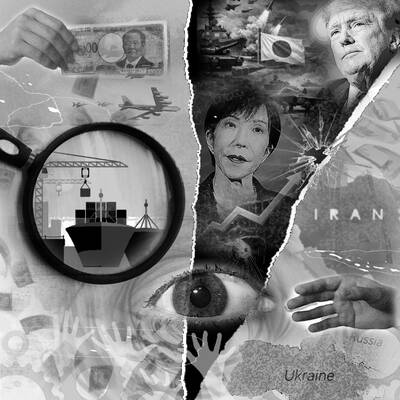
Japan’s imminent easing of arms export rules has sparked strong interest from Warsaw to Manila, Reuters reporting found, as US President Donald Trump wavers on security commitments to allies, and the wars in Iran and Ukraine strain US weapons supplies. Japanese Prime Minister Sanae Takaichi’s ruling party approved the changes this week as she tries to invigorate the pacifist country’s military industrial base. Her government would formally adopt the new rules as soon as this month, three Japanese government officials told Reuters. Despite largely isolating itself from global arms markets since World War II, Japan spends enough on its own
When 17,000 troops from the US, the Philippines, Australia, Japan, Canada, France and New Zealand spread across the Philippine archipelago for the Balikatan military exercise, running from tomorrow through May 8, the official language would be about interoperability, readiness and regional peace. However, the strategic subtext is becoming harder to ignore: The exercises are increasingly about the military geography around Taiwan. Balikatan has always carried political weight. This year, however, the exercise looks different in ways that matter not only to Manila and Washington, but also to Taipei. What began in 2023 as a shift toward a more serious deterrence posture


 RSS
RSS