


Financial traders have a new toy: Bitcoin, a digital currency variously dismissed as a Ponzi scheme or lauded as the greatest invention since the Internet.
Unlike conventional fiat money and other digital currencies, Bitcoin runs through a peer-to-peer network, independent of central control. Bitcoins are currently worth US$4.88 each on online currency exchanges, where they can be bought and sold for about 15 world currencies.
Users — an odd assortment of uber-geeks, anarchists, libertarians, scammers and foreign-exchange traders — send about US$4.3 million to each other in 24 hours.
Banking and payment expert Simon Lelieveldt believes they are living on borrowed time.
“There is always a power base underlying a currency,” he said, speaking at the Digital Money Forum in London last month. “Bitcoin is not going to fly because there is no central bank or power base. It’s doomed to fail.”
However, its separation from power is precisely what attracts many users.
“Bitcoin is not run by people with hot sexual appetites for hotel maids. It is not run by corporations. It is not governed by people with budgets to meet. It is governed by a mathematical formula,” one trader and Bitcoin enthusiast said over a pint of Guinness in London’s financial district.
He also likes that there is an absolute limit of 21 million Bitcoins built into the system.
“If you try to print more than 21 million Bitcoins, you will be rejected by cold, loveless computers whirring away in nerds’ garages,” he said. “It is a better form of money than we have right now, or than anyone has designed so far.”
The trader, who was not willing to be named, said he spent four hours a day on Bitcoin, describing it as his second job. He estimated 90 percent of traders have bought it, most “looking for a quick 2,000 percent.”
However, he is playing the long game, accumulating as much as possible in the belief that one day he will own a small, but significant percentage of a world currency with a fixed supply.
He and three other traders are currently seeking Bitcoin startups to invest in, he said, adding he was hoping to put in US$300,000.
He is not alone.
Workers at Morgan Stanley and Goldman Sachs in London and New York have been visiting online Bitcoin exchanges as often as 30 times a day, according to documents seen by Reuters. Neither bank wanted to comment.
Employees at almost all the major international banks, and numerous trading and investment firms have shown an interest.
Bitcoin has become the Wild West of finance, with a proliferation of Web sites offering loosely regulated replicas of the services familiar to those in the financial industry.
There is a Bitcoin stock exchange, where companies can make initial public offerings and pay dividends in Bitcoin. One Web site offering Bitcoin options trading was “listed” this month for an implied valuation of US$500,000.
Perhaps the most notorious is Bitcoinica, a platform offering margin trading, short selling and stop orders run by 17-year-old Chinese high school student Zhou Tong (周同).
Users can leverage their bets up to a ratio of 10:1 on Bitcoinica, meaning they can lose more than their initial investment.
Zhou, who is professionally advised by a foreign-exchange trader and the head of a Singapore-based algorithmic trading firm, now lends his name to international slang.
To be “Zhou Tonged” is to be wiped out financially.
The chorus of a YouTube rap laments a Bitcoin day trader rash enough to hold a position with no stop loss protection: “It’s so silly, how come you just lost funds? You got Zhou Tonged!”
Its popularity with financial professionals highlights an irony at the heart of the Bitcoin usership — suspicion of the banking system is written into the program’s DNA.
It was released in January 2009 by a developer using the probable pseudonym Satoshi Nakamoto. Embedded in the code of its first block of transaction history are the words: “The Times 03/Jan/2009 Chancellor on brink of second bailout for banks.”
This was a way of time-stamping the first Bitcoin transaction, but also a clue to the developer’s motivation. Before disappearing as an online presence in January 2010, Nakamoto made clear his disapproval of quantitative easing measures and blamed banks for creating credit bubbles.
Such sentiments are common among users.
“There are no bailouts of banks on Bitcoin,” one put it.
The Greek owner of an island bar and restaurant who accepts payment in Bitcoin alongside euros said he liked the currency because it was the opposite of a banking system.
“I don’t put money in the banks,” said Gerald, who did not give his surname. “I trust the euro as a note, but I don’t trust banks. I don’t want them making money out of my earnings.”
Digital money consultant Jon Matonis, former head foreign-exchange trader at Visa, said Bitcoin was a natural fit for societies that prefer cash payments.
“Try tell the Italians that they can’t use cash any more. Try tell the Greeks,” he said.
Bitcoin payments are difficult to trace back to a person’s identity, offering an anonymity that protects users from data-mining by advertising companies, but it also facilitates illicit trade and has obvious potential for money launderers.
The currency gained notoriety alongside a Web site named Silk Road, where vendors offer to send heroin, LSD, or 9mm Beretta handguns in the post in exchange for Bitcoin.
Yet there are signs Bitcoin is finding a niche among ordinary people for everyday, legitimate transactions.
One British businessman in China said he regularly used it to deal with businesses in Asia, Europe and the Americas because of local restrictions on sending currency to foreign companies.
“I’ve been able to have cash in my bank account in a matter of hours using Bitcoin, rather than three days with traditional banking,” he said.
Quietly, a growing list of businesses are starting to accept it for a wide range of goods, from legal services to food.
Matonis said it could be a perfect “digital poker chip” for online gambling and a competitive way for immigrants to send money back home.
Bitcoin poses a puzzle for regulators. It does not fit the UK Financial Services Authority’s definition of e-money as it is not issued on the receipt of funds, according to an FSA response to a Bitcoin business that requested to be regulated in the UK, but the creation of Bitcoin could amount to “issuing payment instruments” as long as Bitcoins in fact count as money, which is “if and when they become widely used,” the FSA concluded.
A spokeswoman for the German Bundesbank said it was not classifying Bitcoins as e-currency.
She said EU law required only euros to be accepted as legal tender, but this was superseded by German law that allows those involved in a contract to determine its content. So Bitcoin is at least not illegal there.
The situation in the US is even more complex, where financial regulation differs from state to state.
As Bitcoin is a huge distributed peer-to-peer system, any effort to enforce regulation would be difficult, though the exchanges, where Bitcoin is swapped for real-world currency, are potentially vulnerable.
A legal precedent could come from France, where the biggest online exchange, Mt Gox, is in dispute with Credit Mutuel’s Credit Industriel et Commercial (CIC).
Mt Gox sued CIC after the bank closed its account. CIC said the company was illegally behaving as a financial intermediary and that using its account made the bank an accomplice, according to court documents.
The court told the bank to reopen the account and compensate Mt Gox, but it was unable to determine whether Bitcoin is a virtual currency under French law and therefore subject to relevant regulation. It has referred the question to another court.
“If exchanges which are trying to walk the path of legality are being closed, then less law-friendly exchanges will thrive,” Mt Gox head Mark Karpeles said. “This won’t stop Bitcoin. It may just kill any chance Bitcoin has to become a clean way of paying merchants, friends and family.”
Credit Mutuel declined to comment on the ongoing case.
The existence of Bitcoin is also an economic puzzle, raising questions about the definition of money itself.
Its value depends on users’ belief that it is worth something. So does all money, but in the case of Bitcoin this faith could be more fragile.
It also runs up against standard economic theory that people will not spend money if they expect it to increase in value — the 21 million limit means once all Bitcoins are in circulation, there are no internal inflationary pressures to devalue it.
More of a threat is the tsunami of other digital forms of money that are beginning to be offered by states and companies.
The Royal Canadian Mint, for example, is exploring how to issue digital currency in the future. Its chief financial officer Marc Brule said Bitcoin’s biggest problem is that it is not backed by anything.
“The system we would bring in would be backed by a fund,” he said. “Bitcoin may work for the small group of people that believe in its value, but that could change very suddenly.”
Without that backing or a similar power base, Bitcoin lives with the ever-present risk of failure.
“To be clear, I would say the same about the euro,” Lelieveldt said.
KMT Chairwoman Cheng Li-wun’s (鄭麗文) recent visit to Beijing and her upcoming visit to Washington will serve as a high-level test of her diplomatic mettle. In Beijing, Cheng was received with symbolic gestures, a warm reception, and high-level access. In Washington, she will receive far less pomp and far sharper questions about the KMT’s vision for the future of Taiwan. Her challenge will be to persuade Washington that the KMT’s engagement with China can coexist with strong deterrence. Cheng’s April 7-12 visit to mainland China coincided with an intense period of conflict in Iran. Despite the strategic significance of Cheng’s trip,
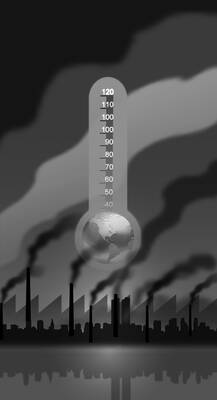
The closure of the Strait of Hormuz has sent the vast Asian chemicals industry into a tailspin. Deprived of the likes of Qatari natural gas and Saudi Arabian oil, the region’s fertilizer and plastics plants are slowing production or even shutting down. Everywhere except China, that is. In petrochemicals, China is unique. As well as a traditional industry that uses oil and gas as feedstock, it has parallel output that relies on its abundant domestic coal. Unsurprisingly, India and other regional powers want to copy and paste the Chinese method. This would not be easy — or climate friendly. The
Indonesian President Prabowo Subianto says he knows how to fix the problems facing Indonesia. Yet his economic mismanagement and authoritarian tendencies are steering the nation toward a familiar mix of currency instability and political chaos. The world’s fourth-most populous nation risks reversing the hard-won democratic and business reforms that came after the Asian Financial Crisis in 1997. At that time, the rupiah collapsed and the political upheaval that followed forced former president Haji Mohamed Suharto from power. Prabowo’s administration is ignoring similar warning signs. That disconnect was apparent in a national address on Wednesday, when Prabowo projected the swagger that has
“Of course you can choose not to be Taiwanese, just do not stay here,” chairwoman of Taipei 101 operator Taipei Financial Center Corp Janet Chia (賈永婕) said in an online interview with local entertainer Tai Chih-yuan (邰智源), triggering intense discussion on social media, with politicians across party lines weighing in. In the interview, which was aired on May 14, Chia and Tai’s discussion over a meal in Taipei 101 covered Chia’s career change from entertainer to chairwoman and US climber Alex Honnold’s free solo climb up the Taipei 101 building. During the interview, Chia said, “Being on this land, we


 RSS
RSS