


Saudi Arabia’s King Abdullah told US diplomats that by toppling former Iraqi president Saddam Hussein, the US had presented Iraq to Iran “on a golden platter.”
That assessment, recorded in a 2005 embassy cable released by WikiLeaks, was affirmed in the eyes of Saudi Arabia’s Sunni Muslim rulers by the outbreak of sectarian squabbling that followed last week’s departure of the last US troops from Iraq after almost nine years of occupation.
The decision by Shiite Iraqi Prime Minister Nouri al-Maliki to seek the arrest of his Sunni vice president on terrorism charges has pushed Iraq’s fragile coalition to the verge of collapse, raising the specter of renewed civil war — with alarming implications for all its neighbors.
“The Saudi government is worried about the departure of American troops because now Iranian influence can become direct instead of indirect. There is nothing now to balance Iranian rule, so things might get worse,” one Saudi official said.
The chaos that followed the 2003 US invasion and toppling of Saddam turned Iraq into a regional bear pit, where Saudi Arabia, Iran, Syria and Turkey backed different sides in a messy struggle that pitted Shiites against Sunnis and Arabs against Kurds.
For its part, Iraq’s Shiite-led government fears that the uprising in neighboring Syria may unhinge its own delicate sectarian balance, no longer protected by the US’ military presence.
Iraq’s Shiite leaders say they fear that a collapse of Syrian President Bashar al-Assad’s ruling establishment, dominated by members of the Alawite Shiite sect and allied with Iran, may usher in a hardline Sunni government on its doorstep, risking a spillover of violence into Iraq and encouraging Iraqi Sunni militants.
“Nature abhors a vacuum and the relative power vacuum in Baghdad is going to draw in the neighbors,” said Stephen Biddle at the US-based Council of Foreign Relations.
Iran arguably now has more to lose from renewed fighting than the other regional heavyweights, particularly in light of the spiraling bloodshed in Syria, an ally that allowed Tehran to extend its influence as far as the Mediterranean.
Tehran’s clerical rulers were widely seen to have come out as the biggest winners after the fall of Saddam, with the emergence of their old ally Maliki and his Dawa party as the strongest political force in Iraq.
However, despite the risk that renewed unrest might alter this favorable political equation, Iran pushed for US troops to withdraw, regarding their presence on its western flank as a constant threat.
“The US withdrawal has created a power vacuum in Iraq, provoking Iran and Saudi Arabia to fill it in order to increase their influence in the region,” Iranian analyst Gholamhossein Mirvarzi said.
“By increasing its influence in Iraq, Iran aims to challenge the regional Sunni rivals, particularly after [potentially] losing its close ally in Syria,” he added.
Iranian officials say they want a calm and stable Iraq and are not seeking a Shiite monopoly on power.
However, as international sanctions have started to bite into the Iranian economy, inflating the prices of imported goods in Tehran’s warren-like bazaar, the rising tensions with Saudi Arabia have deepened its political isolation.
Meanwhile, feuding between factions loyal to Iranian Supreme Leader Ayatollah Ali Khamenei and Iranian President Mahmoud Ahmadinejad have become increasingly open.
“Considering Iran’s domestic problems and the developments in Syria, Iran will not be able to play a central security role in Iraq after the US withdrawal,” Iranian analyst Hossein Farshchian said.
Across the Gulf, Saudi Arabia has long seen Iraq as the fulcrum of a sectarian divide that could stir unrest among its own Shiite minority, concentrated in its oil-producing Eastern Province.
In recent months, those concerns seemed to become more urgent, as the Arab Spring inspired a revolt among the Shiite majority in Bahrain, whose Sunni ruling family is one of Saudi Arabia’s closest allies.
Small protests erupted among Saudi Shiites and persisted throughout the year. Riyadh accused an unnamed foreign power of instigating violence, hinting that Iran was to blame.
These tensions go some way toward explaining why King Abdullah, whose mother’s Shammar tribe includes thousands of Sunni Iraqis, has kept Maliki at arm’s length.
In 2008, Saudi intelligence chief Prince Muqrin told US diplomats that Abdullah viewed the Iraqi prime minister as untrustworthy and “Iranian 100 percent,” according to a cable released by WikiLeaks.
In recent weeks, some Iraqi officials have seen a foreign hand behind the push for more autonomy by mainly Sunni provinces bordering Saudi Arabia, Syria and Jordan.
Yet for all that, the influence of Saudi Arabia, which has still not reopened the Baghdad embassy that it closed when Saddam invaded Kuwait in 1991, remains limited.
“What can be worse than what has already happened? The Americans leaving will affect Iran more than Saudi Arabia because Saudi Arabia does not have a heavy presence in Iraq,” said Jamal Khashoggi, a former Saudi newspaper editor with ties to the royal family. “It had its friends there, but it kept its distance.”

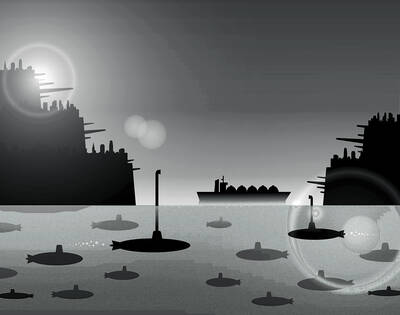
In the event of a war with China, Taiwan has some surprisingly tough defenses that could make it as difficult to tackle as a porcupine: A shoreline dotted with swamps, rocks and concrete barriers; conscription for all adult men; highways and airports that are built to double as hardened combat facilities. This porcupine has a soft underbelly, though, and the war in Iran is exposing it: energy. About 39,000 ships dock at Taiwan’s ports each year, more than the 30,000 that transit the Strait of Hormuz. About one-fifth of their inbound tonnage is coal, oil, refined fuels and liquefied natural gas (LNG),
On Monday, the day before Chinese Nationalist Party (KMT) Chairwoman Cheng Li-wun (鄭麗文) departed on her visit to China, the party released a promotional video titled “Only with peace can we ‘lie flat’” to highlight its desire to have peace across the Taiwan Strait. However, its use of the expression “lie flat” (tang ping, 躺平) drew sarcastic comments, with critics saying it sounded as if the party was “bowing down” to the Chinese Communist Party (CCP). Amid the controversy over the opposition parties blocking proposed defense budgets, Cheng departed for China after receiving an invitation from the CCP, with a meeting with
Chinese Nationalist Party (KMT) Chairwoman Cheng Li-wun (鄭麗文) is leading a delegation to China through Sunday. She is expected to meet with Chinese President Xi Jinping (習近平) in Beijing tomorrow. That date coincides with the anniversary of the signing of the Taiwan Relations Act (TRA), which marked a cornerstone of Taiwan-US relations. Staging their meeting on this date makes it clear that the Chinese Communist Party (CCP) intends to challenge the US and demonstrate its “authority” over Taiwan. Since the US severed official diplomatic relations with Taiwan in 1979, it has relied on the TRA as a legal basis for all
To counter the CCP’s escalating threats, Taiwan must build a national consensus and demonstrate the capability and the will to fight. The Chinese Communist Party (CCP) often leans on a seductive mantra to soften its threats, such as “Chinese do not kill Chinese.” The slogan is designed to frame territorial conquest (annexation) as a domestic family matter. A look at the historical ledger reveals a different truth. For the CCP, being labeled “family” has never been a guarantee of safety; it has been the primary prerequisite for state-sanctioned slaughter. From the forced starvation of 150,000 civilians at the Siege of Changchun


 RSS
RSS