


Three months ago, images of protesters battling the military in the streets of Bangkok seized the world’s attention. Now, by some measures, Thailand is bouncing back: The country’s economy is projected to grow as fast as 7.5 percent this year and the government is pushing ahead with a program of reconciliation with its opponents.
But even as Thailand pulls itself back together, there are concerns that deep-seated problems among its young people represent a quieter, long-term threat to the country’s future.
Declining education standards — as well as reports of growing violence and drug and alcohol use among the young, which some analysts see as related issues — are contributing to fears that Thailand’s dream of joining the ranks of the world’s most developed countries may be becoming more and more elusive.
“Our GDP is going up, but our society is sick,” said Sombat Rittidej, the head of the northeastern division of Child Watch, a program that analyzes trends among young people across Thailand.
“All the problems, all the vices are correlated,” he said. “When kids drink and smoke it relates to cutting class, dropping out of school, violence, fighting and premarital sex.”
Analysts point to a variety of troubling trends. The Thai news media reported last month that the country had the world’s highest number of people addicted to methamphetamine, an illegal stimulant that is especially popular with young people. Experts said that this claim, made by a government official, was impossible to verify, but that there was no denying the scale of the Thai drug problem.
troubling trends
Meanwhile, young Thais are falling behind in the classroom. According to the Trends in International Mathematics and Science Study, a comparative analysis of students worldwide, Thailand’s scores have dipped over the past decade, and the country now ranks in the bottom third of the 36 countries that participated.
Its scores are well behind those of Singapore, Taiwan and South Korea, which have successfully made the transition from poverty to prosperity. Since 2007, student performance in Thailand’s so-called O-Net national exams has fallen steadily in all five core subjects: Thai, math, science, social studies and English.
The range of problems analysts see among Thai youth are on full view here in Na Chueak, in northeastern Thailand, where a startling increase in violence among young people belies the serenity of the Thai countryside.
Since the beginning of the year, three people have been killed in gangland-style clashes; two were shot and one was beaten with poles. Fighting between young people is so common here that the police are called about 10 times a day, said Chalerm Phuttaisong, a police officer, who lists alcohol, gambling, teenage sex and a general disrespect for the law as the village’s main problems.
Doctors in the small district hospital, meanwhile, said that pregnancy and botched illegal abortions were increasingly common among girls as young as 13.
“Our country is going to rank at the top of Southeast Asia — in drugs, teenage pregnancy and violence,” said Sompong Jitradub, one of Thailand’s leading educators.
In a country that has demonstrated its resilience in the face of countless military coups and other social upheavals over the years, Sompong’s predictions might sound overly dire, but they reflect widespread frustration and pessimism about Thai institutions, bred by pervasive corruption and the country’s seemingly intractable political conflicts.
At the heart of what might be described as national angst are the failings of the educational system, a problem that government officials readily acknowledge.
“We have a dire shortage of qualified teachers,” Thai Minister of Finance Korn Chatikavanij said.
In June, the Thai news media reported that high school teachers were ordered to take exams in subjects they were teaching — and many failed. The government has announced programs to improve teacher training, but part of the challenge will be luring talented students into the low-paid profession.
shortage
Government spending on education has tripled over the past decade and a half, yet entry-level teachers still earn less than the equivalent of US$300 a month. Critics of the system say a disproportionate amount of the budget goes toward paying salaries and benefits for high-level bureaucrats.
Frequent changes of government during the recent political turmoil — there have been five prime ministers in as many years — have created a mishmash of educational policies, teachers say.
The upheaval has also helped create what one official describes as an “epidemic” of drug abuse. Tens of thousands of police and military personnel, many of them stationed along the border with Myanmar, where the vast majority of drugs in Thailand are produced, have been called to perform riot control duties during the protests that have flared intermittently since 2006.
The drug trade has flourished during the same period, with the number of drug-related cases rising by 63 percent in the two years after the 2006 military coup, to 150,000 cases in 2008, the latest full year for which figures are available.
The number of people entering drug rehabilitation soared to 120,000 last year, double the number of 2007. The military coup of 2006 ended the highly effective but hotly disputed anti-drug policies of Thaksin Shinawatra, the prime minister who was removed from office. Human rights groups say around 2,500 people suspected of being drug dealers were killed by the police during the anti-drug campaign.
Alcohol seems to dominate the lives of many young people here, especially those in vocational schools. Drinking among teenagers increased sharply with the introduction of relatively cheap beer, teachers and the police say. Per capita beer sales are up 52 percent since 1997.
alcohol
The police recorded 15,814 cases of alcohol-related fighting among the entire population in Thailand in 2007, the latest year for which data are available, three times the number a decade earlier. Much of the violence, which often occurs during holiday festivals or on weekends, breaks out for no apparent reason, said Chalerm, the police officer.
In the classroom, surveys and interviews with teachers depict a generation of students who are endowed with more possessions than their forebears but are less interested in schoolwork.
At a roadside bar surrounded by paddy fields an hour from Na Chueak, a 19-year-old vocational student, Watcharapong Phumma, said he and his friends went drinking every day from 3pm to 7pm. He recently pawned his cellphone to buy beer rather than ask his parents for money. The shy and slight young man did not consider his daily drinking a problem.
“Sometimes I’m hung over in the morning, but I never worry about that because I can sleep in class,” he said.
Many students drop out. High school graduation rates, at 49 percent, are well below the 90 percent rates in South Korea, and the approximately 80 percent rates in the EU and the US.
Orrawan, a daughter of rice farmers who gave only her first name, described a life of “countless” fights, sometimes involving knives and guns. Many students cut class and meet at a reservoir to hang out.
“If I’m not too drunk, I will head home afterward,” she said. “But If I am too drunk, I stay at my friend’s house. That way my parents will never know.”
ADDITIONAL REPORTING BY POYPITI AMATATHAM
KMT Chairwoman Cheng Li-wun’s (鄭麗文) recent visit to Beijing and her upcoming visit to Washington will serve as a high-level test of her diplomatic mettle. In Beijing, Cheng was received with symbolic gestures, a warm reception, and high-level access. In Washington, she will receive far less pomp and far sharper questions about the KMT’s vision for the future of Taiwan. Her challenge will be to persuade Washington that the KMT’s engagement with China can coexist with strong deterrence. Cheng’s April 7-12 visit to mainland China coincided with an intense period of conflict in Iran. Despite the strategic significance of Cheng’s trip,
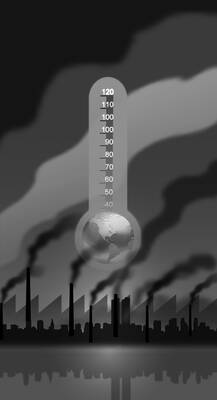
The closure of the Strait of Hormuz has sent the vast Asian chemicals industry into a tailspin. Deprived of the likes of Qatari natural gas and Saudi Arabian oil, the region’s fertilizer and plastics plants are slowing production or even shutting down. Everywhere except China, that is. In petrochemicals, China is unique. As well as a traditional industry that uses oil and gas as feedstock, it has parallel output that relies on its abundant domestic coal. Unsurprisingly, India and other regional powers want to copy and paste the Chinese method. This would not be easy — or climate friendly. The
Indonesian President Prabowo Subianto says he knows how to fix the problems facing Indonesia. Yet his economic mismanagement and authoritarian tendencies are steering the nation toward a familiar mix of currency instability and political chaos. The world’s fourth-most populous nation risks reversing the hard-won democratic and business reforms that came after the Asian Financial Crisis in 1997. At that time, the rupiah collapsed and the political upheaval that followed forced former president Haji Mohamed Suharto from power. Prabowo’s administration is ignoring similar warning signs. That disconnect was apparent in a national address on Wednesday, when Prabowo projected the swagger that has
“Of course you can choose not to be Taiwanese, just do not stay here,” chairwoman of Taipei 101 operator Taipei Financial Center Corp Janet Chia (賈永婕) said in an online interview with local entertainer Tai Chih-yuan (邰智源), triggering intense discussion on social media, with politicians across party lines weighing in. In the interview, which was aired on May 14, Chia and Tai’s discussion over a meal in Taipei 101 covered Chia’s career change from entertainer to chairwoman and US climber Alex Honnold’s free solo climb up the Taipei 101 building. During the interview, Chia said, “Being on this land, we


 RSS
RSS