


On America’s highways, wind turbines may be the ultimate oversize load.
Trucks carrying silvery blades nearly half a football field long have been lumbering through this placid coastal town all summer, backing up traffic as they slowly exit the roadway. Huge, tubular chunks of tower also pass through. Tall pieces of machinery looking somewhat like jet engines travel at night because they require special routing to avoid overpasses.
As demand for clean energy grows, towns around the country are finding their traffic patterns roiled as convoys roll through carrying disassembled towers that will reach more than 76m in height, as well as motors, blades and other parts. Escorted by patrol cars and gawked at by pedestrians, the equipment must often travel hundreds of kilometers from ports or factories to the remote, windy destinations where the turbines are erected.
In Belfast, officials have worked hard to keep the nuisance to a minimum, but about 200 trucks are passing through this year on their way to western Maine, carrying parts that have been shipped from Denmark and Vietnam.
Plenty can go wrong despite months of planning. In Idaho and Texas, trucks laden with tall turbine parts have slammed into interstate overpasses, requiring hundreds of thousands of dollars in repairs. In Minnesota last year, a truck carrying a tubular tower section got stuck at a railroad crossing; an approaching train stopped just in time. Also in Minnesota, a woman was killed last September when her car, driven by her husband, collided at an intersection with a truck carrying a wind turbine. (After a police investigation, local officials found that the truck driver was not at fault.)
Maine had a glitch of its own two years ago after a truck carrying a big piece of turbine got stuck for hours while trying to round a corner near Searsport, a port near Belfast that receives many turbine parts from overseas.
“It left a nice gouge in Route 1,” recalled Ben Tracy, who works nearby at a marine equipment store and saw the incident.
On a per-turbine basis, the cost of transportation and logistics generally varies from around US$100,000 to US$150,000, according to John Dunlop, an engineer with the American Wind Energy Association.
Wolfgang Neuhoff, the project manager for TransCanada, which is developing the Maine wind farm, indicated that his numbers were probably above that range, though he declined to be specific.
In Belfast, the onslaught of turbine-toting trucks did not receive a warm welcome at first from some local business owners, who feared that rerouting traffic during the summer tourist season — the best time to transport turbines in a wintry state like Maine — would keep patrons away.
“We were afraid that the state was going to put up signs to avoid Belfast because of the delays,” said Jerry Savitz, the owner of Darby’s Restaurant in Belfast, who added that locals nonetheless supported the idea of windmills because of the clean energy they create.
After discussions with the town, the wind developers agreed to send the tall nacelles, which sit at the top of the turbine towers and contain the electrical generating components, through town at night, so few people would be delayed. Because they had to pass through residential neighborhoods in order to avoid low underpasses, residents feared that a few trees would need to be chopped down. But in the end, the trees were spared.
The grass was not so lucky: several green medians along the route were turned into roadway so that the trucks did not run over curbs while making wide turns.
The cost and hassle of transporting the huge, heavy turbines has sparked interest in manufacturing turbines in the US rather than in Europe. Last year 24 states opened, expanded or announced turbine manufacturing plants, according to the American Wind Energy Association. By value, about half of all turbine parts are now manufactured in the US, Dunlop said.
Even if more turbine parts are made in the US, experts say that transportation logistics are starting to limit how large — and as a result how powerful — wind turbines can get. Some blades are already more than 50m long, and those are “reaching the limits of what you can ship on the Interstate or on rail cars,” said Peter Stricker, vice president of strategic project development at Clipper Windpower, a wind developer and manufacturer.
There is talk of breaking a blade up into multiple pieces, but “that’s a very significant structural concern,” said Stricker, who also noted that tower bases were getting too large to squeeze through interstate underpasses.
In Texas, the state with by far the most wind turbines, the constant truck traffic has created another challenge: It is tearing up small roads in the western part of the state, where the turbines are being rapidly erected.
“You get what we call alligator cracking,” said Stacey Young, a pavement engineer for the Lubbock district of the Texas Department of Transportation, referring to small seams in the pavement.
One paved road in her area is “basically a gravel road now” because of the trucks going through, Young said. She has appealed to state lawmakers to require the developers to help pay for the upkeep of the roads, but so far to no avail.
A partial solution for Young’s concerns may be at hand. The vast majority of turbine parts travel by truck, but in Texas and elsewhere, some wind companies are looking to move more turbine parts by train to save money.
General Electric, a big turbine maker, says rail transport can be up to 50 percent cheaper over long distances, and the rail company Union Pacific saw its wind-related shipments more than double last year.
But even the train routes must avoid low overpasses when big pieces of wind turbines are aboard.
“It’s not your typical rail-car shipments,” said Tom Lange, a Union Pacific spokesman.
Minister of Labor Hung Sun-han (洪申翰) on April 9 said that the first group of Indian workers could arrive as early as this year as part of a memorandum of understanding (MOU) between the Taipei Economic and Cultural Center in India and the India Taipei Association. Signed in February 2024, the MOU stipulates that Taipei would decide the number of migrant workers and which industries would employ them, while New Delhi would manage recruitment and training. Employment would be governed by the laws of both countries. Months after its signing, the two sides agreed that 1,000 migrant workers from India would
In recent weeks, Taiwan has witnessed a surge of public anxiety over the possible introduction of Indian migrant workers. What began as a policy signal from the Ministry of Labor quickly escalated into a broader controversy. Petitions gathered thousands of signatures within days, political figures issued strong warnings, and social media became saturated with concerns about public safety and social stability. At first glance, this appears to be a straightforward policy question: Should Taiwan introduce Indian migrant workers or not? However, this framing is misleading. The current debate is not fundamentally about India. It is about Taiwan’s labor system, its
On March 31, the South Korean Ministry of Foreign Affairs released declassified diplomatic records from 1995 that drew wide domestic media attention. One revelation stood out: North Korea had once raised the possibility of diplomatic relations with Taiwan. In a meeting with visiting Chinese officials in May 1995, as then-Chinese president Jiang Zemin (江澤民) prepared for a visit to South Korea, North Korean officials objected to Beijing’s growing ties with Seoul and raised Taiwan directly. According to the newly released records, North Korean officials asked why Pyongyang should refrain from developing relations with Taiwan while China and South Korea were expanding high-level
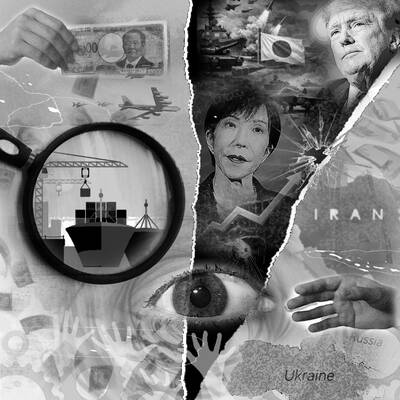
Japan’s imminent easing of arms export rules has sparked strong interest from Warsaw to Manila, Reuters reporting found, as US President Donald Trump wavers on security commitments to allies, and the wars in Iran and Ukraine strain US weapons supplies. Japanese Prime Minister Sanae Takaichi’s ruling party approved the changes this week as she tries to invigorate the pacifist country’s military industrial base. Her government would formally adopt the new rules as soon as this month, three Japanese government officials told Reuters. Despite largely isolating itself from global arms markets since World War II, Japan spends enough on its own


 RSS
RSS