


It is 20 years since Ding Zilin (丁子霖) stood by her gate and waited for her son.
“What came were students with tattered clothes and disheveled hair, shouting ‘they are killing people, they are shooting at people,’” she said.
“The more we watched, the more terrified and desperate we felt ... At about five in the morning we saw a car with a flat wooden board on it and a child’s body on the board. When I saw the body of that child I felt my son’s fate was the same and he would not come back again,” she said.
Her son, Jiang Jielian (蔣捷連), 17, was one of hundreds who died that day, shot dead by the People’s Liberation Army (PLA) on the streets of Beijing. Some believe the death toll in the crackdown on the Tiananmen Square democracy protests stretches into the thousands. But no one knows for sure, and Ding’s attempts to list the dead have resulted in two decades of harassment.
Security officials have repeatedly prevented her from marking her son’s death.
“You killed my son and you’re stopping me [from] going to commemorate him? You didn’t do enough?” was her incredulous comment about them to the Guardian earlier this year.
On Wednesday, police again arrived to blockade her home amid a broad security clampdown. Other dissidents have been detained or invited on “holidays” by security officials this week. Plainclothes and uniformed officers have flooded Tiananmen Square. Popular online services including Twitter and Flickr and bulletin boards have been blocked. BBC broadcasts on the anniversary are blacked out and pages of imported newspapers are cut out or glued together.
Last night an exiled student leader trying to return to China was refused entry to the territory of Macau, where he has not seen his parents for two decades. An arrest warrant for Wuer Kaixi (吾爾開希) has been in force since 1989, when he was second on China’s “most wanted” list. Like the peaceful activities of Ding — a 73-year-old retired philosopher and grieving mother — Wuer Kaixi’s presence is unacceptable to a state determined to suppress memory of the Tiananmen protests.
FORGETTING
Bao Tong (鮑彤), a chief aide to the reformist former general secretary of the Chinese Communist Party (CCP), Zhao Ziyang (趙紫陽), who was purged for his sympathy toward the students, said: “A lot of people have forgotten; foreign people forgot; many Chinese young people forgot, too. But as long as China is still under one-party leadership ... you can’t avoid talking about June 4, because it was a turning point. It’s the key turning point, when it could have gone in the right direction, but went in the wrong direction instead.”
His remarks emphasize the double amnesia surrounding the summer of 1989. The demonstrations’ bloody ending has largely erased memories of the carnival of protest that preceded it: an astonishing uprising that lasted six weeks and drew in millions of people from around the country, threatening an end to communist rule. Anything seemed possible.
Ten years of reform had created an appetite for freedom, but also new economic pressures such as rampant inflation, leaving many anxious and insecure. The CCP’s paramount leader, Deng Xiaoping (鄧小平), tacked between reform and party orthodoxy as he tried to hold the leadership together.
Then, in April 1989, came the death of purged reformist leader Hu Yaobang (胡耀邦). It sparked student protests with modest demands: greater freedom of speech, economic freedoms, curbs on corruption.
“The top leadership was very divided over what it meant. One view was that the students were patriotic ... The other was that they were challenging the leadership of the party and that [would lead] to chaos,” said Professor Andrew Nathan, editor of The Tiananmen Papers.
Bao said: “When protests began, I was at that time very optimistic. I thought students raised anti-corruption issues, and asked for democracy. It was an opportunity to make progress.”
But while his boss was pressing for dialogue with students, others were pushing Deng to crack down.
“What happened later was not the students increasing their level of activity, but Deng irritating them,” Bao said.
Riven, the leadership swung between tolerance and suppression: One side emboldened the protesters, the other appeared to inflame them. As the demonstrations spread to hundreds of cities, primary school teachers took their charges to the square. Police, judges and naval officers marched to support the students. The explosion of dissent took demonstrators as well as the government by surprise. Students found themselves heroes to thousands. Workers were drawn in almost by accident.
“It was not that on the first day I knew what my agenda was, that I was fighting for democracy. I was not there for that — I was there just for fun ... curiosity,” said Han Dongfang (韓東方), now director of China Labour Bulletin, who was passing on a bus when he first spotted the demonstrations. His decision to get off at the next stop would transform his life, resulting first in leadership, then jail, then exile.
“To me, that was a fast growing period mentally, ideologically, politically,” he said. “As a human being, as an activist, I grew really fast in this six weeks, from zero to a spokesman of my organization — the only workers’ organization in the square — and then into a wanted person.”
But what exhilarated participants terrified leaders who had lived through the chaos of the cultural revolution, when young people turned on their elders. The participation of workers was particularly frightening for the government.
“Their logic was very simple: We took power with the ideology of a workers’ movement, therefore, if others are starting a labor movement not under our control, it will one day take away our power,” Han said.
The movement’s demands were growing bolder and more fractured as students flooded in from the provinces and new leaders emerged, scorning suggestions of compromise.
That was inevitable in a state that had never tolerated alternative organizations, said Chen Ziming (陳子明), one of the intellectuals who attempted to mediate. For his pains he would serve 13 years as a “black hand” behind the events. There was simply no way of channeling or shaping such dissent.
“Students who didn’t compromise cannot be described as hostile to the government. It was more like children talking to their parents,” Chen said.
“Fate was against the reformers,” Nathan said. “Zhao Ziyang was suggesting a softer line that isn’t in the DNA of the CCP ... Deng had been through the [communist] revolution, through the cultural revolution. I think it was in his nature to crack down eventually.”
Zhao refused to support the use of troops and was purged; he died years later under house arrest, while Bao served seven years in jail.
But when the government declared martial law, the unthinkable happened.
“I waited all night on the monument of the people’s heroes in the middle of the square for troops to arrive — and they didn’t,” recalled Robin Munro, then a human rights activist in Beijing and now at China Labour Bulletin.
“The student loudspeakers burst into life and someone announced ‘the great Beijing people have blocked the advance of the army’ — and this roar went up. It was an extraordinary moment that no one had believed would be possible. Beijing citizens, ordinary people, had all turned out and physically stood in front of tanks to stop them coming into their city. And the troop columns halted,” Munro said.
‘SERVING THE PEOPLE’
Unlike many of the celebrating students, Munro correctly read the brief triumph as the beginning of the end.
“I felt it was huge loss of face for the authorities. They will not accept it. They will have to end it their way,” he said.
Two weeks later, Deng’s patience ran out. Troops were ordered to clear the square by dawn.
“They woke me up and said tonight, army really, really will break in; we have to get prepared,” Han said. “I still did not believe it — I had been in the army for three years. We were educated that the only aim as a soldier was serving the people.”
Jielian, pushing his way through the crowd in a suburb, was hit almost as soon as the firing started.
“Even after they were shot, they thought it was rubber bullets, so they tried running away,” Ding said. “After he ran a few steps he said to his friend, I may be shot — you run fast; don’t wait for me. And after he finished the sentence he knelt down and then fell forward.”
Munro thinks the authorities had never expected that citizens would dare to defy the state en masse for a second time. Yet they sent their troops in with tanks and live ammunition.
“I believe what probably tilted the balance was this point: that it would shock and awe the Beijing citizenry into submission for the far foreseeable future,” he said. “And terror works. That’s the awful thing.”
He watched as troops fired on civilians and an armored personnel carrier rammed a truck, sending it crashing on to the crowd.
“There was one poor man who had been crushed underneath it and his brains were lying outside of his head — squashed out,” Munro said.
Amid the chaos, some soldiers were set upon, beaten and killed by angry citizens. Officials would cite this as proof of “a counter-revolutionary riot.”
“It was a one-way shooting massacre,” said Wuer Kaixi, who left the square on the last ambulance to arrive in hospital awash with blood: “Darker, fresher, lighter, red. And the awful smell.”
In Tiananmen Square, as the dawn approached, troops were massing in their thousands.
“The students left it till the very last minute — and many were determined to stay and sacrifice their lives. They were writing their wills on the monument,” Munro said.
In the end they walked away, minutes from the deadline. Some would flee into exile, where many remain; others were caught and jailed. Across the city, hundreds lay dead, among them Jielian.
“The last time I kissed him was two days after his death,” Ding said. “He was so cold. So cold, I can never, ever forget his cold cheek.”
KMT Chairwoman Cheng Li-wun’s (鄭麗文) recent visit to Beijing and her upcoming visit to Washington will serve as a high-level test of her diplomatic mettle. In Beijing, Cheng was received with symbolic gestures, a warm reception, and high-level access. In Washington, she will receive far less pomp and far sharper questions about the KMT’s vision for the future of Taiwan. Her challenge will be to persuade Washington that the KMT’s engagement with China can coexist with strong deterrence. Cheng’s April 7-12 visit to mainland China coincided with an intense period of conflict in Iran. Despite the strategic significance of Cheng’s trip,
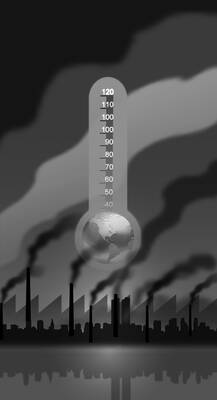
The closure of the Strait of Hormuz has sent the vast Asian chemicals industry into a tailspin. Deprived of the likes of Qatari natural gas and Saudi Arabian oil, the region’s fertilizer and plastics plants are slowing production or even shutting down. Everywhere except China, that is. In petrochemicals, China is unique. As well as a traditional industry that uses oil and gas as feedstock, it has parallel output that relies on its abundant domestic coal. Unsurprisingly, India and other regional powers want to copy and paste the Chinese method. This would not be easy — or climate friendly. The
Indonesian President Prabowo Subianto says he knows how to fix the problems facing Indonesia. Yet his economic mismanagement and authoritarian tendencies are steering the nation toward a familiar mix of currency instability and political chaos. The world’s fourth-most populous nation risks reversing the hard-won democratic and business reforms that came after the Asian Financial Crisis in 1997. At that time, the rupiah collapsed and the political upheaval that followed forced former president Haji Mohamed Suharto from power. Prabowo’s administration is ignoring similar warning signs. That disconnect was apparent in a national address on Wednesday, when Prabowo projected the swagger that has
“Of course you can choose not to be Taiwanese, just do not stay here,” chairwoman of Taipei 101 operator Taipei Financial Center Corp Janet Chia (賈永婕) said in an online interview with local entertainer Tai Chih-yuan (邰智源), triggering intense discussion on social media, with politicians across party lines weighing in. In the interview, which was aired on May 14, Chia and Tai’s discussion over a meal in Taipei 101 covered Chia’s career change from entertainer to chairwoman and US climber Alex Honnold’s free solo climb up the Taipei 101 building. During the interview, Chia said, “Being on this land, we


 RSS
RSS