


Founded in 1976, the Liberation Tigers of Tamil Eelam (LTTE) led an armed insurgency to create a Tamil state independent from the rest of Sri Lanka and its Sinhalese majority. Apart from having an army, a navy and an air force, the LTTE also had an autonomous government and territory. Although it was declared a terrorist organization by 32 countries, and late leader Velupillai Prabhakaran was seen as a dictator, quite a few Western countries sympathized with the Tamils.
When the Sri Lankan government planned to launch the final strike against the group early this month, some Western countries called for mediation. But saying the strike was a matter of Sri Lanka’s internal affairs, government troops defeated the group and, on May 16, killed Prabhakaran.
Still, everyone seems to have ignored the significance of this operation and its connection to China. To deal with the Sri Lankan civil war, the UN had planned to send an investigation team early this year when it called for a ceasefire and peace talks. It also requested that the Sri Lankan government allow humanitarian aid organizations to enter the country, but all such requests were denied. Meanwhile, China opposed the requests at the UN Security Council, saying the situation was an internal Sri Lankan affair.
The fact is, however, that China provided the weapons used by Sri Lankan troops in this long civil war. While the international community was calling for mediation, China encouraged and even supported the Sri Lankan government’s military crackdown on the LTTE, and India’s Home Minister Palaniappan Chidambaram strongly condemned Beijing for doing so on April 25.
The notorious military government of Myanmar also gets its weapons from China. When the military government slaughtered dissidents in the past, Beijing also vetoed UN mediation and relief at the Security Council, arguing that the UN should not interfere with Myanmar’s internal affairs.
As for the Darfur genocide in Sudan, a human catastrophe in which more than 400,000 people have died, China offered the Sudanese government weapons in exchange for its oil resources. China has also repeatedly vetoed humanitarian aid at the Security Council based on the same old claim that the issue is a matter of Sudan’s internal affairs.
Under the administration of President Ma Ying-jeou (馬英九), Taiwan is giving the world the impression that it recognizes itself as a local government of China. For example, Taiwan was only able to attend the World Health Assembly (WHA) as an observer because China told the WHO Secretariat to invite it. Regardless of what title Taiwan uses, the invitation has become a matter of China’s internal affairs because the invitation was not extended by the WHA. Given these circumstances, one can but wonder what will happen to Taiwan if China one day attacks it?
Just think of Sri Lanka, Myanmar, and Darfur. In the eyes of the international community, maybe the Taiwan issue is nothing but a matter of China’s internal affairs.
Mattel Hsu is a doctoral candidate in the School of Languages, Cultures and Linguistics at Monash University, Australia.
TRANSLATED BY EDDY CHANG
KMT Chairwoman Cheng Li-wun’s (鄭麗文) recent visit to Beijing and her upcoming visit to Washington will serve as a high-level test of her diplomatic mettle. In Beijing, Cheng was received with symbolic gestures, a warm reception, and high-level access. In Washington, she will receive far less pomp and far sharper questions about the KMT’s vision for the future of Taiwan. Her challenge will be to persuade Washington that the KMT’s engagement with China can coexist with strong deterrence. Cheng’s April 7-12 visit to mainland China coincided with an intense period of conflict in Iran. Despite the strategic significance of Cheng’s trip,
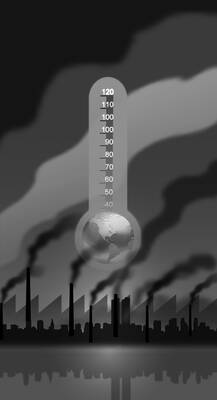
The closure of the Strait of Hormuz has sent the vast Asian chemicals industry into a tailspin. Deprived of the likes of Qatari natural gas and Saudi Arabian oil, the region’s fertilizer and plastics plants are slowing production or even shutting down. Everywhere except China, that is. In petrochemicals, China is unique. As well as a traditional industry that uses oil and gas as feedstock, it has parallel output that relies on its abundant domestic coal. Unsurprisingly, India and other regional powers want to copy and paste the Chinese method. This would not be easy — or climate friendly. The
History might remember 2026, not 2022, as the year artificial intelligence (AI) truly changed everything. ChatGPT’s launch was a product moment. What is happening now is an anthropological moment: AI is no longer merely answering questions. It is now taking initiative and learning from others to get things done, behaving less like software and more like a colleague. The economic consequence is the rise of the one-person company — a structure anticipated in the 2024 book The Choices Amid Great Changes, which I coauthored. The real target of AI is not labor. It is hierarchy. When AI sharply reduces the cost
US President Donald Trump recently repeated his claim that “Taiwan stole America’s chip industry,” reigniting public debate on the issue. As a former Taiwanese minister of economic affairs and an entrepreneur deeply involved in semiconductor supply chain development, I feel a responsibility to clarify this misunderstanding. From the perspective of global industrial evolution and the economic principle of comparative advantage, such a statement appears overly simplistic and risks obscuring the essence of the issue. The rise of Taiwan’s semiconductor industry was not built on “replacing America,” but rather emerged as a result of countries pursuing different development paths within the


 RSS
RSS