


Tarak Babu could have seen or heard little in the seconds before he died. His village of Jelepara in the far southwest of Bangladesh is desperately poor and has no electricity, and the young fisherman was walking back with food for his family at about 8:15pm.
It was June 20 — monsoon season. Tarak was walking along the high earth embankment that protects Jelepara from the Chunkuri River, and had just passed a small Hindu temple with its gaudy, painted wooden effigies of the tiger god Dakshin Ray. He would not have seen the real tiger that had just swum across the river from the great Sunderbans forest 400m away. It hauled itself out of the water and mauled him from behind. No one even heard Tarak cry out.
But that was just the start of the drama in Jelepara that night. According to Selina, a young woman who lives only a few hundred meters from the scene of the killing, the beast then dropped down off the embankment and silently entered Gita Rani’s family compound in the village. It tried to take a chicken, but Gita came out when she heard the commotion in the hen house and was promptly killed. The tiger then went into the house where it killed her father-in-law, Aghoire Mandal.
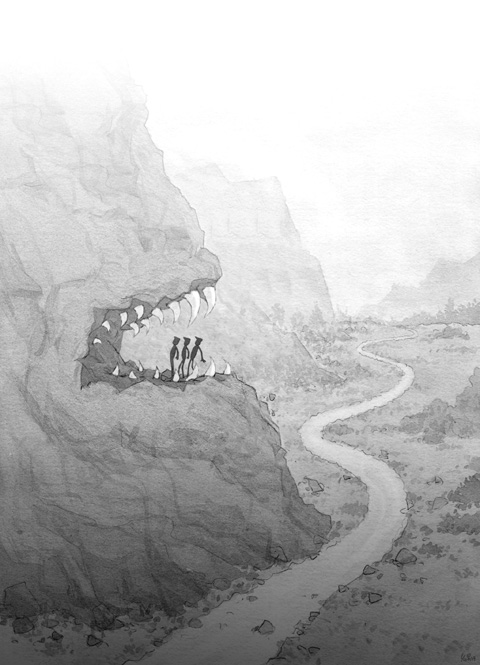
“Word spread fast that a man-eater was in the village,” Selina said. “Everyone was very frightened and angry. People came from all around and the tiger ran to another house half a kilometer away. There it killed some goats.”
Many villagers kept their doors shut and prayed that night, as others kept watch. When dawn came, the damage was counted: Three people, two goats and several chickens had been killed and the tiger was still in the village.
But rather than call the government forest department, 65km away, and hope that they would send a marksman to shoot the tiger, the people of Jelepara set about hunting it. It proved to be a brave but brutal exercise.
Now it was the animal’s turn to run. First dozens of men tried to corner it, blocking off its escape routes and chasing it away from the village. The tiger was tracked through long grass and rice fields. Finally it leapt on the roof of a house. Film shot on a mobile phone by a villager shows the tiger looking perfectly relaxed.
As people gathered for the spectacle of what would surely be a kill — either of animal or of humans — several men then climbed a tree above the house with a rope. Slowly they lowered a noose above the tiger’s head and secured the rope to the tree. At a given moment, the villagers then all started shouting and the tiger leapt forward in a desperate attempt to escape. But the noose tightened, and the rope, held by the tree, steadily began to strangle it.
Men then came forward and clubbed the beast senseless, but it took the strength of many people to hang it up and finally execute it.
“Everyone was astonished how big it was,” Selina said. “It was at least 8 feet [2.5m] long.”
If it was a human victory, it was one tinged with great sadness. This man-eater was a Bengal Royal, one of the largest of all tiger species, but this was hardly the magnificent beast of the forest seen on TV nature program; it was huge, but it was also old, thin and mangey, and had clearly come to the village half-starving.
“It was responsible for about half a dozen other deaths in recent months. It became a man-eater and every now and then it entered villages to look for prey,” said Rajesh Chakma, from the forestry department, who arrived later with colleagues and took away the body.
The tiger attack and the village’s revenge on the animal was not unexpected. The Sunderbans’ maze of swamp, islands and mangrove forests lying between India and Bangladesh is one of the very few places left in the world where man is not top of the food chain. It is possibly the most dangerous place on earth.
Whereas tiger populations are plunging around the world to the point where there may be only about 6,000 left, in the Sunderbans it is believed that numbers are at least stable. At least 500 are known to live there and this almost inaccessible watery wilderness is now the greatest stronghold of tigers left in the world.
But in the past few years man and tiger have been confronting each other more and more in the Sunderbans, and for once, it seems that tigers are getting the upper hand.
“More people are being killed in the forest and more tigers are coming out of the forest into human communities than ever,” said Mamun Rashid, author of a study of 180 human-tiger confrontations in Bangladesh.
The Jalepara tiger was the first trapped and killed by a Bangladeshi community in more than four years, but it followed a pattern, Rashid said.
“If a tiger is found in a village the word spreads quickly. Often the tiger is kept cornered somewhere for a long time while people from the village and places nearby come to see the spectacle. Eventually the people try to kill it by stabbing it with spears, knives, axes and or by throwing rocks. Cornered and injured, the tiger often lashes out at someone,” he said.
Officially, there are about 40 human deaths a year from tigers in the Bangladeshi Sunderbans but this is a major underestimation, he said.
“There is a definite increase in people being killed. On the Bangladeshi side of the Sunderbans, at least 70 people are being killed a year now,” he said.
It is the same story in the smaller, Indian portion of the Sunderbans where there is a national park and an established tiger protection zone.
“In Indian Sunderbans last year there were officially 16 deaths by tigers but the actual number of deaths is certainly much more,” said Pradip Shukla, director of the Sunderbans biosphere reserve.
In the past few months there have been seven deaths, he said.
“Many killings go unrecorded; often villagers don’t report attacks in restricted forest areas for fear of being fined or having their fishing permits cancelled,” he said.
While tigers may be killing more, humans are largely responsible for their own deaths, Rashid said. Up to 5,000 people now to go into the forest regularly for food, he said.
“What is happening is that human poverty is increasing greatly in the Sunderbans. This is because fish catches are declining, the rivers are silting up and because of climate change, there is an increased frequency and intensity of cyclones,” Rashid said.
Climate change is a reality in the Sunderbans. Rising sea levels, constant erosion and increasingly salty waters make life in the tangle of islands and mangrove forests harder for animals. Bangladeshi scientists record sea levels in the bay of Bengal rising 3mm a year, resulting in less fresh water and more floods and erosion. One of the largest islands is predicted to shrink by 15 percent by 2020. On top of that, new irrigation and hydropower projects have reduced the flow of the Ganges River. The net result is less space and prey for the tiger.
“The only way that communities can survive is by going deeper into the forests to collect resources like honey, fish, shrimps and crabs, and wood for their boats and homes,” Rashid said. “They are more vulnerable than they used to be. People now rely far more on the forest for subsistence.”
“In the past, people could cross the river and go into the forest without too much danger; now the tiger is attacking people more,” Selina said. “In the last five years, 10 people from Jelepara have died in tiger attacks. There are many tiger widows here. Ten years ago perhaps one tiger would cross the river a year. The animal would take a cow or a goat and that would be that. Now we have two or three visits a year.”
Tigers are being forced to come out of the forest more because they have less prey than before, Rashid said. His research suggests that most of the victims were attacked from behind and that nearly 80 percent died. It also put to rest theories that tigers always eat their victims. In just 7 percent of the attacks did they fully consume humans. Usually, it seems, they took just a few bites, or, as in Jelepara, just killed and left them.
Theories abound as to why Sunderbans tigers are more aggressive than elsewhere. Some wildlife experts say the water in this coastal area is more salty and this puts them in a state of constant discomfort. Others speculate that the only way a tiger can defend its territory in these tidal areas is to physically dominate everything that enters. Another possibility is that these animals have grown used to human flesh due to the weather. Cyclones kill many people each year and human bodies drift into the swampy waters, where tigers scavenge them.
Equally possible is that tigers in the remote, largely inaccessible Sunderbans were never subject to the hunting massacres that took place in colonial times on the subcontinent, and so have never developed a fear of humans.
Today, the villagers’ fears are well-founded
“One man in Jelepara was so afraid of being killed by a tiger that he moved to India to find work. But he was sent back and had to go to the forest to subsist. He was killed immediately,” said another man in the village.
The hostility between the world’s two top predators has been based on equal amounts of fear and respect. Fishermen and honey collectors say prayers and perform rituals to the forest gods before setting out on expeditions.
In some areas, people going into the forest wear masks looking like faces on the back of their heads, in the belief that tigers always attack from behind. This is said to have worked for a short time, but it seems that the tigers quickly realized it was a hoax, and the attacks continued. On the Indian side of the Sunderbans, people going into the forests wear stiff pads on their backs to prevent the tigers biting the spine, one of their favorite ways to attack.
“If you want to stop the tiger killing people and want to protect the tiger, then you must reduce poverty in the region,” Rashid said. “If you reduce poverty you can increase biodiversity. Development is the best conservation here. Otherwise, the tiger will come again and again to the villages and will kill more people. And people will not stop going to the forest, so the deaths will continue.”

Elbridge Colby, America’s Under Secretary of Defense for Policy, is the most influential voice on defense strategy in the Second Trump Administration. For insight into his thinking, one could do no better than read his thoughts on the defense of Taiwan which he gathered in a book he wrote in 2021. The Strategy of Denial, is his contemplation of China’s rising hegemony in Asia and on how to deter China from invading Taiwan. Allowing China to absorb Taiwan, he wrote, would open the entire Indo-Pacific region to Chinese preeminence and result in a power transition that would place America’s prosperity
A few weeks ago in Kaohsiung, tech mogul turned political pundit Robert Tsao (曹興誠) joined Western Washington University professor Chen Shih-fen (陳時奮) for a public forum in support of Taiwan’s recall campaign. Kaohsiung, already the most Taiwanese independence-minded city in Taiwan, was not in need of a recall. So Chen took a different approach: He made the case that unification with China would be too expensive to work. The argument was unusual. Most of the time, we hear that Taiwan should remain free out of respect for democracy and self-determination, but cost? That is not part of the usual script, and
All 24 Chinese Nationalist Party (KMT) lawmakers and suspended Hsinchu Mayor Ann Kao (高虹安), formerly of the Taiwan People’s Party (TPP), survived recall elections against them on Saturday, in a massive loss to the unprecedented mass recall movement, as well as to the ruling Democratic Progressive Party (DPP) that backed it. The outcome has surprised many, as most analysts expected that at least a few legislators would be ousted. Over the past few months, dedicated and passionate civic groups gathered more than 1 million signatures to recall KMT lawmakers, an extraordinary achievement that many believed would be enough to remove at
Behind the gloating, the Chinese Nationalist Party (KMT) must be letting out a big sigh of relief. Its powerful party machine saved the day, but it took that much effort just to survive a challenge mounted by a humble group of active citizens, and in areas where the KMT is historically strong. On the other hand, the Democratic Progressive Party (DPP) must now realize how toxic a brand it has become to many voters. The campaigners’ amateurism is what made them feel valid and authentic, but when the DPP belatedly inserted itself into the campaign, it did more harm than good. The


 RSS
RSS