


If the Chinese Nationalist Party (KMT) administration ever intended to save face, it surely has not been getting any help from China, as the latter continues to upgrade its military in a threatening manner.
Two days before the launch of the cross-strait weekend charter flights, which President Ma Ying-jeou’s (馬英九) administration has marketed as a sign of thawing cross-strait relations, reports emerged yesterday that Beijing recently upgraded surface-to-air missiles deployed along its southern coast.
Meanwhile, Xinhua news agency has reported that the Chinese military carried out its first parachuting exercise at Hebei Province’s Shijiazhuang Airport on June 18, in which eight civilian aircraft were involved.
In light of these developments, it appears that only one side — ours — still believes in the vows, made only weeks ago, to set aside differences and rebuild mutual trust.
Just because the KMT government chooses to set aside controversial issues does not mean that those issues do not exist.
US Assistant Secretary of Defense for East Asia James Shinn recently expressed concerns that the threat of a Chinese attack on Taiwan has markedly increased in the past few years, as the balance in the Taiwan Strait tilts toward Beijing.
Unless it has been blinded by wishful thinking, the KMT government must be aware of this. If it is not, then it needs to be reminded that China’s ultimate goal remains the same: annexation, whatever it takes.
Civilian flights could provide the Chinese military with the cover it needs to penetrate Taiwanese airspace and launch a strike against command-and-control infrastructure.
Such a scenario is feasible. On June 8, The Associated Press reported that two Russian fighter jets tailed a Finnair Airbus for several minutes over northwestern Russia en route from Helsinki to Seoul without the Finnish pilot being aware of it. As it turns out, Finnish Prime Minister Matti Vanhanen was on that flight.
History shows us that such tactics have their uses. In August 1968, the Soviet Union invaded Czechoslovakia using Soviet military transport planes with airborne troopers on board. By time the aircraft had landed at Prague Airport, the airport had already been occupied by a group of “tourists.” Soon afterwards, Czechoslovakian president Alexander Dubcek was removed from power.
The Soviets used a similar tactic for the invasion of Afghanistan in 1979, using civilian aircraft to transport KGB units, who then occupied the airport, entered the presidential palace and killed Afghan president Hafizullah Amin.
The fact that the Straits Exchange Foundation failed to include cargo flights during its negotiations with its Chinese counterpart now seems to be a blessing in disguise.
In its haste to improve relations with Beijing, the KMT government has undermined national security and — despite his calls for military readiness yesterday — Ma has made it likelier that Taiwan will be added to the inglorious list of countries that play down feasible threats and suffer the consequences.
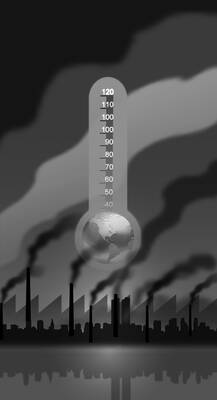
The closure of the Strait of Hormuz has sent the vast Asian chemicals industry into a tailspin. Deprived of the likes of Qatari natural gas and Saudi Arabian oil, the region’s fertilizer and plastics plants are slowing production or even shutting down. Everywhere except China, that is. In petrochemicals, China is unique. As well as a traditional industry that uses oil and gas as feedstock, it has parallel output that relies on its abundant domestic coal. Unsurprisingly, India and other regional powers want to copy and paste the Chinese method. This would not be easy — or climate friendly. The
KMT Chairwoman Cheng Li-wun’s (鄭麗文) recent visit to Beijing and her upcoming visit to Washington will serve as a high-level test of her diplomatic mettle. In Beijing, Cheng was received with symbolic gestures, a warm reception, and high-level access. In Washington, she will receive far less pomp and far sharper questions about the KMT’s vision for the future of Taiwan. Her challenge will be to persuade Washington that the KMT’s engagement with China can coexist with strong deterrence. Cheng’s April 7-12 visit to mainland China coincided with an intense period of conflict in Iran. Despite the strategic significance of Cheng’s trip,
History might remember 2026, not 2022, as the year artificial intelligence (AI) truly changed everything. ChatGPT’s launch was a product moment. What is happening now is an anthropological moment: AI is no longer merely answering questions. It is now taking initiative and learning from others to get things done, behaving less like software and more like a colleague. The economic consequence is the rise of the one-person company — a structure anticipated in the 2024 book The Choices Amid Great Changes, which I coauthored. The real target of AI is not labor. It is hierarchy. When AI sharply reduces the cost
US President Donald Trump recently repeated his claim that “Taiwan stole America’s chip industry,” reigniting public debate on the issue. As a former Taiwanese minister of economic affairs and an entrepreneur deeply involved in semiconductor supply chain development, I feel a responsibility to clarify this misunderstanding. From the perspective of global industrial evolution and the economic principle of comparative advantage, such a statement appears overly simplistic and risks obscuring the essence of the issue. The rise of Taiwan’s semiconductor industry was not built on “replacing America,” but rather emerged as a result of countries pursuing different development paths within the


 RSS
RSS