


Shell has become embroiled in a major row with the World Bank and green energy companies after allegations it is unfairly refusing to honor warranties on solar power systems sold to the developing world.
A widespread breakdown of its equipment in Sri Lanka and elsewhere has left the oil firm accused of abandoning a responsibility to impoverished communities while damaging the prospects of the wider renewable power sector in a world desperate to reduce carbon emissions following the Copenhagen climate change summit.
The rural electrification business under which the Shell systems were sold has now itself been passed on — as have most other parts of the group’s solar business — but critics say that Shell, which made profits of US$31 billion in 2008, has a continuing role in ensuring former customers are not left vulnerable.
“Shell exited solar on a global basis, seemingly without due consideration to how after-sales service and warranty replacements would be provided, thereby damaging the very local solar industries it had earlier helped to create,” said Damian Miller, a former Shell manager who now heads his own solar business.
“In Sri Lanka, poor customers with average earnings of US$1,500-US$2,000 a month have bought Shell’s solar systems. The system is equivalent to 30 percent of their annual income,” he added. “They could only afford a system because they could get a loan from microfinance institutions or other banks. But now there are reports of thousands of Shell’s [branded] solar panels failing in the field and Shell seemingly is not replacing them.”
The World Bank, which provides financing packages to the developing world, said it too was very worried about a situation in which about 700 solar systems appear to have failed and local suppliers risked going out of business.
Anil Cabraal, an energy specialist at the bank’s Washington headquarters, has written to Shell asking for action.
“I would like Shell to honor these commitments. We are not talking about millions of dollars here but hundreds of thousands,” he said.
The company argues that it is being unfairly targeted and is doing all it can to sort out the problem. It points out that its Shell Solar Sri Lanka business has been transferred to a third-party purchaser, Environ Energy, along with all liabilities. The Anglo-Dutch oil group says the bulk of its former solar module manufacturing operation has also been switched to a new owner, Solar World.
“In October 2007, Shell sold Shell Solar Lanka Ltd to Environ Energy Global PTE Ltd. Specifically in order to protect customer interests, the terms of the transaction explicitly covered the management of all past, present and future liabilities, including warranty issues,” a Shell spokesman in the Hague said.
The situation has been complicated by the fact that Environ claims Solar World will not replace any modules unless it has the appropriate warranty documents. Environ claims those papers were destroyed by Shell prior to the handover, though Shell denied that.
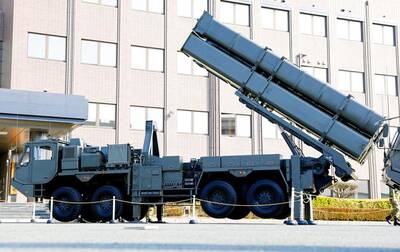
Japan has deployed long-range missiles in a southwestern region near China, the Japanese defense minister said yesterday, at a time when ties with Beijing are at their lowest in recent years. The missiles were installed in Kumamoto in the southern region of Kyushu, as Japan is attempting to shore up its military capacity as China steps up naval activity in the East China Sea. “Standoff defense capabilities enable us to counter the threat of enemy forces attempting to invade our country ... while ensuring the safety of our personnel,” Japanese Minister of Defense Shinjiro Koizumi said. “This is an extremely important initiative for
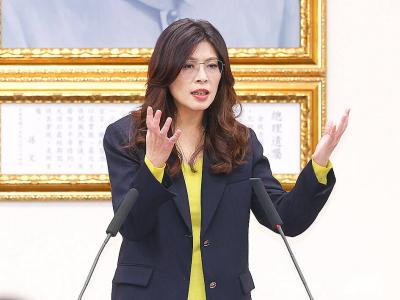
Chinese Nationalist Party (KMT) Chairwoman Cheng Li-wun (鄭麗文) today accepted an invitation from Chinese President Xi Jinping (習近平) to lead a delegation to China next month, saying she hopes to promote the peaceful development of cross-strait relations and bring stability to the Taiwan Strait. “I am grateful and happy to accept this invitation,” Cheng said in a statement from the KMT chairperson’s office. Cheng said she hopes both sides can work together to promote the peaceful development of cross-strait relations, enhance exchange and cooperation, bring stability to the Taiwan Strait and improve people’s livelihoods. At today's news conference, Cheng said any efforts to
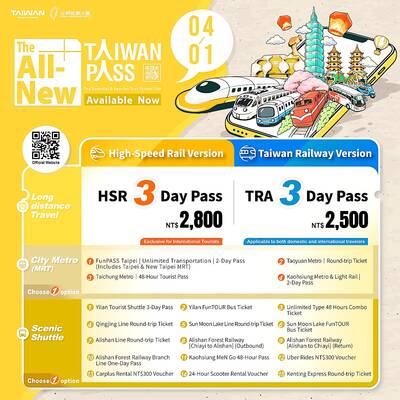
MORE POPULAR: Taiwan Pass sales increased by 59 percent during the first quarter compared with the same period last year, the Tourism Administration said The Tourism Administration yesterday said that it has streamlined the Taiwan Pass, with two versions available for purchase beginning today. The tourism agency has made the pass available to international tourists since 2024, allowing them to access the high-speed rail, Taiwan Railway Corp services, four MRT systems and four Taiwan Tourist Shuttles. Previously, five types of Taiwan Pass were available, but some tourists have said that the offerings were too complicated. The agency said only two types of Taiwan Pass would be available, starting from a three-day pass with the high-speed rail and a three-day pass with Taiwan Railway Corp. The former costs NT$2,800

The nation’s fastest supercomputer, Nano 4 (晶創26), is scheduled to be launched in the third quarter, and would be used to train large language models in finance and national defense sectors, the National Center for High-Performance Computing (NCHC) said. The supercomputer, which would operate at about 86.05 petaflops, is being tested at a new cloud computing center in the Southern Taiwan Science Park in Tainan. The exterior of the server cabinet features chip circuitry patterns overlaid with a map of Taiwan, highlighting the nation’s central position in the semiconductor industry. The center also houses Taiwania 2, Taiwania 3, Forerunner 1 and


 RSS
RSS