


Arab states — and Israel — are watching intently as Iran’s political convulsions continue, seeking clues to how the unfolding crisis will affect the strategic picture in the Middle East, especially the key issue of the Islamic republic’s nuclear ambitions.
In a region where democratic politics are the exception, there is nervousness about the implications of people power on the streets of Tehran. Iranian President Mahmoud Ahmadinejad is deeply unpopular — but mass protests worry all autocrats.
ISRAEL
Officially and in public, at least, Israeli officials have spoken of their deep concern about Ahmadinejad’s apparent re-election. Israel’s rightwing government, under the leadership of Prime Minister Benjamin Netanyahu, has made a priority of challenging Iran’s nuclear ambitions. On Sunday night, Netanyahu said the world’s greatest challenge today was “the nexus between radical Islam and nuclear weapons.”
However, in private, Israeli officials appeared to be hoping for an Ahmadinejad victory even before the polls opened, despite his vitriolic criticism of Israel, his denial of the Holocaust and his apparent eagerness for a nuclear weapons program.
Israeli newspapers quoted several senior officials anonymously saying a win for Ahmadinejad would help Israel because, as they saw it, none of the candidates differed very much on policy and Ahmadinejad’s strong language and blunt actions made him easier to criticize internationally.
“Considering the circumstances, he is the best thing that ever happened to us,” one foreign ministry official was quoted as saying in the popular Ma’ariv newspaper last Friday.
Ben Caspit, a Ma’ariv columnist, put it even more bluntly that morning: “If you have friends in Iran, try to convince them to vote for Mahmoud Ahmadinejad today ... There is no one who will serve Israel’s PR interests better.”
Far fewer were the voices who questioned that line of thinking. Among them was Aluf Benn, a Ha’aretz columnist who dismissed the support for Ahmadinejad as a “blatant manifestation of the narrow horizons of Israeli strategic thinking.”
LEBANON
Recently emerging from their own political upheavals, savvy Lebanese see much of themselves in the people politics unfolding in Tehran.
“It reminds me of our protests,” said Haitham Chamas, an activist who helped organize protests in 2005 that brought 1 million Lebanese to the streets calling for democratic reforms and the fall of the government.
Just as in Tehran, that opposition was swiftly answered by a huge rally in support of the incumbent regime, organized then by Hezbollah, which is allied with Iran and Syria.
Chamas and friends have spent the last week talking of little else but what the historic events unfolding in Iran could mean for Lebanon, where Iranian financing of Hezbollah has divided opinion like never before.
The Western-backed government, known as March 14, recently beat Hezbollah and its allies in undisputed elections.
“I think if [defeated Iranian presidential candidate Mir Hossein] Mousavi’s supporters stay on the streets for a week the regime will fall and that will seriously affect Hezbollah,” Chamas said.
Hassan Nasrallah, Hezbollah’s leader, was quick to congratulate Mahmoud Ahmadinejad on his disputed re-election, saying it represented “great hope to all the oppressed people.”
In the Hezbollah-controlled southern suburbs of Beirut, men and women speak admiringly of Ahmadinejad as a true leader of the Shiite cause and brand Mousavi “Iran’s March 14 candidate.”
But for those who see Iran as meddling in Lebanon’s affairs, the turmoil in Tehran brings a certain satisfaction.
“Now the Iranians are arranging their own house, so perhaps we can expect a little less interference in ours,” said Sawssan Abou Zahr, a journalist with An Nahar newspaper.
IRAQ
Iran’s near neighbor and former arch-foe has remained largely silent in the wake of the post-election revolt.
The Iraqi street is paying little heed to the contested result and national leaders have passed only cursory congratulations to Mahmoud Ahmadinejad in the tumultuous days since.
Lawmakers from the Shiite parties have mostly refused public comment to Iraqi media. Many maintain close links to establishment figures in Tehran and some owe their careers to the patronage of Shiite Islamic clerics and supporters.
However, with elections just over six months away, Iraqi MPs are keen to distance themselves from the perception of foreign sponsorship and to concentrate on shaping a sovereign state.
On the streets, people were ambivalent.
“This is the Middle East,” said a woman from Baghdad. “Wars and revolutions happen all the time.”
GULF STATES
In Saudi Arabia, Iran’s main Arab adversary and leader of the conservative US-backed camp, the government has made no public comment. But there are signs of concern about the effect of the unrest on the Shiite majority in the kingdom’s oil-producing eastern provinces.
“The Saudis are watching this upheaval and internal divisions with satisfaction,” said political analyst Mai Yamani. “It weakens the aggressive ambitions of Iran as they see it. It also damages the prospects for talks between the [US President Barack] Obama administration and Iran, which they feel would be at Saudi expense if they succeeded.”
The United Arab Emirates, which has a long-running dispute with Iran over three tiny Gulf islands, congratulated Ahmadinejad. Dubai, home to a large Iranian expatriate community, banned election-related protests.

PHISHING: The con might appear convincing, as the scam e-mails can coincide with genuine messages from Apple saying you have run out of storage For a while you have been getting messages from Apple saying “your iCloud storage is full.” They say you have exceeded your storage plan, so documents are no longer being backed up, and photos you take are not being uploaded. You have been resisting Apple’s efforts to get you to pay a minimum of £0.99 (US$1.33) a month for more storage, but it seems that you cannot keep putting off the inevitable: You have received an e-mail which says your iCloud account has been blocked, and your photos and videos would be deleted very soon. To keep them you need
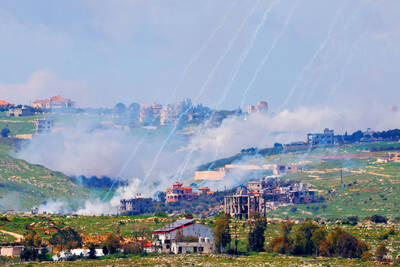
The Israeli military has demolished entire villages as part of its invasion of south Lebanon, rigging homes with explosives and razing them to the ground in massive remote detonations. The Guardian reviewed three videos posted by the Israeli military and on social media, which showed Israel carrying out mass detonations in the villages of Taybeh, Naqoura and Deir Seryan along the Israel-Lebanon border. Lebanese media has reported more mass detonations in other border villages, but satellite imagery was not readily available to verify these claims. The demolitions came after Israeli Minister of Defense Israel Katz called for the destruction of

A US YouTuber who caused outrage for filming himself kissing a statue commemorating Korean wartime sex slaves has been sentenced to six months in prison, a court in Seoul said yesterday. Johnny Somali, 25, gained notoriety several years ago for recording himself doing a series of provocative stunts in South Korea and Japan, and streaming them on platforms such as YouTube and Twitch. South Korean authorities indicted Somali — whose real name is Ramsey Khalid Ismael — in 2024 on public order violations and obstruction of business, and banned him from leaving the country. “The court has sentenced him to six months in
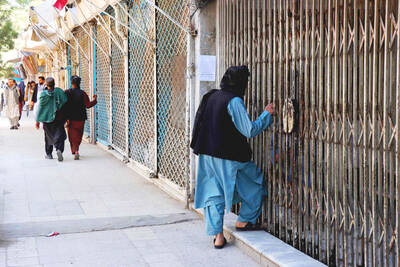
The death toll from a shooting in western Afghanistan rose to 11 on Saturday, after gunmen targeted civilians at a picnic spot in Herat, the provincial authority said. Bullet marks were visible on a wall of the Sayed Mohammad Agha Shia shrine, while bloodstains marked a blanket abandoned at the scene. “Eleven people have been recorded dead and eight others wounded from Friday’s incident, with the condition of two of the wounded reported as critical,” Herat’s information office said in a statement. The update raises a toll of seven killed provided on Friday by the Afghan Ministry of Interior Affairs


 RSS
RSS