


Asian stocks rose, led by financial companies and automakers, after G20 finance ministers vowed to combat the global recession and OPEC refrained from cutting output quotas to bolster economic growth.
Mitsubishi UFJ Financial Group Ltd, Japan’s biggest publicly traded bank, rose 6 percent as corporate bond risk fell following a pledge by G20 officials for coordinated action to clean up banks’ toxic assets. Mazda Motor Corp, Japan’s No. 4 carmaker, jumped 9.8 percent on optimism that production will rebound.
“People in the market have calmed down and started noticing authorities worldwide are doing what they can to revive the global economy and restore the financial system,” said Kiyoshi Ishigane, a strategist at Tokyo-based Mitsubishi UFJ Asset Management Co, which oversees about US$61 billion.
The MSCI Asia Pacific Index rose 1.4 percent to 75.77 as of 1:47pm in Tokyo, with about three stocks gaining for each one that declined. Japan’s Nikkei 225 Stock Average climbed 2 percent to 7,722.41, while Hong Kong’s Hang Seng Index gained 1 percent.
Markets in Asia rose except in South Korea, China, Singapore, Indonesia, Malaysia, Thailand and the Philippines.
Foxconn International Holdings Ltd (富士康), the world’s biggest contract maker of mobile phones, gained 7.7 percent in Hong Kong following a brokerage upgrade.
Futures on the Standard & Poor’s 500 Index fell 0.9 percent. The benchmark gauge rose 0.8 percent on Friday, capping an 11 percent rally for the week, as takeover speculation lifted health care companies.
The MSCI Asia Pacific Index rose 3.9 percent last week, its best performance this year. The gauge is down 16 percent this year, extending last year’s record 43 percent drop as the global recession decimated profits at companies from Mazda to Canon Inc, the world’s top maker of digital cameras.
Estimated earnings for companies included in the benchmark are down 66 percent from a year ago, data compiled by Bloomberg show. Companies on the index trade at an average of 1.1 times book value, near its October record low of 1 times book.
The Bank of Japan is considering buying subordinated debt from banks to shore up capital, the Nikkei Shimbun reported.
The cost of protecting investors in Asian bonds from default fell after the G20’s weekend pledges. The Markit iTraxx Japan index of credit-default swaps dropped 5 basis points, Barclays Capital prices showed. The Markit iTraxx Asia index of 50 investment-grade borrowers outside Japan also lost 5 basis points, ICAP Plc said.
Mazda, partly owned by Ford Motor Co, climbed 9.1 percent to ¥156 (US$1.59). The company will resume full production at two domestic plans in July, the Nikkei Shimbun said on Saturday.
Foxconn gained 7.7 percent to HK$2.66 (US$0.34) in Hong Kong after Macquarie Group raised its rating for the stock to “outperform” from “neutral” because it expects the company to return to profit this year.
HSBC, which is raising US$17.7 billion from a rights offering, rose 1.2 percent to HK$38.70 in Hong Kong.

SECOND-RATE: Models distilled from US products do not perform the same as the original and undo measures that ensure the systems are neutral, the US’ cable said The US Department of State has ordered a global push to bring attention to what it said are widespread efforts by Chinese companies, including artificial intelligence (AI) start-up DeepSeek (深度求索), to steal intellectual property from US AI labs, according to a diplomatic cable. The cable, dated Friday and sent to diplomatic and consular posts around the world, instructs diplomatic staff to speak to their foreign counterparts about “concerns over adversaries’ extraction and distillation of US AI models.” Distillation is the process of training smaller AI models using output from larger, more expensive ones to lower the costs of training a powerful new
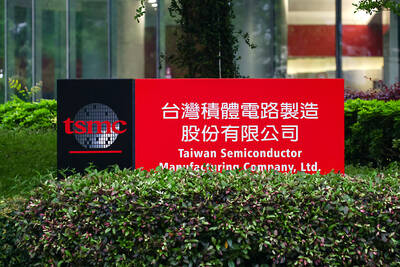
Shares of Taiwan Semiconductor Manufacturing Co (TSMC, 台積電) have repeatedly hit new highs, but an equity analyst said the stock’s valuation remains within a reasonable range and any pullback would likely be technical. The contract chipmaker’s historical price-to-earnings (P/E) ratio has ranged between 20 and 30, Cathay Futures Consultant Co (國泰證期) analyst Tsai Ming-han (蔡明翰) told Central News Agency. With market consensus projecting that TSMC would post earnings per share of about NT$100 (US$3.17) this year, supported by strong global demand for artificial intelligence (AI) applications, and the stock currently trading at a P/E ratio of below 25, Tsai said the valuation
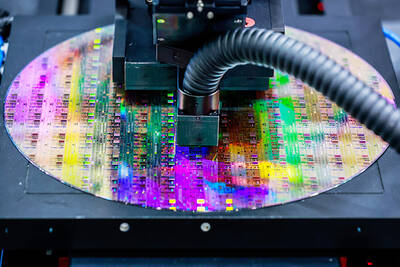
The artificial intelligence (AI) boom has triggered a seismic reshuffling of global equity markets, with Taiwan and South Korea muscling past European nations one by one. With its stock market now valued at nearly US$4.3 trillion, Taiwan surpassed the UK, Europe’s biggest market, earlier this month, data compiled by Bloomberg showed. South Korea is about US$140 billion away from doing the same. The tech-heavy Asian markets have shot past Germany and France in the past seven months. The shift is largely down to massive gains in shares of three companies that provide essential hardware for AI: Taiwan Semiconductor Manufacturing Co (TSMC, 台積電),
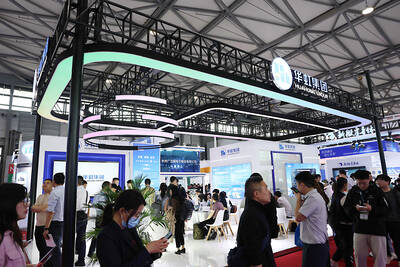
The US Department of Commerce last week ordered multiple chip equipment companies to halt shipments of certain tools to China’s second-largest chipmaker, Hua Hong Semiconductor Ltd (華虹半導體), its latest action to slow the country’s development of advanced chips, two people familiar with the matter said. The department sent letters to at least a handful of companies informing them of restrictions on tools and other materials destined for two Hua Hong facilities US officials believe make China’s most sophisticated chips, the people said. Top US chip equipment companies Lam Research Corp, Applied Materials Inc and KLA Corp, each of which has significant


 RSS
RSS