


The story is all too familiar: The wife of a high-ranking politician with a taste for expensive jewelry compromises the reputation and position of her powerful husband through her brazen shopping exploits.
But this particular tale is not news of first lady Wu Shu-jen (
No, the spouse I am referring to lives across the water and is none other than Chinese No. 2 Wen Jiabao's (
Seems leaders in Taiwan and China have more in common than they thought.
An article posted on the Los Angeles Times Web site on Dec. 26 entitled "In Beijing, some bling is unwelcome" told how last month TVBS ran a brief story on how Zhang bought a number of jade artifacts, including a pair of earrings worth US$250,000 from Taiwanese jeweler Yu Chong-da (
Another jeweler familiar with the predilections of the premierlissimo's wife, Chiou Wei-jung (邱惟鍾), told how Mrs Wen also has a taste for emeralds and Taiwanese coral.
Now, I know that those Chinese have a reputation for eating anything, but chowing down on a coral ciabatta is pushing it just a little (and anyway, isn't coral protected? Maybe the National Police Agency should issue a warrant).
But getting back on track.
Zhang obviously developed a liking for pretty rocks during her formative years digging around in the deserts of western China. According to Communist Party legend, the couple met as they worked in remote Gansu Province as part of a geological team during the Cultural Revolution. Zhang apparently won a three-horse race for studmuffin Wen's affections because of her willingness to visit his dorm and wash his smalls.
Zhang, a career geologist and former vice director of China's national gemstone testing center, is obviously now looking for payback and eager to increase her personal collection of green stuff in return for 15 years of washing the brown stuff out of Wen's Y-fronts (I'm talking about Gobi Desert dust, for those of you with your minds in the gutter).
At least now we know why Wen -- famed for his modest lifestyle and "man of the people" image -- often ends up stuck down a mine (brave man) on New Year's Eve eating dumplings with miners: He has to save money to pay for his wife's bling addiction.
Look at pictures of Zhang on the Internet and you can see why she likes to hang pretty trinkets from every convenient orifice. All those years spent under the harsh desert sun have given her face -- how can I put it politely -- a slightly weathered look. In fact she makes Chinese Nationalist Party (KMT) honorary lifetime loser Lien Chan's (連戰) very own weather-beaten wife Lien Fang Yu (連方瑀) look like Jolin Tsai (蔡依林).
May I suggest a full-face jade mask be top of the list for Zhang's next shopping excursion?
But here's where the similarities between the two ladies and their stories end because, as we all know, Wu ended up being savaged to the verge of death by the pro-unification press pack, quickly characterized as a money-crazed, world domination-obsessed female version of wheelchair-bound James Bond baddie Ernst Blofeld.
By contrast, news of Zhang's super shopping spree disappeared from the radar as quickly as it had come into range thanks to some pressure in the right places from the long arm of commie central.
According to the Los Angeles Times report, Yu and Chiou quickly published retractions in the Chinese-language press both here and in Hong Kong. However, they insisted that the apologies had nothing to do with "political pressure."
And check this. The report then tells the bizarre tale of how the Taiwanese jewelry association asked TVBS to issue a retraction. Everyone's favorite news-creating station then ran a follow-up report including a "clarification" from the two jewelers in question.
Yes, after you've picked yourself up off the floor, you did hear correctly. TVBS ran a "clarification" on a "factually untrue" broadcast. Let's hope they don't make a habit of it, as there aren't enough hours in the day.
I've been around a long time, but I never realized the Taiwan jewelry association was such an influential organization. Anyone that can force TVBS to admit to telling untruths must have gonads bigger than Taipei's small giant egg (
Meanwhile, back in bandit country, the "Great Firewall of China" sprang into action, with all searches for "Wen's wife" and "jewelry" on China's Yahoo and Google directing Chinese netizens to hastily photoshopped pictures of Zhang donating said earrings to a poor Tibetan market stallholder in the name of ethnic harmony (actually, I made this bit up but it can't be too far from the truth).
But the biggest mystery in all of this is where our pals in the pro-unification print media were on this story. One would have thought they'd have been all over this like a rash. After all, it was the perfect chance to extol the glory of the "motherland" and its economic development and show that the wives of top-ranking communist officials are doing more than the Taiwanese government to help our economy.
It could also have given Prez A-bian (陳水扁) and Prem Wen some common ground on which to kick-start cross-strait negotiations.
Big Red may have been successful in cowing the likes of TVBS and other self-serving organizations, forcing them to renege on their principles in their pursuit of wealth (the growing list includes the US, Russia, France, the UK, every other member of the UN bar our "impoverished" allies, the WHO and the International Organization for Animal Health to name just a few) -- but not I. Not Johnny Neihu.
I will shout it from the rooftops of Neihu Towers until I'm blue in the face (or until an undercover Chinese sniper gets me), because I have no business interests behind the Bamboo Curtain to compromise.
You see, for reasons I can't explain, my fan base in China doesn't seem to be expanding all that fast.
Heard or read something particularly objectionable about Taiwan? Johnny wants to know: dearjohnny@taipeitimes.com is the place to reach me, with "Dear Johnny" in the subject line.
KMT Chairwoman Cheng Li-wun’s (鄭麗文) recent visit to Beijing and her upcoming visit to Washington will serve as a high-level test of her diplomatic mettle. In Beijing, Cheng was received with symbolic gestures, a warm reception, and high-level access. In Washington, she will receive far less pomp and far sharper questions about the KMT’s vision for the future of Taiwan. Her challenge will be to persuade Washington that the KMT’s engagement with China can coexist with strong deterrence. Cheng’s April 7-12 visit to mainland China coincided with an intense period of conflict in Iran. Despite the strategic significance of Cheng’s trip,
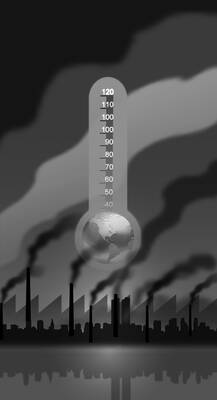
The closure of the Strait of Hormuz has sent the vast Asian chemicals industry into a tailspin. Deprived of the likes of Qatari natural gas and Saudi Arabian oil, the region’s fertilizer and plastics plants are slowing production or even shutting down. Everywhere except China, that is. In petrochemicals, China is unique. As well as a traditional industry that uses oil and gas as feedstock, it has parallel output that relies on its abundant domestic coal. Unsurprisingly, India and other regional powers want to copy and paste the Chinese method. This would not be easy — or climate friendly. The
Indonesian President Prabowo Subianto says he knows how to fix the problems facing Indonesia. Yet his economic mismanagement and authoritarian tendencies are steering the nation toward a familiar mix of currency instability and political chaos. The world’s fourth-most populous nation risks reversing the hard-won democratic and business reforms that came after the Asian Financial Crisis in 1997. At that time, the rupiah collapsed and the political upheaval that followed forced former president Haji Mohamed Suharto from power. Prabowo’s administration is ignoring similar warning signs. That disconnect was apparent in a national address on Wednesday, when Prabowo projected the swagger that has
“Of course you can choose not to be Taiwanese, just do not stay here,” chairwoman of Taipei 101 operator Taipei Financial Center Corp Janet Chia (賈永婕) said in an online interview with local entertainer Tai Chih-yuan (邰智源), triggering intense discussion on social media, with politicians across party lines weighing in. In the interview, which was aired on May 14, Chia and Tai’s discussion over a meal in Taipei 101 covered Chia’s career change from entertainer to chairwoman and US climber Alex Honnold’s free solo climb up the Taipei 101 building. During the interview, Chia said, “Being on this land, we


 RSS
RSS