


How disappointing it was to see British Foreign Secretary David Miliband on Wednesday follow in the footsteps of French President Nicolas Sarkozy and publicly oppose the planned referendum on UN membership using the name "Taiwan."
Miliband, with his Chinese counterpart Yang Jiechi (
Even so, the announcement comes as no surprise. Diplomatic realpolitik means that the national interest will, when necessary, trump considerations such as democracy and human rights. And for Britain, as with so many other countries, keeping the Chinese on side is a top priority given their economic might and perceived diplomatic leverage.
Former British prime minister Winston Churchill once said: "The reason for having diplomatic relations is not to confer a compliment, but to secure a convenience."
True to this spirit, Britain has a long history of placating Beijing to serve its own, usually economic, interests. Indeed, the UK was one of the first states to move to abandon the Republic of China, its World War II ally, when it offered to establish diplomatic relations with Beijing in January 1950.
The rationale behind the swift offer of recognition is not fully understood, but it can be assumed that the threat to long-standing British commercial interests in China posed by the Communist takeover was one of the most pressing reasons.
Miliband's announcement on Wednesday was only the latest manifestation of this very British tradition.
Add that to a series of identical messages emanating from developed nations around the globe as they come under Chinese pressure and what emerges is a clever change of tack from the Chinese.
Previously, Taiwanese election campaigns received a mixture of indirect and direct threats from Beijing, with poor consequences for pro-unification candidates.
This time, however, China has learned from its mistakes. It is now twisting the arms of Miliband and other European politicians, getting them to do its dirty work as Taiwan's election season begins.
But when such "warnings" are issued -- as with Miliband and Sarkozy, with a Chinese official glowering by their side -- any impact is likely to be minimal, because this method is arguably just as offensive as direct intervention.
Fortunately for Taiwan, a rebuke from the UK, like that from France last week, is nothing to worry about. London's message carries nowhere near the same weight as one from Taipei's staunchest and arguably only reliable ally, the US.
As US Republican presidential candidate Mitt Romney put it recently, since World War II, Britain, along with the rest of Europe, has faded from the heights to become a "second-tier nation." It is no longer a world power as it was in the days of Empire.
Taiwan's Ministry of Foreign Affairs should therefore issue the obligatory polite reply rebutting Miliband's comments and then put the issue to one side.
That way the public can get on with making their own -- and more profound -- statement of intent to defy Chinese belligerence, no matter which pliable countries channel their agenda.
KMT Chairwoman Cheng Li-wun’s (鄭麗文) recent visit to Beijing and her upcoming visit to Washington will serve as a high-level test of her diplomatic mettle. In Beijing, Cheng was received with symbolic gestures, a warm reception, and high-level access. In Washington, she will receive far less pomp and far sharper questions about the KMT’s vision for the future of Taiwan. Her challenge will be to persuade Washington that the KMT’s engagement with China can coexist with strong deterrence. Cheng’s April 7-12 visit to mainland China coincided with an intense period of conflict in Iran. Despite the strategic significance of Cheng’s trip,
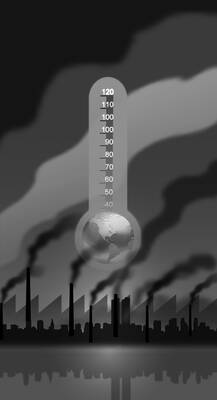
The closure of the Strait of Hormuz has sent the vast Asian chemicals industry into a tailspin. Deprived of the likes of Qatari natural gas and Saudi Arabian oil, the region’s fertilizer and plastics plants are slowing production or even shutting down. Everywhere except China, that is. In petrochemicals, China is unique. As well as a traditional industry that uses oil and gas as feedstock, it has parallel output that relies on its abundant domestic coal. Unsurprisingly, India and other regional powers want to copy and paste the Chinese method. This would not be easy — or climate friendly. The
Indonesian President Prabowo Subianto says he knows how to fix the problems facing Indonesia. Yet his economic mismanagement and authoritarian tendencies are steering the nation toward a familiar mix of currency instability and political chaos. The world’s fourth-most populous nation risks reversing the hard-won democratic and business reforms that came after the Asian Financial Crisis in 1997. At that time, the rupiah collapsed and the political upheaval that followed forced former president Haji Mohamed Suharto from power. Prabowo’s administration is ignoring similar warning signs. That disconnect was apparent in a national address on Wednesday, when Prabowo projected the swagger that has
“Of course you can choose not to be Taiwanese, just do not stay here,” chairwoman of Taipei 101 operator Taipei Financial Center Corp Janet Chia (賈永婕) said in an online interview with local entertainer Tai Chih-yuan (邰智源), triggering intense discussion on social media, with politicians across party lines weighing in. In the interview, which was aired on May 14, Chia and Tai’s discussion over a meal in Taipei 101 covered Chia’s career change from entertainer to chairwoman and US climber Alex Honnold’s free solo climb up the Taipei 101 building. During the interview, Chia said, “Being on this land, we


 RSS
RSS