


On Tuesday, Canadian Broad-casting Corp (CBC) television was scheduled to show a documentary entitled Beyond the Red Wall: The Persecution of Falun Gong ("Canadian TV pulls Falun Gong program hours before airtime," Nov. 10, page 7).
David Kilgour, co-author of the comprehensive report which sets out the evidence of this "new form of evil on the planet," is interviewed in the film. Also featured are Zhang Kunlun, a McGill University professor and Canadian citizen who, on a visit to China, was thrown into a labor camp and tortured for three years because of his Falun Gong beliefs. Former Canadian justice minister Irwin Cotler is also described as "speaking passionately" about the persecution of Falun Gong.
I am also interviewed in this film on the subject of the Chinese "judicial system" -- or lack thereof -- my call for a boycott of the 2008 Olympics and the collaboration of the governments of former Canadian prime ministers Jean Chretien and Paul Martin with the perpetrators of these atrocities.
CBC had purchased this documentary from its producer, Peter Rowe, last March. Subsequently, it required Rowe to edit the film, primarily to delete certain charges against the Chinese government and to allow more extensive comment on Falun Gong by Chinese diplomatic officials. Rowe complied and CBC management gave final approval to the edited version last spring. For weeks, CBC had been promoting the film. Hours before it was to air, CBC pulled the film and replaced it with a re-run whitewash of Pakistan's dictator. Spokesmen for CBC lied about the reasons for the recall to a series of inquirers.
One story was that there were "contractual issues." Not with the producer, there weren't.
All contract issues between him and CBC had been finalized long ago. If there is a contractual issue, it consists solely of the fact that CBC has the Canadian contract for televising Bloody Harvest Olympics in Beijing next year. There is little doubt that Beijing threatened our national broadcaster with loss of this contract in the event that CBC were to allow Canadian audiences to view Beyond the Red Wall.
A second version was that the crisis in Pakistan pre-empted Peter Rowe's film and that Pakistan was of immediate topical interest. That lie is particularly transparent. The crisis in Pakistan was almost a week old. Urgent up to the minute coverage could have been injected at any time.
The truth is that Chinese diplomatic officials had contacted CBC and had employed at least one long-known Chinese Communist Party agent to orchestrate a campaign against showing the film, which they denounced as "all lies." How they could know this is unclear since no one has yet seen the film. CBC itself has acknowl-edged the intervention by China, but has said only that it decided to ask for further editing.
Human-rights advocates the world over lament the Beijing government's consistent suppression of accurate news reports in China. Now it is apparent that Beijing has the power to approve or disapprove what is broadcast by news services in democratic countries. CBC is apparently quite comfortable with the idea that what Canadians are allowed to see or hear should be determined by the Chinese Communist Party in Beijing. Clive Ansley ,Courtenay, Canada
KMT Chairwoman Cheng Li-wun’s (鄭麗文) recent visit to Beijing and her upcoming visit to Washington will serve as a high-level test of her diplomatic mettle. In Beijing, Cheng was received with symbolic gestures, a warm reception, and high-level access. In Washington, she will receive far less pomp and far sharper questions about the KMT’s vision for the future of Taiwan. Her challenge will be to persuade Washington that the KMT’s engagement with China can coexist with strong deterrence. Cheng’s April 7-12 visit to mainland China coincided with an intense period of conflict in Iran. Despite the strategic significance of Cheng’s trip,
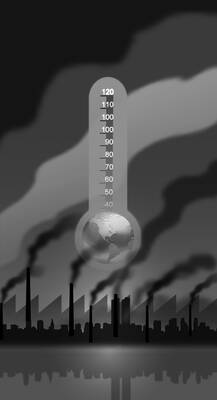
The closure of the Strait of Hormuz has sent the vast Asian chemicals industry into a tailspin. Deprived of the likes of Qatari natural gas and Saudi Arabian oil, the region’s fertilizer and plastics plants are slowing production or even shutting down. Everywhere except China, that is. In petrochemicals, China is unique. As well as a traditional industry that uses oil and gas as feedstock, it has parallel output that relies on its abundant domestic coal. Unsurprisingly, India and other regional powers want to copy and paste the Chinese method. This would not be easy — or climate friendly. The
History might remember 2026, not 2022, as the year artificial intelligence (AI) truly changed everything. ChatGPT’s launch was a product moment. What is happening now is an anthropological moment: AI is no longer merely answering questions. It is now taking initiative and learning from others to get things done, behaving less like software and more like a colleague. The economic consequence is the rise of the one-person company — a structure anticipated in the 2024 book The Choices Amid Great Changes, which I coauthored. The real target of AI is not labor. It is hierarchy. When AI sharply reduces the cost
US President Donald Trump recently repeated his claim that “Taiwan stole America’s chip industry,” reigniting public debate on the issue. As a former Taiwanese minister of economic affairs and an entrepreneur deeply involved in semiconductor supply chain development, I feel a responsibility to clarify this misunderstanding. From the perspective of global industrial evolution and the economic principle of comparative advantage, such a statement appears overly simplistic and risks obscuring the essence of the issue. The rise of Taiwan’s semiconductor industry was not built on “replacing America,” but rather emerged as a result of countries pursuing different development paths within the


 RSS
RSS